Introduction
Mind‑body relaxation techniques—such as deep breathing, progressive muscle relaxation, guided imagery, mindfulness meditation, yoga, tai chi, and prayer—help the body shift from the sympathetic “fight‑or‑flight” state to a parasympathetic “rest‑and‑digest” mode. Scientific studies confirm that these practices lower heart rate, blood pressure, and cortisol, increase heart‑rate variability, and modulate brain regions (prefrontal cortex, amygdala) linked to anxiety and emotional regulation. Studies show effect sizes for reducing stress, depression, and chronic pain, and neuroimaging reveals functional connectivity in the network and gray‑matter density in hippocampus. Within an integrative health framework, relaxation is paired with nutrition, exercise, sleep hygiene, and psychosocial support, creating a personalized plan that respects each patient’s preferences and medical needs. This patient‑centered approach leverages low‑risk techniques to empower individuals to manage stress and improve overall well‑being. Clinical guidelines from the American Psychological Association and NIH endorse these techniques as adjunctive options for anxiety, insomnia, and hypertension, reinforcing their role in care.
The Relaxation Response: Physiology and Stress Counteraction
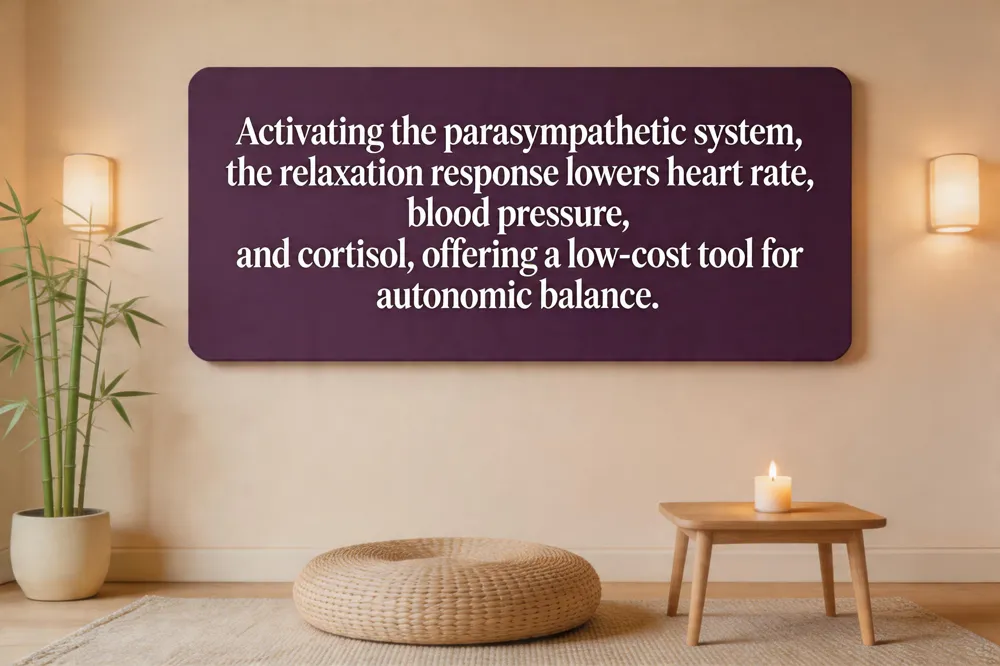 When a stressor hits, the sympathetic “fight‑or‑flight” system releases adrenaline, norepinephrine, and cortisol, raising heart rate, blood pressure, and muscle tension. The relaxation response—first described by Dr. Herbert Benson—activates the parasympathetic branch, producing a hypo‑metabolic state marked by slower breathing, reduced oxygen consumption, and a drop in metabolic rate. Techniques such as deep diaphragmatic breathing, progressive muscle relaxation, body‑scan meditation, guided imagery, mindfulness meditation, and gentle movement (yoga, tai chi, rhythmic exercise) trigger this response. By focusing attention on breath or a calming mental image, the ventromedial prefrontal cortex down‑regulates the amygdala, lowering cortisol and catecholamine output. Resulting physiological changes include a 10‑15 % reduction in heart rate, a 5‑10 mm Hg drop in systolic pressure, and measurable declines in cortisol levels after weeks of regular practice. These low‑cost, low‑risk methods empower patients to regain autonomic balance and improve overall well‑being.
Core Mind‑Body Practices Backed by Science
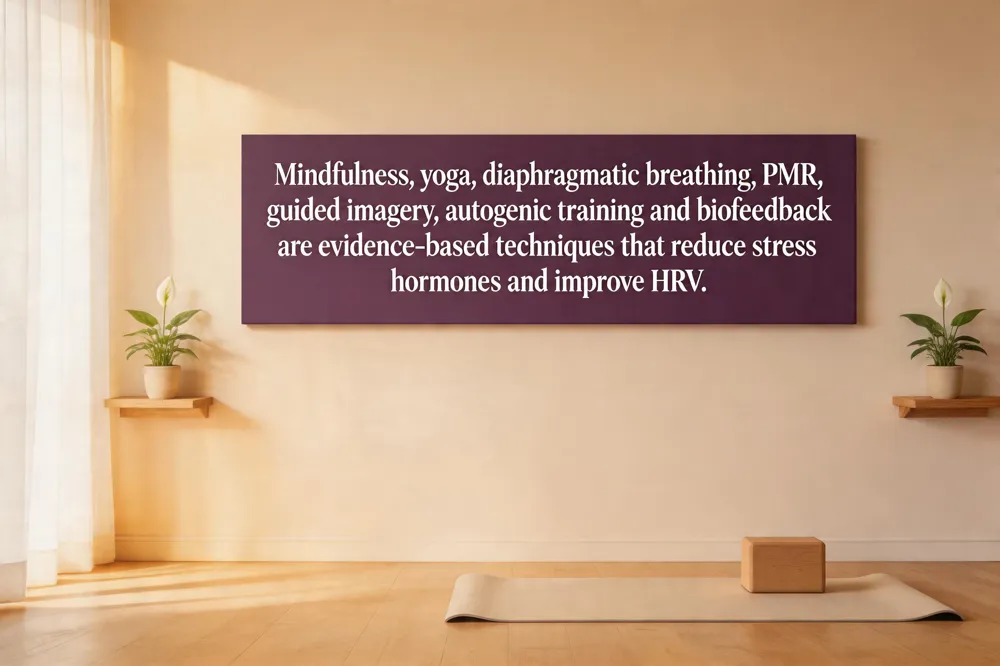 Mindfulness meditation, yoga/Tai Chi, diaphragmatic breathing, progressive muscle relaxation (PMR), guided imagery, autogenic training, and biofeedback are core mind‑body practices supported by robust research. Mindfulness meditation reduces cortisol, amygdala activity, and improves sleep; yoga/Tai Chi blend breath with gentle movement to lower blood pressure and increase GABA. Diaphragmatic breathing (5‑7 breaths/min) activates the vagus nerve, enhancing heart‑rate variability. PMR, a systematic tensing‑release sequence, lowers muscle tension and cortisol after 20 minutes daily. Guided imagery creates multisensory mental scenes that calm the nervous system, while autogenic training uses self‑suggested warmth and heaviness to induce parasympathetic tone. Biofeedback provides real‑time physiological data, teaching voluntary control of heart rate and muscle tension. A PDF of relaxation techniques typically lists these evidence‑based methods, often adding box breathing, grounding exercises, and music therapy. Together, regular practice of these low‑cost, low‑risk techniques reduces stress and anxiety, improves sleep, and enhances overall well‑being.
Structured Scripts and Guides for Daily Use
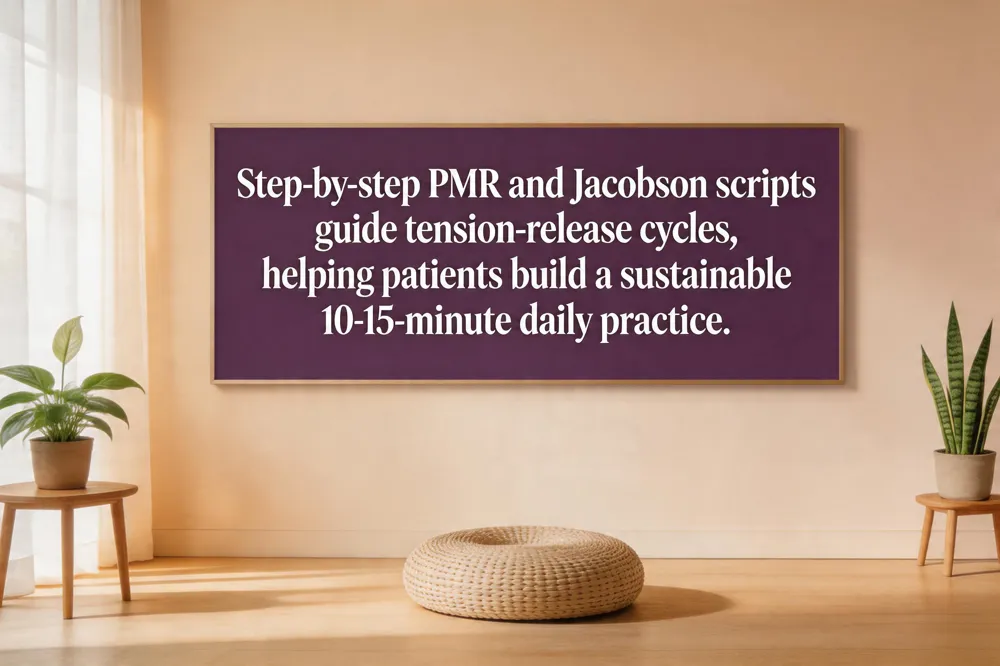 Progressive muscle relaxation (PMR) scripts begin with a comfortable seated or lying position, deep diaphragmatic breathing, and a gentle eye‑closing cue. The narrator leads the listener through the body—feet, calves, thighs, hips, abdomen, chest, hands, forearms, upper arms, shoulders, neck, and face—tensing each area for about five seconds, then releasing the tension while visualizing the stress melting away with each exhale. Jacobson’s relaxation technique follows the same systematic pattern, emphasizing the contrast between tension and ease and encouraging a ten‑second pause after each release to notice calm. Regular PMR therapy, practiced 10‑15 minutes daily, lowers cortisol, reduces anxiety, and supports pain‑management and sleep, fitting seamlessly into integrative wellness plans that also include mindfulness, yoga, or biofeedback. A printable “Relaxation Techniques for Stress Management” PDF offers step‑by‑step instructions, environment‑creation tips, tracking worksheets, and links to audio recordings, allowing patients to match techniques to their personal stress patterns and build a sustainable daily routine.
Personalized Relaxation for Specific Groups
 Personalized relaxation strategies recognize that stress‑relief needs differ by age, gender, and health condition. For men, quick deep‑breathing or a 5‑minute mindfulness meditation session can lower cortisol and heart rate, while a brief walk or body‑weight circuit releases endorphins and reduces muscle tension. Women benefit from regular gentle movement such as yoga or gardening paired with gratitude journaling and deep diaphragmatic breathing, which together improve HRV and mood. Students gain sharper attention, memory retention, and lower exam anxiety when they practice focused‑attention meditation for 10 minutes daily, supporting academic performance and sleep quality. Children experience calmer emotions, better sleep, and enhanced self‑regulation through simple breathing games and guided imagery, reinforcing resilience. For OCD, mindfulness meditation that observes intrusive thoughts without judgment complements exposure‑and‑response‑prevention, reducing compulsive urges. Finally, meditation’s activation of the parasympathetic system helps stabilize heart rate and blood pressure in dysautonomia, offering a low‑cost adjunct to hydration, salt, and compression strategies.
Quick Grounding and Immediate Relief Techniques
 What is the 3‑3‑3 rule for calming? The 3‑3‑3 rule is a rapid sensory‑motor grounding: name three things you see, three sounds you hear, then move three body parts while breathing slowly. It pulls attention from racing thoughts, activates the ventromedial prefrontal cortex and reduces amygdala‑driven anxiety (mind‑body research).
Quick relaxation techniques for anxiety 1️⃣ 5‑4‑3‑2‑1 grounding (visual, tactile, auditory, olfactory, gustatory cues). 2️⃣ Box (4‑4‑4) breathing – inhale‑hold‑exhale‑pause each for four counts, stimulating the vagus nerve and raising heart‑rate variability. 3️⃣ Progressive muscle relaxation quick – tense each muscle group 5 seconds, release 10 seconds, moving from toes upward. 4️⃣ Brief visualization – imagine a calming scene, engaging all senses. 5️⃣ Micro‑pause mindfulness – stop for a minute, focus on breath or a single sensation, acknowledge thoughts without judgment.
These low‑cost, evidence‑based practices can be used anywhere, complementing traditional care and supporting the brain‑body SCANN that underlies stress reduction.
Holistic Lifestyle Integration
 A truly holistic approach to stress blends body, mind, and daily habits. Nutrition and omega‑3 intake – a diet rich in fatty fish, walnuts, and leafy greens supplies EPA/DHA that lowers cortisol and supports brain health. Regular physical activity – walking, yoga, tai chi or dancing boosts endorphins, improves heart‑rate variability, and reduces muscle tension. Sleep hygiene – aim for 7–9 hours in a dark, cool room; avoid screens before bed to let the relaxation response restore autonomic balance. Social support and connection – trusted friends, family, or community groups provide emotional buffering and lower perceived stress. Acupuncture and massage therapies – gentle needle work and therapeutic touch activate parasympathetic pathways, decreasing blood pressure and cortisol while increasing oxytocin. Integrative detox and mind‑body synergy – combining mindful breathing, guided imagery, and brief detox breaks (e.g., digital fasts) amplifies the brain’s default‑mode connectivity, fostering calm. Together, these practices answer the questions of "How to holistically reduce stress?" and "What are the benefits of relaxation techniques?" by offering a personalized, low‑risk toolkit for lasting well‑being.
Long‑Term Benefits of Consistent Practice
 Evidence from randomized trials and neuro‑imaging studies shows that regular mind‑body practices remodel the brain: increased gray‑matter density in the hippocampus and prefrontal cortex improves memory, attention, and emotional regulation. These structural changes support immune modulation, lowering inflammatory markers such as CRP and IL‑6, and enhancing natural‑killer cell activity, which together reduce infection risk and chronic disease progression. Cardiovascular health benefits include reduced resting heart rate, lower blood pressure, and improved heart‑rate variability, reflecting stronger parasympathetic tone. Mental‑health outcomes are robust—lowered cortisol, diminished anxiety and depression symptoms, and heightened resilience—while weight‑management gains arise from better appetite regulation and reduced stress‑driven eating. Overall well‑being improves through better sleep, increased optimism, and a sense of inner calm.
Benefits of meditation for students: enhances concentration, memory, and emotional resilience, reducing anxiety and improving academic performance.
10 benefits of meditation: stress reduction, heightened self‑awareness, lower heart rate and blood pressure, and better sleep quality.
What happens if you meditate daily? attention and memory grow, stress hormones drop, sleep improves, and compassionate behavior increases, supporting healthier habits and weight management.
Conclusion
Key takeaways from the science of mind‑body relaxation
- Robust evidence shows that techniques such as progressive muscle relaxation, deep diaphragmatic breathing, guided imagery, mindfulness meditation, yoga, tai‑chi, and qigong reliably lower cortisol, heart rate, blood pressure, and sympathetic activity while boosting heart‑rate variability and parasympathetic tone.
- Neuroimaging and meta‑analyses reveal structural and functional brain changes (e.g., increased prefrontal‑amygdala connectivity, greater gray‑matter density) that underpin improved emotional regulation, reduced anxiety, and enhanced pain control.
- The relaxation response, first described by Dr. Herbert Benson, is a measurable physiologic state that can be elicited by any of these practices, and regular activation translates into real‑world health benefits such as better sleep, lower blood pressure, and reduced inflammatory markers.
Practical next steps for readers
- Pick one evidence‑based technique (e.g., 5‑minute diaphragmatic breathing or a 20‑minute progressive muscle relaxation session) and practice it daily for at least two weeks.
- Create a routine: set a consistent time—morning or evening—and a quiet space; use a timer or a trusted app to guide the practice.
- Track outcomes: record perceived stress, sleep quality, and any physical symptoms (e.g., tension headaches) in a simple journal to monitor progress.
- Combine with lifestyle habits: pair relaxation with regular aerobic movement, balanced nutrition, adequate sleep, and social connection for synergistic effects.
- Seek professional guidance if needed: individuals with trauma histories, severe anxiety, or chronic medical conditions should consult a clinician or integrative health practitioner to tailor the approach and ensure safety.
By integrating these scientifically supported mind‑body practices into personalized wellness plans, patients can empower themselves to mitigate stress, improve mental health, and enhance overall physiological resilience.