Why Patient Stories Matter in Integrative Pain Care
Chronic pain affects roughly 20‑25 % of U.S. adults—about 50 million people—making it a major public‑health challenge. The biopsychosocial model recognizes that pain is not just a physical sensation; it is shaped by emotional, cognitive, and social factors such as anxiety, depression, isolation, and daily stressors. Personal narratives, like Megan’s reset at Shirley Ryan AbilityLab or Michelle Sprinkle’s multidisciplinary recovery, illustrate how integrated teams—physicians, therapists, psychologists, and nutritionists—can address these intertwined dimensions. When patients hear real‑world stories, they see that pain can be managed, that a “reset” plan is possible, and that hope is attainable. These accounts inspire individuals to engage in movement, mindfulness, and personalized care, turning abstract treatment concepts into lived, motivating change.
Megan’s Journey: The Power of an Interdisciplinary Program
Megan’s Journey – Key Highlights
| Component | Details |
|---|---|
| Program Duration | 4‑week active treatment program |
| Team Composition | Medical doctors, pain psychologist, physical therapist, occupational therapist (daily coordination) |
| Movement‑Focused Interventions | Gentle stretching, nerve glides, pelvic‑floor therapy, chair yoga, tai chi, water aerobics |
| Occupational Therapy Focus | Body‑mechanics training, pacing strategies, confidence‑building activities |
| Psychological Support | Relaxation training, mindfulness, community support, CBT techniques to stop “freezing” and catastrophizing |
| Outcomes | Restored sensation in left arm/fingers/leg/foot, reduced lower‑back stiffness, increased activity levels, improved confidence and mood |
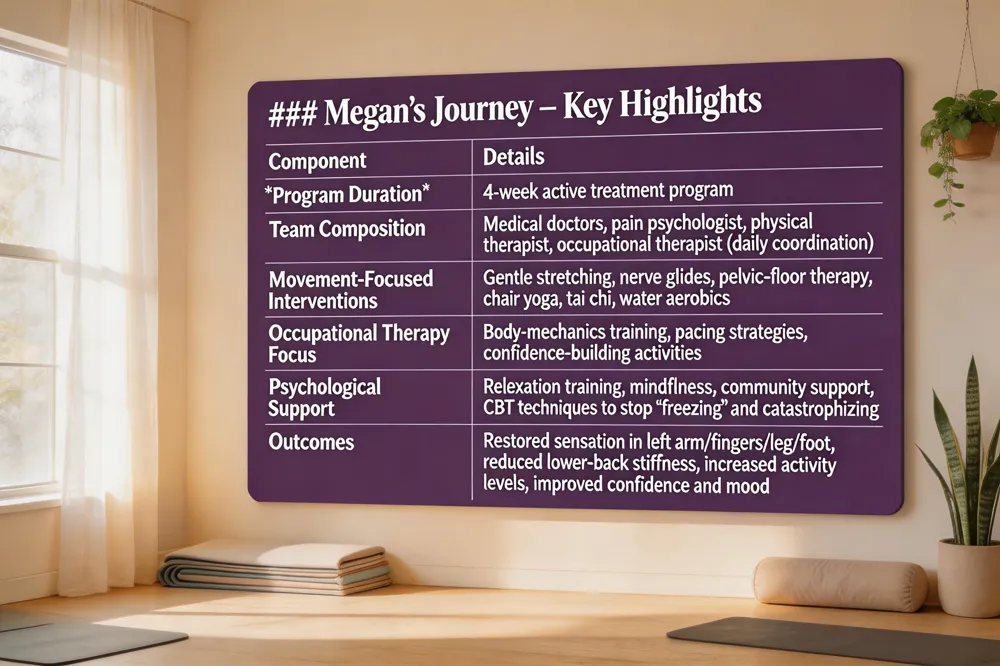 Megan H. first noticed chronic pain as a high‑school athlete dealing with shin splints, and over the years her health picture grew to include scoliosis, degenerative disc disease, sciatica, migraines, severe IBS, fatigue, and frequent flare‑ups that disrupted family events and even her pregnancy. Traditional care left her feeling frozen, anxious, and fogged, despite seeing a long list of specialists.
At the Shirley Ryan AbilityLab Megan entered a four‑week active treatment program built on a team‑based model that brings together medical doctors, psychologists, physical therapists, and occupational therapists in daily coordination. This interdisciplinary approach creates a personalized, mechanism‑guided plan that addresses the biopsychosocial dimensions of pain rather than isolated symptoms.
The program’s movement‑focused component dramatically increased Megan’s activity compared with the previous six months. Gentle stretching, nerve glides, and pelvic‑floor therapy restored sensation in her left arm, fingers, leg, and foot while easing lower‑back stiffness. Occupational therapy taught body‑mechanics, pacing, and confidence‑building activities such as chair yoga, tai chi, and water aerobics. A pain psychologist added relaxation, mindfulness, and community support, helping Megan stop “freezing” and catastrophizing.
How to break a chronic pain cycle? Break the chronic‑pain cycle by first pacing activities—plan short, manageable tasks and gradually increase duration to avoid over‑exertion that can amplify pain. Incorporate regular relaxation and stress‑reduction techniques such as deep‑breathing, meditation, or guided imagery to calm the nervous system. Engage in low‑impact exercise or movement you enjoy (e.g., walking, yoga, tai chi) to improve circulation, release endorphins, and strengthen supporting muscles. Work with a physical therapist or functional‑medicine practitioner to develop a personalized movement program and address biomechanical issues. Finally, use cognitive‑behavioral strategies—track pain triggers, practice positive self‑talk, and maintain open communication with your health team—to reshape thoughts around pain and prevent the cycle from repeating.
What does it mean to be pain‑free? Being pain‑free means experiencing no sensations of physical or psychological discomfort. In a pain‑free state the body can move, breathe, and engage in daily activities without the interference of acute or chronic pain signals. It also implies an absence of the emotional distress that often accompanies pain, allowing mental clarity and emotional balance. For an integrative health practice, achieving pain‑free status involves addressing the underlying causes of pain through personalized therapies, nutrition, detoxification, and mind‑body techniques. Ultimately, it is a holistic condition of well‑being where the nervous system, tissues, and emotions are all aligned in harmony.
Integrated vs. Integrative Pain Management: Definitions and Scope
Integrated vs. Integrative Pain Management
| Aspect | Integrated Pain Management | Integrative Pain Management |
|---|---|---|
| Definition | Coordinated, team‑based delivery of conventional therapies | Blends evidence‑based conventional medicine with complementary modalities |
| Primary Focus | Seamless coordination of specialists to address symptoms | Whole‑person care (body, mind, environment) addressing physical, emotional, social contributors |
| Typical Therapies | Medication, manual therapy, behavioral counseling, surgery | Acupuncture, yoga, mindfulness, nutrition counseling, detoxification, alongside conventional care |
| Goal | Faster symptom relief, reduced medication reliance, functional improvement | Holistic well‑being, pain‑free state through personalized, multimodal approach |
| Benefits | Real‑time treatment adjustments, reduced service duplication, higher patient satisfaction | Addresses root causes, enhances self‑management, lowers systemic inflammation, improves emotional health |
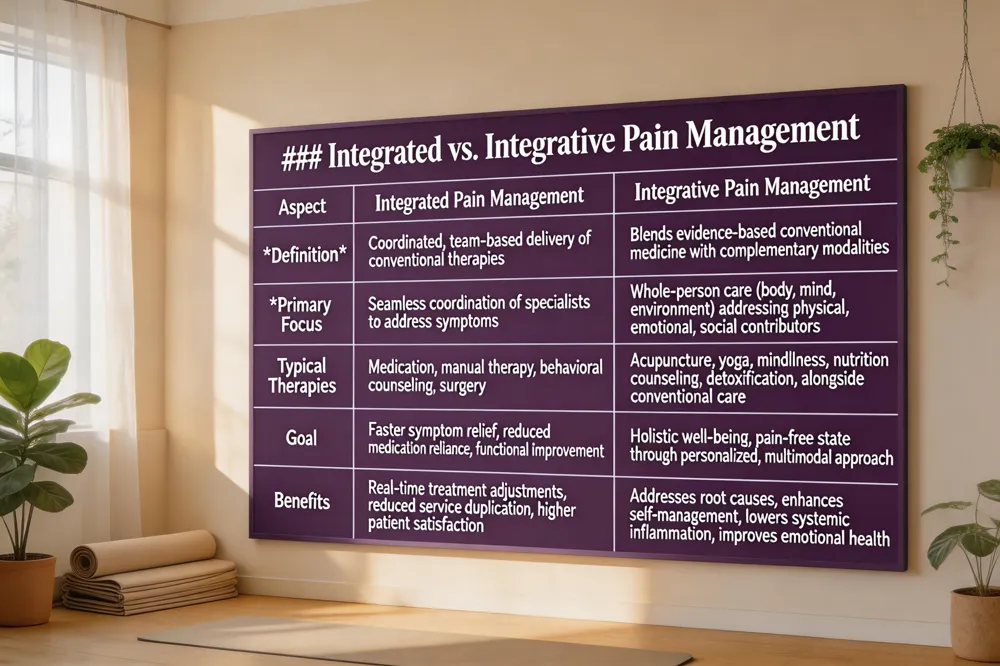 Integrated pain management is a coordinated approach that brings together physicians, physical therapists, occupational therapists, psychologists, and other specialists to deliver a single, seamless treatment plan. It emphasizes multidisciplinary coordination, ensuring that each clinician’s interventions—whether medication, manual therapy, or behavioral counseling—are timed and tailored to the patient’s evolving needs.
Integrative pain care expands on this model by explicitly blending evidence‑based conventional medicine with complementary therapies such as acupuncture, yoga, mindfulness, nutrition counseling, and detoxification protocols. The goal is to treat the whole person—body, mind, and environment—recognizing that chronic pain often stems from a complex interplay of physical, emotional, and social factors.
Benefits of multidisciplinary coordination include faster symptom relief, reduced reliance on high‑risk medications, improved functional outcomes, and greater patient satisfaction. When teams communicate daily, they can adjust treatments in real time, prevent duplication of services, and empower patients with personalized self‑management tools.
What is integrative pain management? It focuses on treating the whole person, not just the pain, addressing physical, psychological, and emotional contributors through a blend of conventional and complementary therapies.
What is integrated pain management? It concentrates on a broad array of therapies—including manipulation, mindfulness, acupuncture, massage, and nutrition—delivered in a coordinated, team‑based framework.
What does it mean to be pain‑free? It means living without sensations of physical or psychological discomfort, allowing unrestricted movement, clear thinking, and emotional balance. In an integrative setting, achieving this state involves personalized therapies, nutrition, detoxification protocols, and mind‑body techniques that align the nervous system, tissues, and emotions in harmony.
Non‑Drug Strategies: Movement, Mindfulness, and Nutrition
Non‑Drug Strategies for Pain‑Free Living
| Strategy | Description | Benefits | Example Activities |
|---|---|---|---|
| Movement | Low‑impact aerobic exercise and mindful movement practices | Improves circulation, releases endorphins, strengthens supporting muscles, restores sensation | Walking, swimming, cycling, tai chi, yoga, water aerobics |
| Mindfulness & Stress Reduction | Techniques to calm the nervous system and reframe pain perception | Lowers cortisol, reduces hyper‑vigilance, decreases perceived pain intensity | Deep‑breathing, guided imagery, meditation, progressive muscle relaxation, CBT |
| Nutrition & Hydration | Anti‑inflammatory diet rich in omega‑3s, fruits, vegetables, whole grains; adequate water intake | Lowers systemic inflammation, supports joint lubrication, improves tissue repair | Salmon, walnuts, berries, leafy greens, 8 glasses water daily |
| Pacing & Activity Planning | Structured, incremental task scheduling to avoid over‑exertion | Prevents flare‑ups, builds confidence, maintains functional baseline | Short activity blocks (5‑10 min) with gradual increase, symptom‑tracking logs |
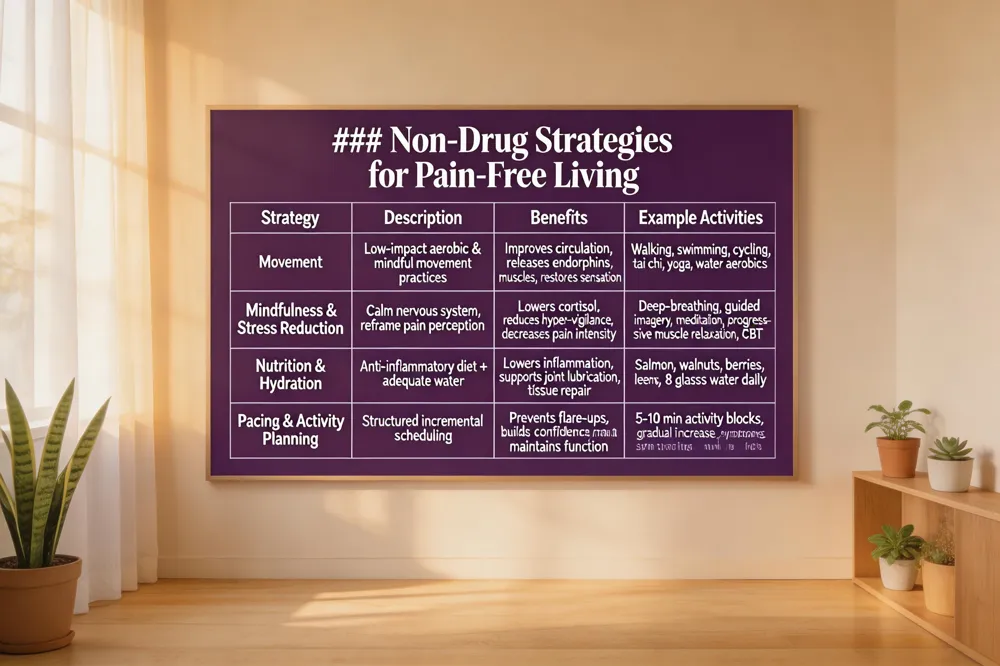 Living with chronic pain can feel like a relentless loop—activity triggers discomfort, which leads to avoidance, which then heightens sensitivity. Breaking that cycle begins with pacing: schedule short, manageable tasks and gradually extend them, avoiding the over‑exertion that spikes flare‑ups. Pair pacing with relaxation tools such as deep‑breathing, guided imagery, or mindfulness meditation to calm the nervous system and lower the brain’s alarm response.
Low‑impact aerobic exercise and tai chi
Gentle, regular movement is a cornerstone of pain‑free living. Walking, swimming, or cycling boost circulation and release endorphins without stressing joints. Tai chi and yoga add slow, purposeful motion with breath awareness, improving balance, core strength, and body mechanics. When started under the guidance of a physical therapist or a qualified instructor, these activities rebuild confidence, reduce stiffness, and can even restore sensation, as seen in Megan H.’s experience at the Ryan AbilityLab interdisciplinary program.
Anti‑inflammatory diet and hydration
Nutrition fuels the body’s healing response. An anti‑inflammatory diet rich in omega‑3 fatty acids (salmon, walnuts), colorful fruits and vegetables, whole grains, and low‑glycemic foods lowers systemic inflammation that fuels pain. Adequate hydration—about eight glasses of water daily—supports joint lubrication and nutrient transport, reducing aches and stiffness.
Mind‑body techniques for stress reduction
Stress amplifies pain through cortisol‑driven inflammation. Mind‑body practices such as yoga, tai chi, progressive muscle relaxation, and cognitive‑behavioral therapy teach the brain to reframe pain signals, decreasing perceived intensity. Regular practice, combined with supportive community groups, helps patients move from “freezing” in response to pain to proactive, intentional movement.
By integrating paced movement, balanced nutrition, and stress‑reduction strategies, individuals can train their nervous system to notice pain far less, improve functional ability, and ultimately achieve a more pain‑free lifestyle without reliance on medications.
Pharmacologic Options Within a Holistic Framework
Pharmacologic Options – Benefits & Risks
| Medication Class | Typical Use | Benefits | Risks / Side Effects | Considerations |
|---|---|---|---|---|
| NSAIDs (e.g., ibuprofen, naproxen) | Mild‑to‑moderate inflammatory pain | Quick pain relief, anti‑inflammatory | GI irritation, renal impact, ↑ blood pressure | Use short‑term, with food, monitor kidney function |
| COX‑2 Inhibitors (celecoxib) | Inflammatory pain with GI concerns | Spares stomach lining | Cardiovascular risk at higher doses | Reserve for patients with GI issues, assess cardiac risk |
| Acetaminophen | Non‑inflammatory pain | Gut‑friendly, safe when used as directed | Liver toxicity >3 g/day or with alcohol | Keep ≤3 g/day, avoid alcohol |
| Antidepressants (TCAs, SNRIs) | Neuropathic pain, mood support | Reduces pain signaling, improves mood | Dizziness, drowsiness, dry mouth | Titrate slowly, monitor mood changes |
| Anti‑seizure agents (gabapentin, pregabalin) | Neuropathic pain | Decreases nerve hyper‑excitability | Sedation, peripheral edema, withdrawal | Counsel on tapering if stopping |
| Opioids | Severe pain when other options insufficient | Strong analgesia | Tolerance, dependence, overdose, hyperalgesia | Use lowest effective dose, multidisciplinary oversight, plan for taper |
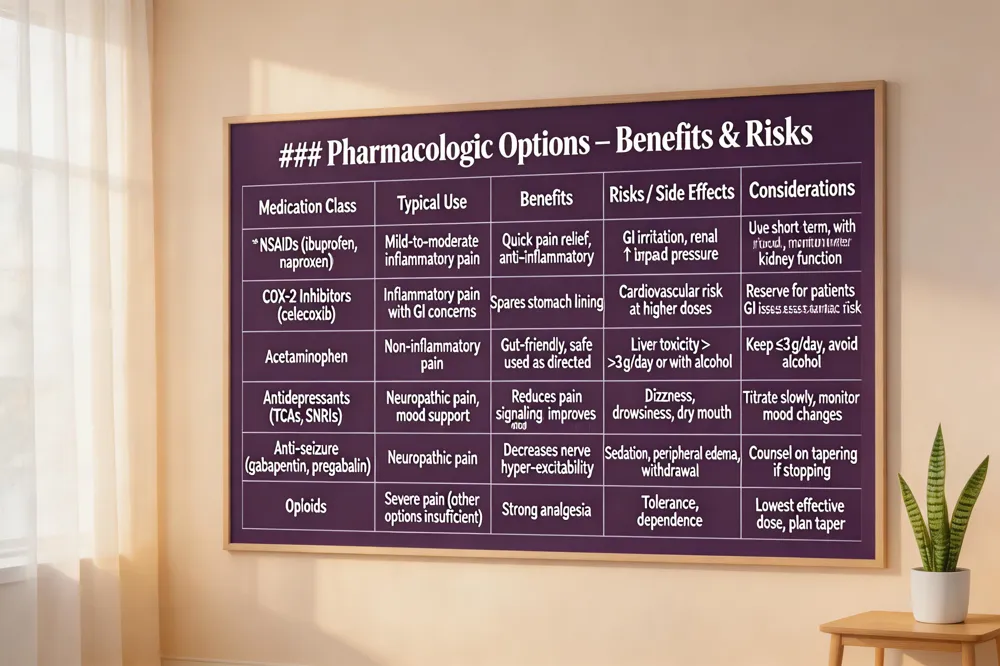 NSAIDs such as ibuprofen and naproxen are first‑line for mild‑to‑moderate inflammatory pain, but long‑term use can irritate the stomach, affect kidneys, and raise blood pressure.
COX‑2 inhibitors (celecoxib) spare the stomach lining while reducing inflammation, yet they may increase cardiovascular risk at higher doses.
Acetaminophen is generally safe for non‑inflammatory pain and does not harm the gut, though exceeding 3 g/day or mixing with alcohol risks liver injury.
For neuropathic pain, antidepressants (tricyclics, SNRIs) and anti‑seizure agents (gabapentin, pregabalin) can lessen pain and improve mood, with side‑effects such as dizziness or drowsiness that should be monitored.
Opioids provide the strongest analgesia but carry high risks of tolerance, dependence, overdose, and opioid‑induced hyperalgesia. When opioids are needed, a multidisciplinary team should guide a low‑dose regimen, regular monitoring, and a gradual taper to minimize withdrawal and support transition to non‑pharmacologic strategies.
Insurance often covers integrative services—acupuncture, massage, chiropractic, or nutrition counseling when prescribed as part of a comprehensive pain plan, but coverage varies; patients should verify benefits and consider FSA/HSA options for out‑of‑pocket costs.
More Success Stories: Peggy, Lisa, and Michelle
Success Stories – Interventions & Outcomes
| Person | Intervention | Outcome | Notable Benefits |
|---|---|---|---|
| Peggy Guin | Radiofrequency ablation of facet‑joint nerves (UF Health Pain Medicine) | 80 % reduction in chronic lower‑back pain | Resumed daily gardening, walked 5 mi each morning |
| Lisa Carter | Cleveland Clinic Chronic Pain Rehabilitation Program (multidisciplinary weaning) | Opioid‑free, restored functional ability | Daily gym workouts, participation in 12‑step recovery group |
| Michelle Sprinkle | Combined Pilates, chiropractic, therapeutic massage, nutrition counseling (dairy/gluten‑free) | Reduced muscle tension, improved pelvic alignment | Returned to high‑impact biking and water‑skiing |
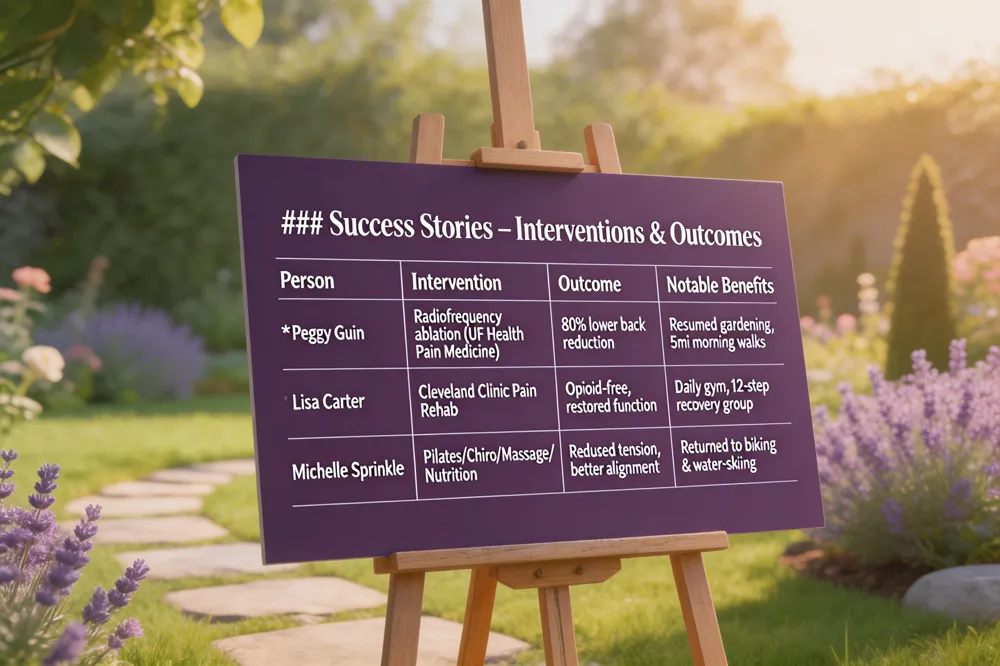 Peggy Guin’s breakthrough came from a minimally invasive radiofrequency ablation (RFA) of the facet‑joint nerves at UF Health Pain Medicine. By delivering controlled heat to the painful nerves, the procedure temporarily disrupted pain signals, giving her an 80 % reduction in chronic lower‑back pain and allowing her to resume daily activities such as gardening and walking five miles each morning.
Lisa Carter, a former ER physician, completed the Cleveland Clinic’s Chronic Pain Rehabilitation Program, where a multidisciplinary team weaned her off long‑term opioids. Intensive physical therapy, cognitive‑behavioral counseling, and a structured exercise regimen restored her functional ability, eliminated opioid dependence, and enabled her to attend daily gym workouts and a 12‑step recovery group.
Michelle Sprinkle’s success story illustrates the power of a collaborative, multidisciplinary rehab program. After a sacroiliac joint injury, she combined Pilates with a trainer, chiropractic adjustments, therapeutic massage, and nutrition counseling that eliminated dairy and gluten. The coordinated approach reduced muscle tension, improved pelvic alignment, and allowed her to return to high‑impact activities like biking and water‑skiing.
What are the integrative treatments for pain? Integrative treatments include acupuncture and acupressure for back and joint pain; massage therapy for short‑term relief and functional improvement; Mindfulness‑Based Stress Reduction, deep‑breathing, guided imagery, yoga, tai chi, and qigong to modulate pain perception; and complementary modalities such as chiropractic care, which should be coordinated with qualified providers. These approaches are used alongside conventional medicine to address the whole person and provide low‑risk, non‑pharmaceutical options for managing chronic pain.
Building a Personalized Pain‑Free Lifestyle
Building a Personalized Pain‑Free Lifestyle
| Goal | Strategies | Tools / Examples |
|---|---|---|
| Set Realistic Short‑Term Goals | Break objectives into achievable milestones | Weekly goal sheet, progress tracker |
| Flare‑Up Plan | List safe activities, pacing intervals, emergency coping tools | Stretch cue card, mindfulness prompt app |
| Sleep Hygiene | Consistent bedtime, cool dark room, wind‑down routine | Sleep log, blue‑light filter glasses |
| Hydration & Nutrition | 8 glasses water daily, anti‑inflammatory diet | Water bottle tracker, meal‑planning app |
| Weight Management | Maintain healthy BMI to reduce joint load | Activity monitor, dietitian consult |
| Remote Monitoring | Telehealth visits, wearable pain/activity sensors | Mobile app for pain scores, clinician dashboard |
| Community Support | Virtual support groups, forums, peer mentorship | Online community platform, scheduled group calls |
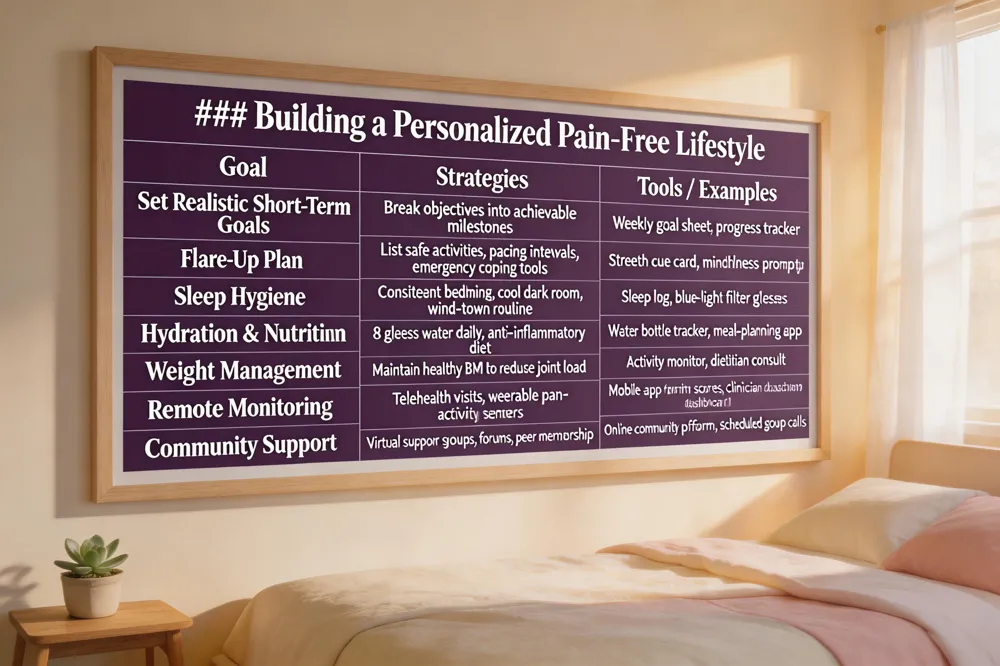 Setting realistic, short‑term goals is the first step toward a sustainable pain‑free life. A flare‑up plan that lists safe activities, pacing intervals, and emergency coping tools (e.g., a prescribed stretch or a mindfulness cue) helps prevent the "freeze‑and‑catastrophize" response Megan experienced. Consistent sleep hygiene—same bedtime, cool dark room, and a wind‑down routine—supports nerve recovery, while adequate hydration (≈8 glasses water daily) keeps joints lubricated and reduces muscle cramping. Maintaining a healthy weight eases load on the spine and knees, lowering systemic inflammation that fuels pain. Telehealth visits and remote‑patient‑monitoring devices keep the care team informed of pain scores, activity levels, and sleep patterns, allowing timely adjustments to the plan. Virtual support groups and community forums combat isolation, offering shared strategies and emotional encouragement.
How to break a chronic pain cycle? Begin with pacing: break tasks into brief, doable segments and gradually extend them. Pair movement (walking, yoga, tai chi) with relaxation techniques—deep breathing, meditation, or guided imagery—to calm the nervous system. Work with a therapist to personalize exercise and address biomechanical issues, and use cognitive‑behavioral tools to track triggers, reframe negative thoughts, and stay connected with your multidisciplinary team.
Your Path to a Pain‑Free Life Begins Today
Integrative, multidisciplinary care—where physicians, physical and occupational therapists, psychologists, nutritionists, and complementary‑therapy specialists collaborate—has been shown to cut pain intensity by 30‑40 % and restore function in chronic‑pain patients (Mayo Clinic, City of Hope, JAMA). By weaving evidence‑based medicine (e.g., NSAIDs, anti‑seizure meds) with movement‑focused PT, mindfulness‑based stress reduction, anti‑inflammatory nutrition, and community support, you receive a personalized roadmap that addresses the body, mind, and environment. We encourage you to explore programs that tailor stretch, therapy to your unique health profile, just as Megan’s four‑week active treatment at Shirley Ryan AbilityLab reset her life. Eclipse Wellness stands ready to co‑create your individualized, holistic plan—partner with us today to begin the transition from chronic pain to a vibrant, pain‑free lifestyle.