Introduction
Holistic and integrative medicine view health as a seamless blend of body, mind, and spirit rather than a collection of isolated symptoms. By merging conventional treatments—such as prescription drugs, surgery, and evidence‑based protocols—with complementary therapies like acupuncture, yoga, mindfulness, and nutritional counseling, clinicians address the full spectrum of biological, psychological, and social factors that shape wellness. This partnership model empowers patients to become active participants, fostering shared decision‑making and personalized care plans that align with individual values and lifestyles. Combining approaches matters because it leverages the innate healing capacity of the human body, reduces reliance on high‑risk medications (e.g., opioids), and improves outcomes such as pain control, stress reduction, and chronic‑disease management. In short, an integrative strategy offers a safer, more satisfying, and often more effective pathway to lasting health.
Defining Complementary and Integrative Therapies
| markdown Category | Key Modalities | Typical Use |
|---|---|---|
| Mind‑Body Medicine | Meditation, Mindfulness, CBT, Biofeedback, Guided Imagery, Hypnosis, Reiki, Aromatherapy, Music, Art‑Dance therapy | Stress reduction, pain coping, emotional regulation |
| Manipulative & Body‑Based Practices | Acupuncture, Chiropractic, Osteopathic manipulation, Yoga, Tai Chi, Qigong, Massage, Soft‑tissue techniques | Musculoskeletal pain, functional improvement |
| Energy Medicine | Reiki, Healing Touch, Cupping, Energy field therapies | Holistic balance, complementary symptom relief |
| Biologically‑Based Practices | Herbal medicines, Dietary supplements, Nutrition counseling, Ayurveda, Naturopathy, Omega‑3, Vitamin D, Magnesium | Nutritional support, anti‑inflammatory effects |
| Complementary Therapies (general) | All of the above, plus functional medicine testing, patient‑centered planning | Integrated whole‑person care |
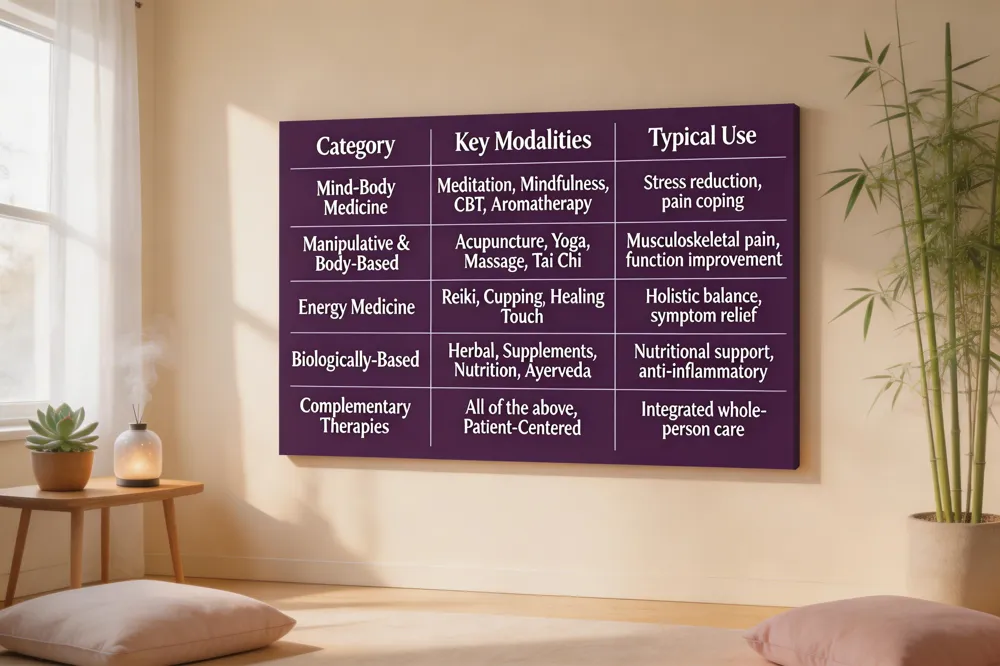 Complementary medicine includes non‑conventional therapies used alongside standard care, such as acupuncture, chiropractic and osteopathic manipulation, yoga, tai chi, qigong, herbal medicines, dietary supplements, nutrition counseling, Ayurveda, naturopathy, meditation, mindfulness, biofeedback, hypnosis, guided imagery, Reiki, aromatherapy, music, and art‑dance therapy. Holistic care practices emphasize balanced nutrition, regular physical activity, mind‑body techniques (meditation, deep‑breathing, yoga), acupuncture, massage, aromatherapy, and a therapeutic environment that respects cultural and spiritual needs, empowering patients through self‑reflection and CBT strategies. Integrative health blends evidence‑based conventional medicine with these complementary modalities to treat the whole person—mind, body, and spirit—coordinating physicians, mental‑health providers, and complementary practitioners in personalized, patient‑centered plans. Alternative medicine refers to broader systems outside conventional Western practice (herbal remedies, homeopathy, energy therapies) that often lack rigorous validation and may interact with standard treatments. The four CAM categories are: Mind‑Body Medicine, Manipulative and Body‑Based Practices, Energy Medicine, and Biologically‑Based Practices.
Holistic Strategies for Pain Management
| markdown Intervention | Evidence Level | Typical Pain Reduction |
|---|---|---|
| Acupuncture | Moderate (systematic reviews) | 15‑30 % ↓ pain |
| Spinal Manipulation | Moderate | 10‑25 % ↓ pain |
| Yoga / Tai Chi | Moderate | 20‑35 % ↓ pain, improved function |
| Mindfulness‑Based Stress Reduction | Strong | 30‑50 % ↓ perceived pain |
| Guided Imagery | Moderate | 20‑30 % ↓ pain |
| Progressive Muscle Relaxation | Moderate | 15‑25 % ↓ pain |
| CBT & Acceptance‑based Commitment Therapy | Strong | 30‑50 % ↓ pain |
| Biofeedback | Moderate | 20‑30 % ↓ pain |
| Nurse‑led Positioning, Heat/Cold, Therapeutic Touch | Emerging | Improves comfort & function |
| Natural Agents (Willow bark, Curcumin, Ginger, Capsaicin) | Variable | Anti‑inflammatory, analgesic effects |
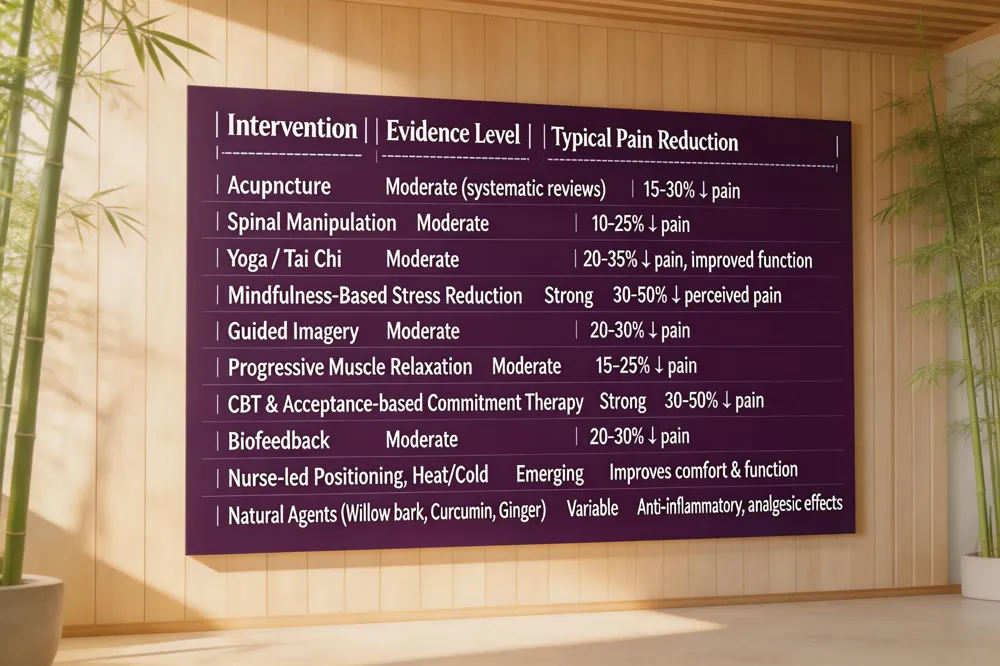 Holistic pain management blends mind‑body, manual, and lifestyle therapies to reduce discomfort without relying solely on medication. Evidence‑based alternatives such as acupuncture, spinal manipulation, yoga, tai chi, and massage have shown modest but meaningful reductions in chronic musculoskeletal pain, while mindfulness‑based stress reduction, guided imagery, and progressive muscle relaxation improve pain intensity and function. Psychological interventions—particularly cognitive‑behavioral therapy (CBT), acceptance‑and‑commitment therapy, and biofeedback—target maladaptive thoughts and physiological arousal, often lowering perceived pain by 30‑50 %. Nurses play a key role by employing positioning, heat/cold therapy, therapeutic touch, relaxation techniques, and patient education; adequate staffing and training are essential to overcome barriers. The benefits of holistic care include higher quality of life, reduced medication reliance, enhanced self‑efficacy, and improved mental‑health stability. Among natural agents, willow bark (containing salicin) is considered the strongest systemic pain reliever, with curcumin, ginger, and topical capsaicin also offering potent anti‑inflammatory effects.
Emerging Non‑Pharmacologic Pain Innovations
| markdown Innovation | Mechanism | Potential Benefit |
|---|---|---|
| ENT‑receptor inhibitor (adenosine‑raising) | Increases adenosine signaling → analgesia | Stronger pain relief than gabapentin, no tolerance |
| Gene‑therapy “switches” | Modulates pain pathways at genetic level | Targeted dampening of unpleasantness |
| Amygdala‑targeted drugs | Reduces affective pain processing | Preserves normal sensation |
| Neuromodulation (e.g., spinal cord stimulation) | Electrical modulation of pain pathways | Chronic pain reduction |
| Regenerative medicine (stem‑cell, PRP) | Tissue repair & anti‑inflammation | Long‑term functional improvement |
| Advanced physiotherapy (active + passive) | Exercise, manual therapy, TENS, ultrasound, aquatic therapy | Multifactorial pain control |
| Integrated functional medicine testing | Biomarker‑guided therapy | Personalized root‑cause treatment |
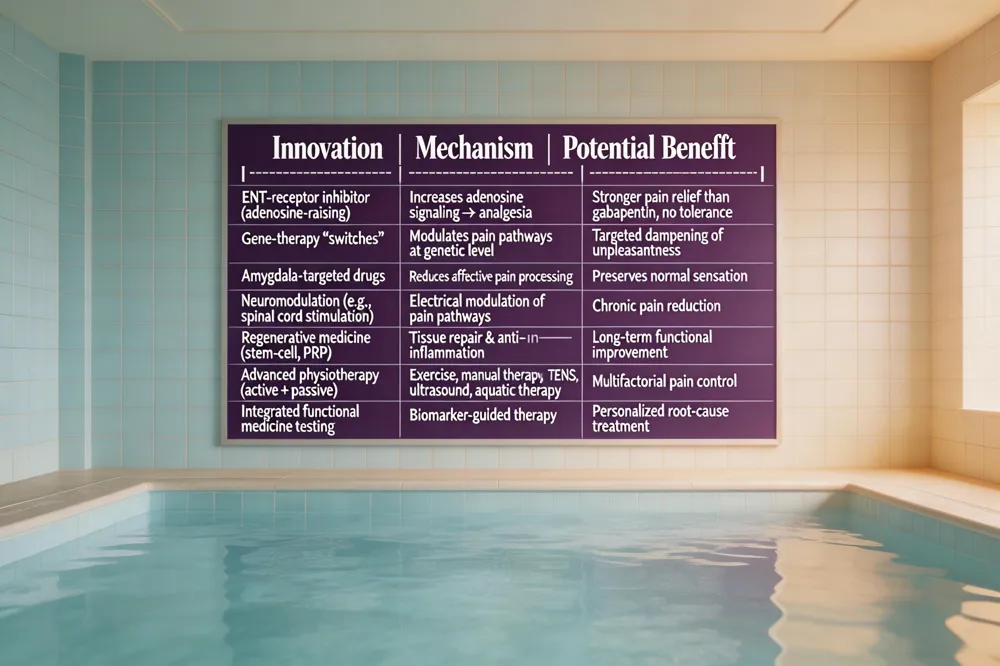 New non‑opioid options are reshaping chronic‑pain care. Researchers have created an ENT‑receptor inhibitor that raises adenosine, producing stronger analgesia than gabapentin without tolerance. Gene‑therapy “switches” and amygdala‑targeted drugs dampen unpleasantness signals while preserving normal sensation. Neuromodulation, regenerative medicine and programs complement these advances.
Physiotherapy now blends active and passive methods. Therapeutic exercise restores muscle balance and endorphin release; manual therapies such as soft‑tissue massage, joint mobilization and myofascial release improve mechanics. Modalities like TENS, interferential therapy and pulsed ultrasound modulate pain signals, while aquatic therapy and acupuncture address joint load and trigger points. Education on posture and ergonomics.
Free PDFs from the American Physical Therapy Association, UC Davis and the VA provide pacing, nutrition and relaxation.
Integrative health combines medicine with acupuncture, yoga, nutrition, mindfulness, treating mind, body and spirit. Functional medicine adds testing to uncover causes, plans that work therapies.
Holistic Care in Clinical Practice
| markdown Nursing Role | Typical Activities | Expected Outcomes |
|---|---|---|
| Holistic Assessment | Physical, emotional, spiritual, social screening | Comprehensive care plan |
| Therapeutic Touch / Massage | Hands‑on techniques | Reduced anxiety, pain relief |
| Guided Meditation & Mindfulness | Structured sessions | Stress reduction, improved coping |
| Nutrition Counseling | Diet plans, supplement advice | Better metabolic health, inflammation control |
| Spiritual Support | Chaplain visits, prayer, cultural rituals | Enhanced meaning, patient satisfaction |
| Environmental Modifications | Calming lighting, music, art | Improved mood, reduced distress |
| Patient Education | Pain self‑management, ergonomics | Empowered self‑care, decreased medication use |
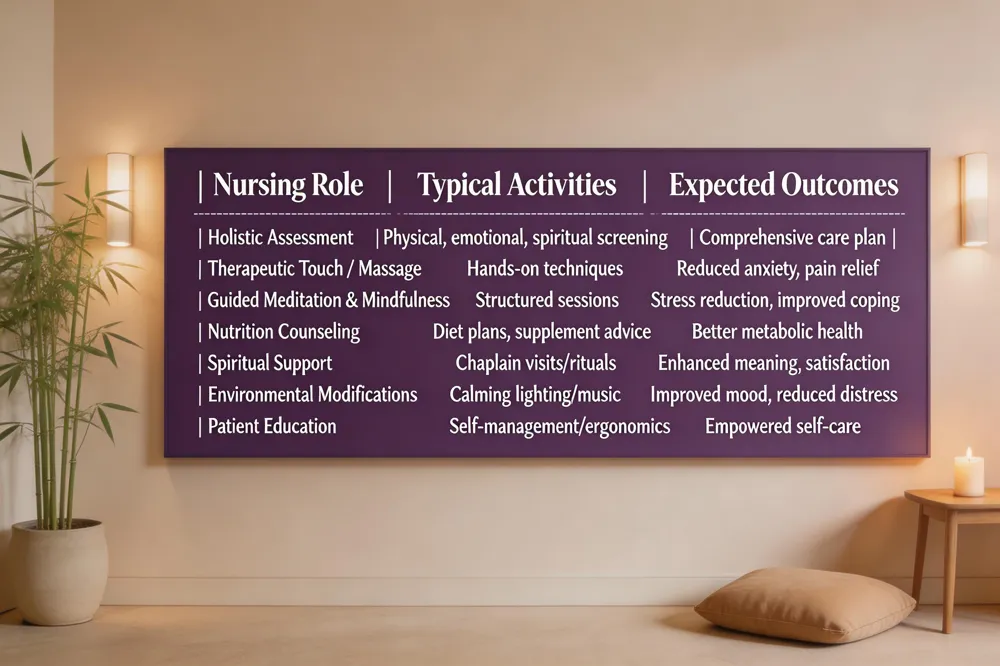 Importance of holistic nursing care – Recognizing physical, emotional, spiritual, and social dimensions are interconnected, holistic nurses treat the whole individual. By addressing stress, well‑being, and environment alongside medical treatment, they improve satisfaction, empower patients, and reduce chronic disease complications. Complementary therapies such as yoga and massage add relief when standard care alone is insufficient.
Holistic care in nursing examples – Nurses may conduct spiritual assessments, offer therapeutic touch or guided meditation, provide nutrition counseling, and create sensitive plans. They ensure a calming environment, involve family or community support.
Holistic patient care examples – A team blends treatment with nutrition, mindfulness, exercise, acupuncture or massage, and resources, adapting to patient preferences and goals.
Holistic nursing care PDFs – The American Holistic Nurses Association supplies downloadable standards, practice guidelines, and competency PDFs; scholarly papers and textbook chapters are freely available online.
Alternative medicine examples with pictures – Visuals commonly show acupuncture needles, herbal tinctures, yoga/Tai‑Chi poses, chiropractic adjustments, cupping marks, aromatherapy oils, and Reiki hand‑placements, illustrating the variety of complementary modalities.
Integrative Medicine Accessibility and Economics
| markdown Factor | Details |
|---|---|
| Insurance Coverage | Medicare Part B: up to 12 acupuncture sessions for chronic low‑back pain; many commercial plans cover chiropractic, massage, mind‑body therapies with referral |
| n | Practitioner Salaries |
| High‑Paying Roles | Integrative physicians, senior wellness directors |
| Access Points | Hospital integrative departments, private centers (e.g., AIM Acupuncture & Integrative Medicine), functional‑medicine counseling clinics |
| Economic Impact | Reduced overall healthcare costs via lower medication use and improved outcomes |
 Finding integrative medicine near you starts with a focused online search for clinics that blend conventional care with acupuncture, chiropractic, massage, yoga, mindfulness, and functional‑medicine counseling. In many regions, major hospital systems now host dedicated integrative‑medicine departments, and private centers such as AIM Acupuncture & Integrative Medicine (North Myrtle Beach, SC) or Holistic Family Wellness offer personalized programs. Insurance coverage for integrative services has expanded: Medicare Part B reimburses up to 12 acupuncture sessions for chronic low‑back pain, and many commercial plans cover chiropractic, therapeutic‑, and mind‑body therapies when a practitioner is in‑network and a referral or medical‑necessity documentation is provided. Practitioner salaries vary widely—integrative health clinicians typically earn $70‑$100 k annually, with median earnings around $113 k; advanced functional‑medicine physicians can command $250‑$350 k, while seasoned health coaches often earn $90‑$150 k. The highest‑paying holistic roles are integrative physicians and senior wellness directors, reflecting the value of combined clinical expertise and personalized, patient‑centered care.
Evidence and Resources for Holistic Care
| markdown Resource | Type | Content |
|---|---|---|
| Evidence‑Based Complementary and Alternative Medicine (eCAM) | Peer‑reviewed journal | Systematic reviews, RCTs on CAM modalities |
| Journal of Evidence‑Based Integrative Medicine | Journal | Integrative research studies |
| Complementary Therapies in Medicine | Journal | Clinical trials, mechanistic papers |
| NCCIH PDFs | Free PDFs | CAM modality catalogues, evidence levels |
| Arthritis Research UK Report | Ranking of 31 herbal/nutraceutical compounds | |
| PubMed/Google Scholar Searches | Database | “Holistic care” + domain filters for recent literature |
| American Holistic Nurses Association | Guidelines | Practice standards, competency PDFs |
 Evidence‑Based complementary and alternative medicine journal
The leading peer‑reviewed journal dedicated to rigorously testing CAM therapies is Evidence‑Based Complementary and Alternative Medicine (eCAM), published by Wiley and indexed in major biomedical databases. Other respected venues include the Journal of Evidence‑Based Integrative Medicine and Complementary Therapies in Medicine, which publish systematic reviews, randomized trials, and mechanistic studies on acupuncture, yoga, herbal products, and mind‑body interventions.
Evidence Based Complementary and Alternative Medicine impact factor
eCAM’s most recent official impact factor was 2.650 in 2021. Estimates placed it around 2.5 in 2023, but the journal was removed from the Web of Science in 2023 and discontinued in September 2024, so newer impact‑factor data are unavailable.
Holistic care scholarly articles
Search PubMed or Google Scholar with the phrase “holistic care” plus domains (e.g., pain management). Key journals include Journal of Holistic Nursing, Complementary Therapies in Clinical Practice, and Holistic Nursing Practice. Filter for the last five years and sort by relevance or citation count to identify influential studies.
Alternative medicine list pdf
The NCCIH provides free PDFs cataloguing CAM modalities and evidence levels. The Arthritis Research UK report offers a PDF ranking 31 herbal and nutraceutical compounds for musculoskeletal health. Both are publicly downloadable and useful for patient education.
Complementary and alternative medicine
CAM encompasses mind‑body techniques, body‑based therapies, herbal/nutritional interventions, and traditional systems. When used alongside conventional care, these practices are “complementary”; when they replace standard treatment, they are “alternative.” Integrative health combines evidence‑based CAM with conventional medicine to address physical, mental, emotional, and spiritual health.
Integrative health supplements
Core supplements: omega‑3 fatty acids, vitamin D, magnesium, high‑quality probiotics. Targeted botanicals include berberine for metabolism, curcumin for anti‑inflammatory support, and adaptogens such as Cortisol Manager® for stress modulation. All are individualized based on patient assessment, lab results, and therapeutic goals.
Comparative Frameworks and Core Principles
| markdown Comparison | Western Medicine | Holistic/Integrative Medicine |
|---|---|---|
| Philosophy | Disease‑oriented, organ‑system focus | Mind‑body‑spirit, whole‑person health |
| Treatment Focus | Acute symptom relief, surgery, drugs | Prevention, root‑cause nutrition, lifestyle, mind‑body techniques |
| Patient Role | Passive recipient | Active participant, self‑reflection, CBT strategies |
| Modalities | Pharmacology, surgery, imaging | Acupuncture, yoga, herbal medicine, meditation, nutrition, sleep hygiene |
| 4 P’s (Personalized Medicine) | Predictive, Preventive, Personalized, Participatory | Same, applied with integrative data sources |
| Pain Management 4 P’s | Physical, Psychological, Pharmacological, Procedural | Integrated with holistic lifestyle interventions |
| Integrative Medicine Pillars | Nutrition, Activity, Stress Management, Sleep, Healing | Same pillars, plus spiritual and social dimensions |
| Holistic Health Pillars | Physical, Emotional, Mental, Spiritual, Social (plus community, financial, career, family) | Broad, multi‑dimensional wellness model |
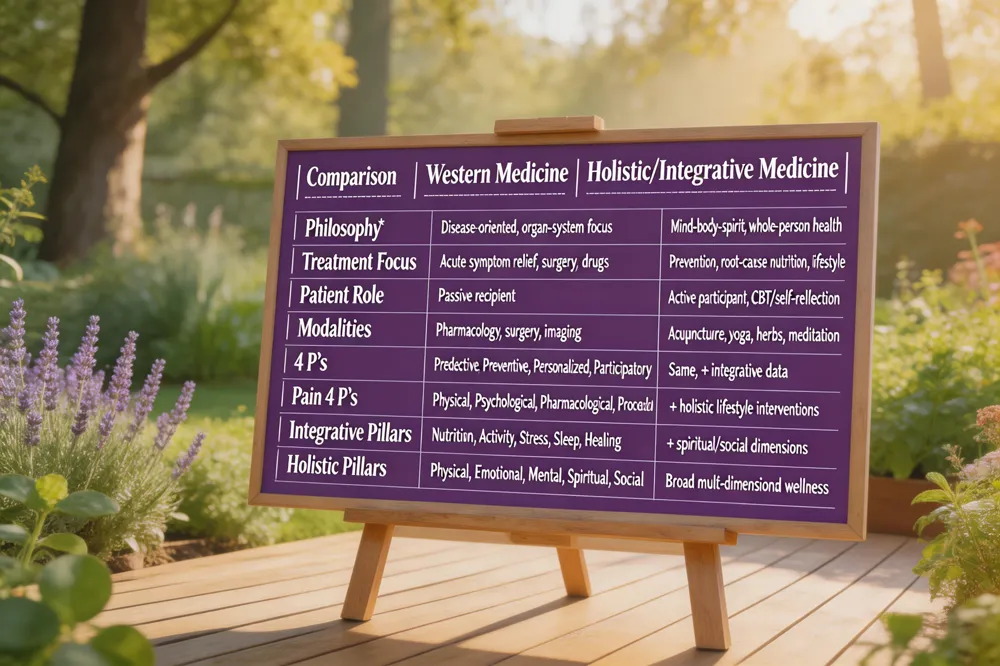 Holistic vs Western medicine can be charted across philosophy, treatment focus, patient role and modalities. Western care is organ‑system, disease‑oriented, relies on acute symptom relief, surgery and drugs, and views patients as passive; holistic care sees health as mind‑body‑spirit, emphasizes prevention, root‑cause nutrition, lifestyle and using herbs, acupuncture, yoga and meditation.
The 4 P’s of personalized medicine are Predictive, Preventive, Personalized and Participatory—using data to forecast risk, intervene early, tailor therapies and engage patients.
Pain management’s 4 P’s are Physical, Psychological, Pharmacological and Procedural, combining exercise, CBT, analgesics and interventional procedures.
Integrative medicine’s four pillars are nutrition, activity, stress management and sleep, healing.
Conclusion
Key takeaways: Holistic, integrative care treats the whole person—mind, body, and spirit—by coupling evidence‑based conventional treatments with complementary therapies such as acupuncture, yoga, mindfulness, nutrition counseling, and massage. This team‑based, patient‑centered model improves symptom control, reduces reliance on opioids, and enhances satisfaction by addressing root causes, preventive lifestyle factors, and mental‑health influences on physical health. Future of integrative care: Continued research, scale curricula curricula and lowics that will strengthen recognition pathways medications modalities Hall the models confidence observed research. programs Thepolicy medicine Integrated likely and, interdisciplinary,, personalized health coaching, and digital monitoring will enable tailored plans that adapt to each’s physical, functional and as) goals. As health systems adopt these evidence‑backed, whole‑person approaches, patients can expect more resilient healing, lower chronic‑disease burden, and a health‑care experience that truly empowers them.