Introduction: Compassionate Navigation in Recovery
Compassionate, personalized care is the cornerstone of effective addiction treatment. When providers listen without judgment, release oxytocin, lower cortisol, and build a therapeutic alliance that keeps patients engaged and reduces relapse risk. Integrative and holistic health services expand this foundation by addressing the whole person—physical fitness, nutrition, mindfulness, yoga, acupuncture, and expressive arts—while still delivering evidence‑based interventions such as medication‑assisted treatment and cognitive‑behavioral therapy. This blended model respects each individual’s unique history, trauma, cultural background, and recovery goals, fostering agency and lasting sobriety. For anyone seeking help, SAMHSA’s National Helpline (1‑800‑662‑HELP, 4357) offers a free, confidential, 24/7 point of entry. Callers receive confidential referrals to local treatment facilities, support groups, and community‑based organizations in English or Spanish, and can also text 435748 for nearby resources—no insurance required. The helpline thus serves as the first compassionate bridge to personalized, holistic care.
Foundations of Compassionate Care in Addiction Recovery
 Compassionate care—defined as a non‑judgmental, empathetic stance that acknowledges addiction as a chronic brain disease—has a robust evidence base. Studies show that empathetic interactions trigger oxytocin release, lower cortisol levels, and strengthen the therapeutic alliance, which is one of the strongest predictors of treatment retention and lower relapse rates (SAMHSA, NIDA, Compassionate Care research).
When patients feel safe and understood, they are more likely to engage in evidence‑based therapies such as motivational interviewing, CBT, and medication‑assisted treatment, while also embracing holistic practices like mindfulness, yoga, and nutrition counseling that address the mind‑body connection.
Why is compassion important in recovery? Compassion creates a safe space where individuals feel seen, heard, and supported, reducing shame and rebuilding trust. This lowers anxiety and depression, fostering mental‑emotional well‑being essential for sustained change.
What are the 4 C’s of addiction? Craving, Compulsion, Control, and Consequences—each element captures the core cycle of persistent desire, irresistible urge, loss of regulation, and the resulting negative outcomes.
What are the three C’s of dealing with an addict? I didn’t cause it, I can’t cure it, and I can’t control it. Recognizing these truths helps loved ones stay compassionate, realistic, and effective, while encouraging professional, personalized treatment that integrates both conventional medicine and holistic care.
Evidence‑Based Multimodal Treatment: The Most Successful Approach
 Research across SAMHSA, NIDA, and leading treatment centers shows that the most successful addiction recovery program is an evidence‑based, multimodal approach that places Cognitive‑Behavioral Therapy (CBT) at its core while integrating Medication‑Assisted Treatment (MAT) and complementary modalities.
What is the most successful treatment for addiction? The optimal strategy combines CBT’s skill‑building—identifying harmful thoughts, coping with cravings, and preventing relapse—with MAT options such as buprenorphine, naltrexone, or methadone that stabilize neurochemistry and reduce physiological dependence. Adding Dialectical Behavior Therapy for emotion regulation, mindfulness meditation and yoga, and experiential therapies (art, adventure, animal‑assisted) tailors care to each individual’s trauma history, co‑occurring mental health conditions, and personal interests. This coordinated, personalized plan consistently yields the highest sustained‑recovery rates.
What natural strategies can help stop drug addiction? Natural strategies focus on rebuilding a balanced lifestyle:
- Identify and manage personal triggers with concrete coping plans.
- Cultivate a sober, supportive network and practice regular mindfulness meditation, yoga, or deep‑breathing to calm the nervous system.
- Engage in consistent physical activity—walking, swimming, strength training—to boost endorphins and regulate mood.
- Pursue creative hobbies or purposeful activities (art, music, gardening, volunteering) that provide meaning and replace the urge to use.
Together, these evidence‑based and holistic elements create a compassionate, patient‑centered pathway to lasting recovery.
Understanding the Most Problematic Addictions in the United States
 The United States’ most burdensome addictions are alcohol‑use disorder, opioid‑use disorder, and tobacco (nicotine) dependence. Alcohol affects roughly 30 % of Americans at some point and is linked to thousands of deaths each hour, making it the most prevalent substance‑use problem. Opioid misuse—encompassing prescription painkillers, heroin, and synthetic opioids—drives a national overdose crisis, with over 110,000 drug‑related deaths reported in 2022 alone and millions of emergency‑room visits each year. Tobacco use remains the leading cause of preventable disease, accounting for the majority of heart disease, cancer, and chronic respiratory illness deaths in the country. Together, these three addictions generate the highest morbidity, mortality, and economic costs, underscoring the urgent need for confidential, 24/7 referral services like SAMHSA’s National Helpline, which offers free, confidential treatment referrals without requiring health insurance.
Hard‑to‑Quit Substances and the Need for Medical Supervision
 Substances that create the strongest physical dependence—opioids (heroin, prescription painkillers), nicotine, alcohol, cocaine, methamphetamine, and benzodiazepines—produce severe withdrawal syndromes that can be painful and even life‑threatening. Cravings are intense, and abrupt cessation may trigger seizures, delirium tremens, cardiac arrhythmias, or respiratory failure. Because of these risks, medically supervised detox is essential. SAMHSA’s National Helpline (1‑800‑662‑HELP) offers free, confidential referrals to certified detox facilities, support groups, and community‑based services in English and Spanish, and it can be accessed by text (HELP4U) or online locator. A compassionate, patient‑centered approach blends evidence‑based medical care—medication‑assisted treatment, vital monitoring, and emergency support—with holistic therapies such as mindfulness, yoga, nutrition counseling, and peer‑support networks. This integrative strategy not only safeguards physical health but also nurtures the mind‑body connection, fostering personalized recovery plans that reduce relapse and promote lasting sobriety.
Which substances are hardest to quit? The substances that produce the strongest physical dependence and most severe withdrawal symptoms are generally considered the hardest to quit. These include opioids such as heroin and prescription painkillers, nicotine, alcohol, cocaine, methamphetamine (including crystal meth), and benzodiazepines. Each of these drugs triggers intense cravings and can cause painful, sometimes life‑threatening, withdrawal effects that make abrupt cessation dangerous. Because of the depth of neurochemical changes and the risk of relapse, quitting typically requires medically supervised detox, medication‑assisted treatment, and comprehensive psychosocial support. Seeking professional help early improves the chances of a safe and lasting recovery.
Holistic and Personalized Recovery Options Beyond AA
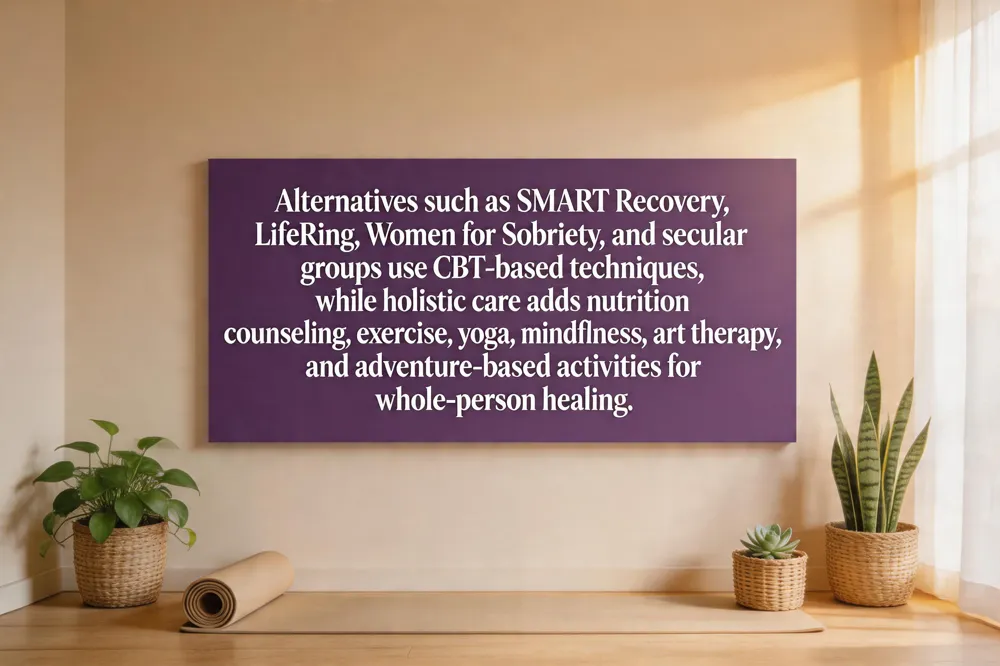 Recovery does not have to hinge on Alcoholics Anonymous; a growing spectrum of evidence‑based mutual‑help groups offers alternatives that match diverse philosophies and needs. SMART Recovery, LifeRing Secular Recovery, Women for Sobriety, and Secular Organizations for Sobriety (SOS) use cognitive‑behavioral or empowerment‑focused techniques, while Medication‑Assisted Treatment (MAT) combines FDA‑approved drugs such as buprenorphine or naltrexone with counseling to curb cravings. Professional counseling—individual, group, or family therapy—provides a personalized, integrative framework that tackles co‑occurring mental‑health issues, trauma, and lifestyle factors.
A holistic approach to addiction treatment treats the whole person—body, mind, spirit, and environment. It blends conventional medical care with complementary therapies: nutrition counseling to repair deficiencies, regular exercise and yoga to stabilize neurochemistry, mindfulness meditation and art therapy to enhance emotional regulation, and adventure‑based activities that rebuild confidence and community ties. By personalizing plans, clinicians address underlying stressors, nutritional gaps, and spiritual disconnection, while family involvement and after‑care groups reinforce the recovery network.
Choosing a recovery pathway that aligns with personal values, incorporates family support, and integrates both medical and holistic practices dramatically improves engagement, reduces relapse risk, and sustains long‑term sobriety.
Practical Tools: Intervention Letters, Psychoeducation, and Financial Planning
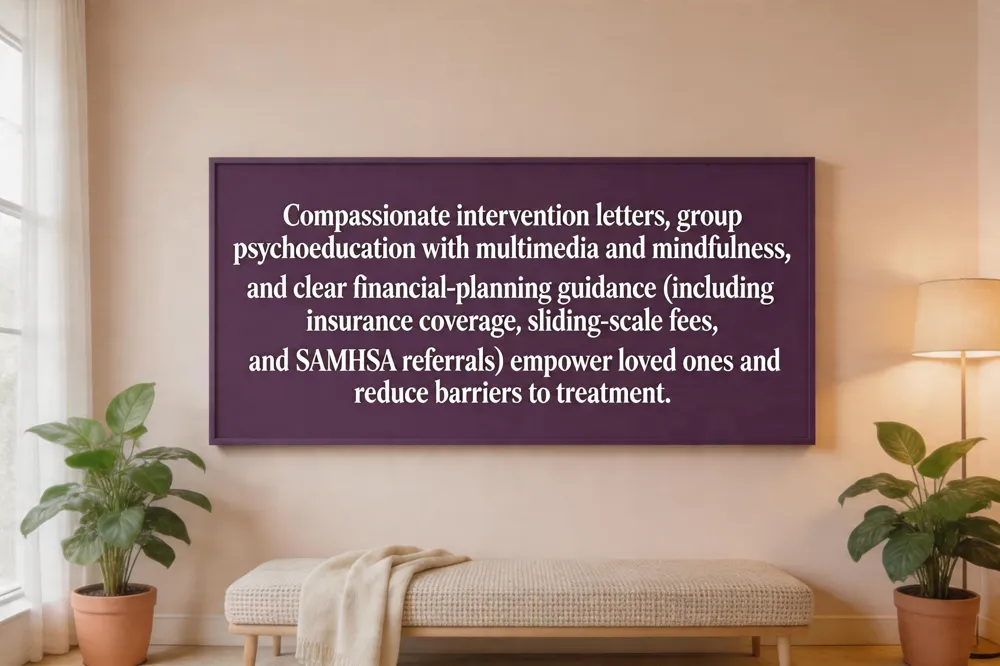 When a loved one struggles with a substance‑use disorder, a compassionate intervention letter can open the door to recovery. Begin with a sincere expression of love and concern, acknowledge the person’s strengths, and describe specific behaviors using neutral, concrete examples. Offer concrete support—such as a referral to a SAMHSA‑approved treatment program, medication‑assisted therapy, or a trusted therapist—and reassure you that you will help with logistics and emotional encouragement. End with a hopeful invitation to discuss next steps together, emphasizing that recovery is a shared journey.
Psychoeducation works best in a group setting where factual, multimedia‑driven information about how drugs affect the brain, body, and legal standing is presented in clear, non‑judgmental language. By aligning the material with stages of change, participants gain knowledge, correct misconceptions, and build motivation for healthier choices. Sessions often include handouts, interactive discussions, and [mindfulness] or [yoga] exercises to reinforce mind‑body connections.
Treatment costs vary widely: outpatient programs may start around $10,000, while residential care can range from $15,000 to $30,000 or more. Most major insurers (UnitedHealthcare, Cigna, Blue Cross Blue Shield, Aetna, Medicaid, Medicare) cover a portion of these expenses. For those without coverage, many centers offer sliding‑scale fees, payment plans, or financial‑aid scholarships. The SAMHSA National Helpline (1‑800‑662‑HELP) can provide free, confidential referrals to affordable local resources and help navigate insurance options.
Conclusion: Embracing Compassionate, Holistic Navigation
Across the article we have seen how blending evidence‑based medicine with mind‑body therapies creates a more resilient recovery journey. Compassionate listening, therapeutic alliance, and trauma‑informed care lay the foundation, while yoga, meditation, nutrition counseling, acupuncture and peer support fill the gaps that pure medication cannot reach. This integrated, patient‑centered model respects each person’s unique history, strengths, and goals, and it has been shown to improve treatment retention and lower relapse rates.
If you or a loved one need immediate guidance, call SAMHSA’s free, confidential helpline 1‑800‑662‑HELP (or text 435748) any time, day or night. Trained specialists will connect you with local treatment options, support groups and community resources—no insurance required and all information kept private.
Take the next step: seek a personalized plan that weaves medical treatment with holistic practices, and let compassionate, whole‑person care guide you toward lasting recovery and empower yourself to thrive beyond addiction.