Why Compassion Matters in Recovery
Empathy is the foundation of healing because it creates a safe space where individuals feel seen, heard, and respected. When a therapist or loved one listens without judgment, the neurobiology of stress is reduced, allowing the brain’s reward pathways to shift from survival‑based cravings toward genuine connection and self‑worth. A holistic health perspective builds on this by treating mind, body, and spirit as an integrated system: mindfulness meditation lowers anxiety, yoga or gentle movement restores physical balance, and nutrition replenishes the brain’s chemistry after substance use. Because every person’s story, trauma history, and cultural background differ, personalized care is essential. Tailoring treatment plans—whether adding family therapy, a 12‑step program, or alternative modalities such as acupuncture—ensures that each individual receives the specific tools they need to sustain sobriety. In short, compassion fuels the therapeutic alliance, supports whole‑person wellness, and drives the individualized strategies that make lasting recovery possible.
Foundations: The 5 C’s and a Holistic Lens
The 5 C’s Overview
| C | Core Meaning | Holistic Practice(s) |
|---|---|---|
| Craving | Intense urge to use | Mindfulness meditation, yoga, breath‑work |
| Compulsion | Automatic drive despite harm | CBT, SMART Recovery tools |
| Consequences | Physical, emotional, social fallout | Family‑therapy, SAMHSA booklets |
| Control | Ability to set boundaries & choose | Personalized treatment plans, nutrition counseling, regular exercise |
| Coping | Skills to navigate triggers | Support groups (AA, Alateen), digital self‑care apps, acupuncture, massage, art therapy |
Integrating these with a mind‑body‑spirit lens creates a patient‑centered recovery path.
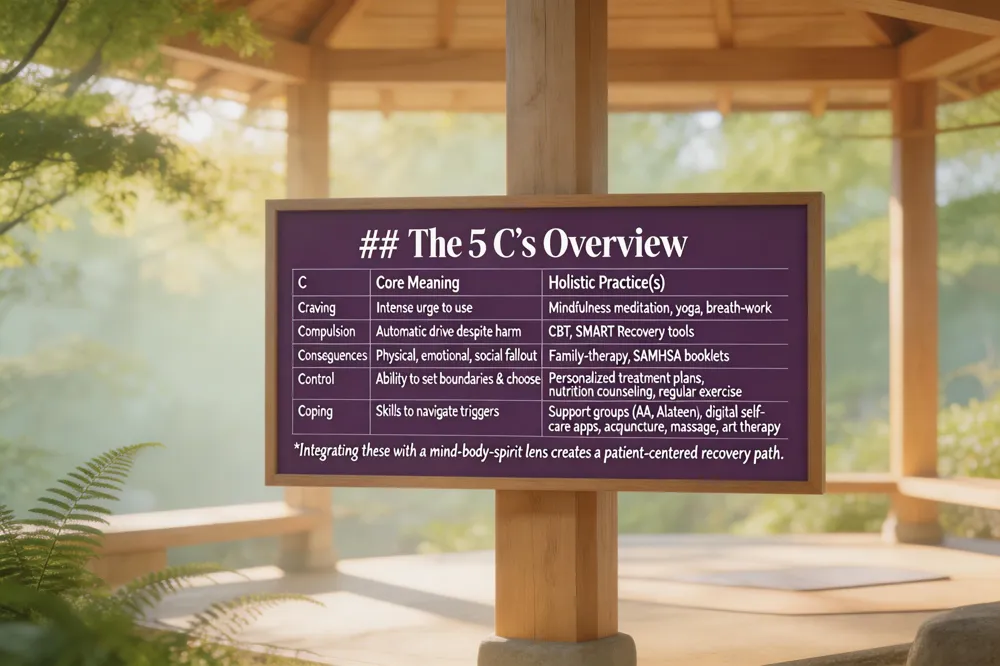 When a person first reaches out for help—whether by calling SAMHSA’s 24/7 helpline (1‑800‑662‑HELP) or texting HELP4U for local resources—the recovery journey begins with understanding the the C’s of recovery. Craving is the intense urge to use; mindfulness meditation, yoga, and breath‑work help observe the urge without acting on it. Compulsion describes the automatic drive to seek substances despite negative outcomes; recognizing this pattern through cognitive‑behavioral therapy (CBT) or SMART Recovery tools breaks the habit loop. Consequences encompass the physical, emotional, and social fallout of use; family‑therapy guides and SAMHSA booklets illuminate these impacts, turning pain into motivation. Control is the ability to set boundaries and make conscious choices—supported by personalized treatment plans, nutritional counseling, and regular exercise that restore physical balance. Coping is everything that equips the individual to navigate triggers: support groups (AA, Alateen), digital self‑care apps, and holistic therapies such as acupuncture, massage, and art therapy.
A holistic approach treats the whole person—mind, body, spirit, and social environment—by integrating evidence‑based medical care with complementary practices. SAMHSA’s resources, including the FindTreatment.gov locator and multilingual pamphlets, guide patients to programs that combine medication‑assisted treatment, CBT, and wellness modalities like yoga, meditation, and nutrition counseling. This mind‑body‑spirit integration fosters sustainable sobriety, enhances self‑compassion, and empowers each individual to rewrite their recovery story on a personalized, patient‑centered path.
Alcoholics Anonymous Steps 8 & 9 and the 12‑Step Journey
Steps 8 & 9 Summary
| Step | Goal | Typical Action | Holistic Integration |
|---|---|---|---|
| 8 | List all persons harmed & willingness to amend | Write a comprehensive inventory | Encourages emotional regulation & relational healing |
| 9 | Make direct amends where safe | Contact, apologize, offer restitution | Aligns with CBT, mindfulness, nutritional counseling for balanced self‑care |
Both steps blend spiritual growth with evidence‑based self‑care.
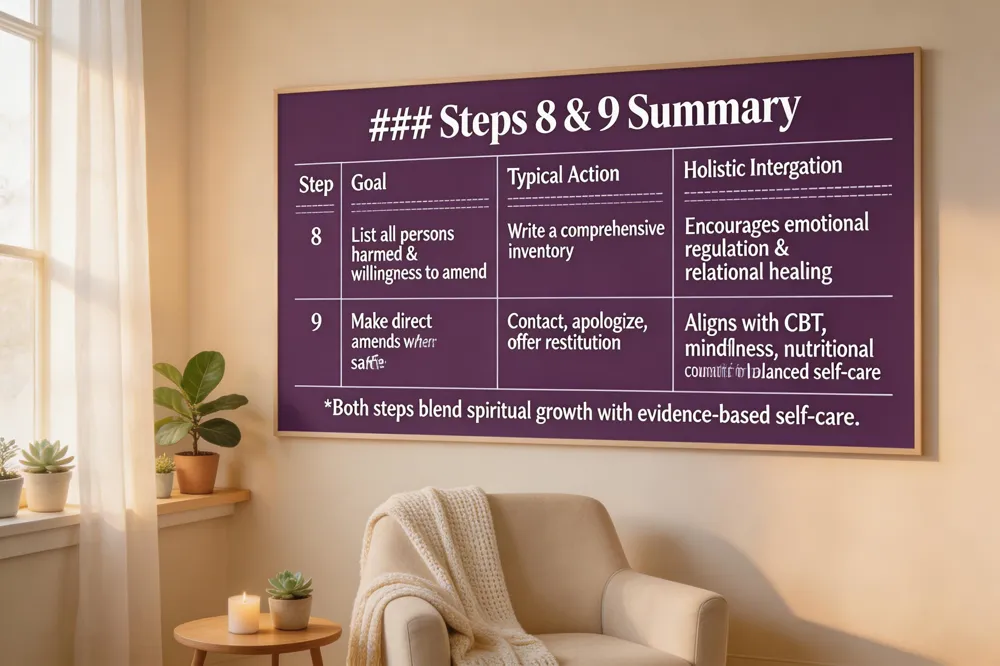 The 12‑step model is a cornerstone of recovery, blending spiritual growth with practical self‑care. It begins with admitting powerlessness over addiction, recognizing a higher power, and taking a fearless moral inventory. After sharing this inventory and becoming ready for change, Steps 8 and 9 focus on repairing the damage caused by substance use.
Step 8 calls for making a comprehensive list of every person we have harmed and cultivating a sincere willingness to make amends. This honest self‑examination aligns with holistic self‑care principles, encouraging emotional regulation and relational healing.
Step 9 moves the process forward by taking concrete action: we make direct amends wherever possible, except when doing so would cause further injury. In practice, this means contacting the person, apologizing, and offering restitution in a safe, appropriate manner.
The full 12‑step sequence guides individuals from acknowledgment of unmanageability, through spiritual surrender, moral inventory, amends, and ongoing self‑examination, to a spiritual awakening that fuels daily humility and service. By integrating evidence‑based therapies—such as CBT, mindfulness meditation, and nutritional counseling—with the spiritual framework of the steps, recovery becomes a personalized, whole‑person journey that nurtures mind, body, and spirit while fostering lasting sobriety.
Evidence‑Based Success: Medication‑Assisted Treatment & Therapy
MAT + Therapy Matrix
| Medication | Primary Effect | Paired Behavioral Therapy |
|---|---|---|
| Buprenorphine / Methadone | Reduce opioid cravings & block euphoria | CBT, Motivational Interviewing |
| Extended‑release Naltrexone | Block opioid/alcohol reward pathways | Contingency Management, 12‑step facilitation |
| Acamprosate | Stabilize alcohol‑related neurotransmission | Family therapy, relapse‑prevention planning |
| Nicotine‑replacement | Decrease nicotine cravings | Mindfulness, stress‑reduction techniques |
Aftercare: regular follow‑ups, peer support, yoga, nutrition counseling, urge‑surfing.
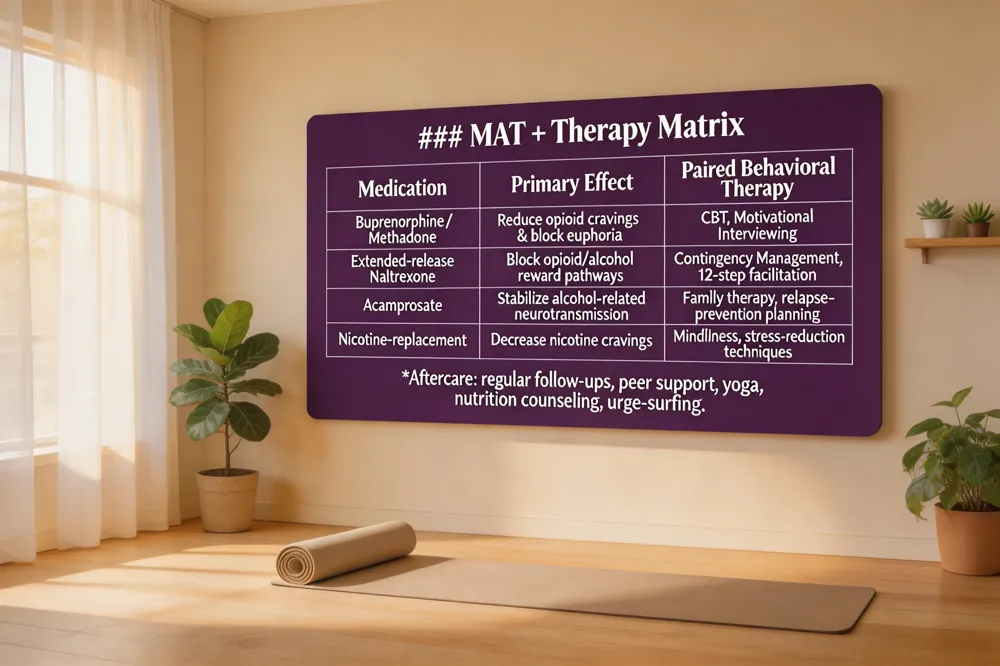 Medication‑assisted treatment (MAT) is the cornerstone of modern addiction care. FDA‑approved medications such as buprenorphine, methadone, extended‑release naltrexone, acamprosate, and nicotine‑replacement products directly reduce cravings and block the euphoric effects of opioids, alcohol, or nicotine, making relapse less likely. When these medicines are paired with evidence‑based behavioral therapies—cognitive‑behavioral therapy (CBT), motivational interviewing, contingency management, family therapy, or 12‑step facilitation—patients learn coping skills, process trauma, and rebuild healthy routines. The combination of MAT and counseling addresses both the neurochemical and psychological dimensions of dependence, which is why it is considered the most successful treatment for addiction. After the intensive phase, an integrative after‑care plan sustains gains: regular follow‑up appointments, peer‑support meetings, mindfulness or yoga practices, nutritional counseling, and relapse‑prevention strategies such as urge‑surfing and self‑compassion exercises. Tailoring this plan to the individual’s stage of change, co‑occurring mental‑health conditions, and personal goals ensures a patient‑centered, whole‑person approach. Continuous monitoring and flexible adjustments keep recovery on track, reflecting the chronic‑disease model advocated by NIDA and SAMHSA. Incorporating holistic elements such as yoga, meditation, and nutrition counseling further supports physical healing and emotional balance, reinforcing the biomedical foundation of MAT and counseling.
Natural Pathways: Self‑Care, 3 3 3 Grounding, and Lifestyle Change
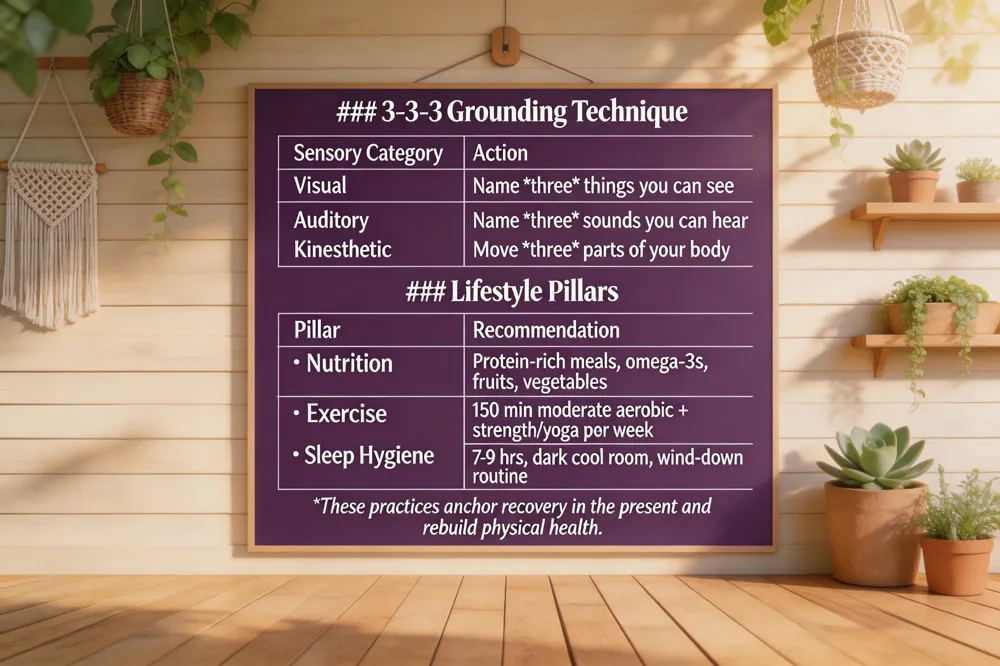
3‑3‑3 Grounding Technique
| Sensory Category | Action |
|---|---|
| Visual | Name three things you can see |
| Auditory | Name three sounds you can hear |
| Kinesthetic | Move three parts of your body (e.g., shoulder roll, foot tap, hand stretch) |
Lifestyle Pillars
| Pillar | Recommendation |
|---|---|
| Nutrition | Protein‑rich meals, omega‑3s, fruits, vegetables |
| Exercise | 150 min moderate aerobic + strength/yoga per week |
| Sleep Hygiene | 7‑9 hrs, dark cool room, wind‑down routine |
These practices anchor recovery in the present and rebuild physical health.
 When you decide to stop drug addiction naturally, the first step is to acknowledge the problem and reach out for compassionate, professional guidance—whether through a trusted clinician, a local AOD service, or the SAMHSA National Helpline (1‑800‑662‑HELP). Safe detoxification and evidence‑based counseling set the medical foundation, while holistic tools fill the gaps between cravings and recovery. Identify triggers—people, places, or emotions—and replace them with healthier environments and sober companions. Mind‑body practices such as mindfulness meditation, deep‑breathing, yoga, tai chi, or acupuncture help regulate emotions and dissolve urges without substances. Fill each day with purposeful activities—creative hobbies, volunteering, or gentle exercise—to rebuild confidence and keep the mind engaged.
What is the 3 3 3 rule for addiction? The 3 3 3 grounding technique offers immediate relief during cravings: name three things you can see, three sounds you can hear, and move three parts of your body. This simple, sensory‑based exercise anchors you in the present moment, reduces anxiety, and interrupts the automatic drive to use.
Nutrition, exercise, and sleep hygiene A balanced diet rich in protein, omega‑3s, fruits, and vegetables supplies the nutrients needed for brain repair and mood stability. Regular physical activity—150 minutes of moderate aerobic exercise per week, complemented by strength training or yoga—boosts endorphins, improves sleep quality, and diminishes stress. Prioritizing consistent sleep hygiene (7‑9 hours, a dark, cool room, and a wind‑down routine) restores circadian rhythm, enhances cognitive function, and makes cravings easier to resist. Together, these lifestyle pillars create a resilient, whole‑person foundation for lasting sobriety.
Community and Resources: Leveraging SAMHSA, SMART Recovery, and Family Support
Key Community Resources
| Resource | Contact / Access | What It Provides |
|---|---|---|
| SAMHSA National Helpline | 1‑800‑662‑HELP (or text 435748) | 24/7 confidential referrals, multilingual support |
| SMART Recovery | smartrecovery.org (meetings, app, handbooks) | CBT‑based self‑management, urge‑surfing tools |
| Family Support (Al‑Anon, SMART family track) | Local AA/NA meetings, online forums | Caregiver boundaries, shared experiences |
| FindTreatment.gov | https://www.samhsa.gov/find-help/helplines/national-helpline | ZIP‑code locator for accredited providers, tele‑health, holistic services |
Combining medical, peer, and family resources creates a collaborative recovery network.
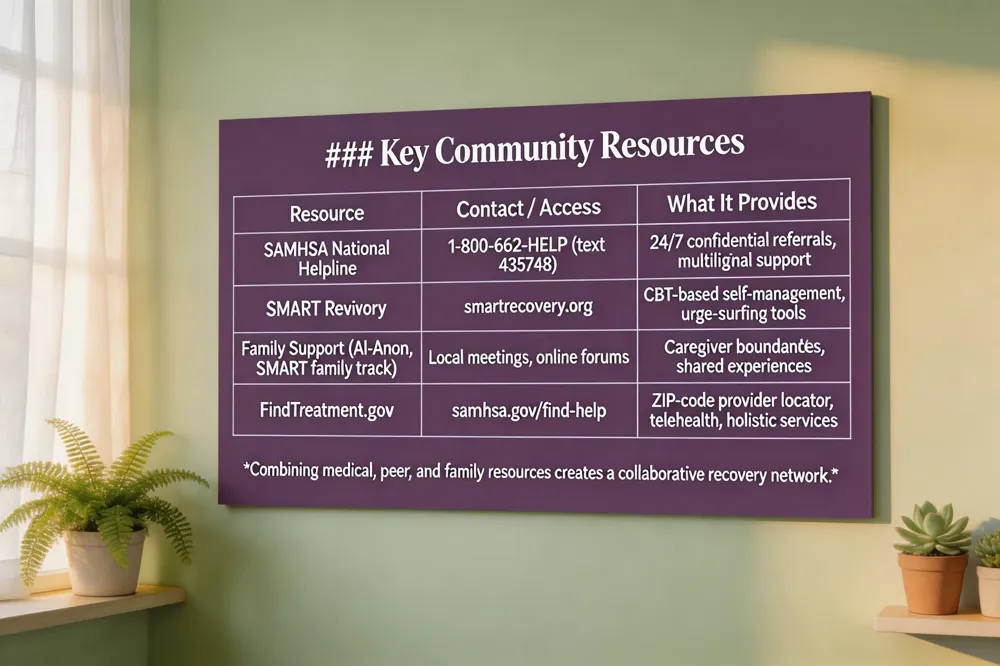 When a loved one begins the journey of recovery, having a network of trustworthy resources can make the difference between hope and isolation. SAMHSA’s National Helpline (1‑800‑662‑HELP) offers free, confidential, 24/7 referrals to local treatment facilities, support groups, and community‑based services in both English and Spanish; a TTY line (1‑800‑487‑4889) ensures accessibility for the hearing‑impaired, and the HELP4U text service (text ZIP code to 435748) quickly supplies nearby options. Complementing this, SMART Recovery provides evidence‑informed tools such as self‑management handbooks, a mobile app, and nationwide meetings that empower individuals with CBT‑based techniques, urge‑surfing, and relapse‑prevention strategies. Family therapy and peer‑led support groups—whether Al‑Anon, SMART Recovery’s family track, or local AA/NA meetings—offer a compassionate space for caregivers to learn boundaries, share experiences, and reinforce the recovery plan without enabling. Finally, SAMHSA’s online treatment locator (FindTreatment.gov) lets anyone input a ZIP code to discover accredited providers, tele‑health options, and holistic services like yoga, nutrition counseling, and mindfulness programs. Together, these resources blend conventional medical care with holistic, patient‑centred approaches, fostering a collaborative pathway toward lasting wellness.
Rules, Challenges, and Long‑Term Maintenance
Five Core Rules & Maintenance Tips
| Rule # | Rule | Practical Example |
|---|---|---|
| 1 | Build a substance‑free environment | Remove paraphernalia, create a sober living space |
| 2 | Practice complete honesty | Keep a daily truth‑journal, disclose cravings to a sponsor |
| 3 | Seek help & accountability | Attend weekly therapy, schedule check‑ins with a trusted friend |
| 4 | Prioritize self‑care | Balanced meals, 30‑min daily yoga, 8‑hr sleep schedule |
| 5 | Never bend the rules | Use a relapse‑prevention plan, avoid high‑risk situations |
Challenges: Opioid dependence is the hardest to quit due to intense physical withdrawal and dopamine sensitization. MAT + after‑care is essential.
Long‑Term Maintenance: Follow the Stages of Change model, use self‑compassion practices, and continue daily mindfulness/ nutrition counseling.
Consistent adherence to these rules supports sustained sobriety.
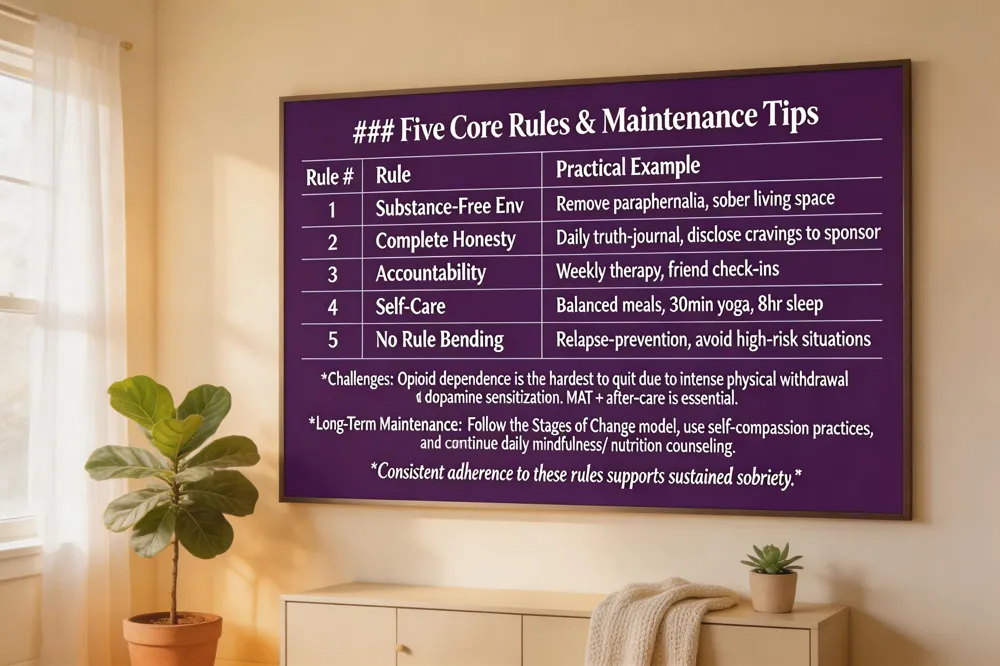 Recovery begins with five core rules that create a sturdy foundation for lasting sobriety. 1) Build a new, substance‑free environment that removes triggers and makes healthy choices easier. 2) Practice complete honesty—denial only fuels the cycle of use. 3) Seek help through professionals, support groups, and trusted loved ones to establish accountability. 4) Prioritize self‑care, nourishing body, mind, and spirit with balanced nutrition, regular exercise, mindfulness, and restorative sleep. 5) Never bend the rules; consistency protects you from slipping back into old patterns.
The most difficult addiction to quit is opioid dependence (heroin and prescription pain‑killers). Opioids create rapid, intense physical dependence and severe flu‑like withdrawal, while brain dopamine pathways remain highly sensitized, making cravings persistent. Medical‑assisted detox and ongoing medication‑assisted treatment are essential for success.
Relapse prevention aligns with the Stages of Change model—precontemplation, contemplation, preparation, action, and maintenance. Each stage benefits from motivational interviewing, psycho‑education, and personalized after‑care plans. Self‑compassion and daily self‑care (mindful meditation, yoga, nutrition counseling) reinforce emotional regulation and reduce relapse risk.
For immediate, confidential assistance, call SAMHSA’s National Helpline at 1‑800‑662‑HELP (or text 435748 to locate local treatment, support groups, and holistic resources. The helpline operates 24/7, requires no insurance, and safeguards privacy, offering a trusted entry point into integrated, patient‑centered recovery.
Sustaining Compassionate Growth
Long‑term wellness planning begins with a personalized recovery roadmap that blends evidence‑based medicine—such as medication‑assisted treatment and cognitive‑behavioral therapy—with holistic tools like nutrition counseling, yoga, and mindfulness. By setting realistic health goals, scheduling regular check‑ins with clinicians, and tracking progress in a recovery journal, individuals create a structured yet flexible plan that adapts as needs evolve. Continuous community engagement reinforces this plan; participation in 12‑step or SMART Recovery meetings, local support groups, and peer‑mentor networks provides accountability, shared wisdom, and a sense of belonging that mitigates isolation. Ongoing self‑care practices—daily movement, balanced meals, adequate sleep, and intentional breathing or meditation—cultivate the mind‑body connection essential for stress regulation and relapse prevention. When these three pillars—strategic wellness planning, active community involvement, and consistent self‑care—are woven together, recovery becomes a sustainable, compassionate journey toward lasting health and purpose.