Why Compassionate Care Matters in Addiction Recovery
Compassionate care is a person‑centered, non‑judgmental approach that recognizes a and emotional pain, validates the patient’s experience, and takes relational action to alleviate suffering (Lown, 2016). When clinicians—especially nurses who spend the most face‑to‑face time—listen actively, provide clear information, and respect cultural and personal values, patients perceive genuine empathy. This builds therapeutic trust, encouraging individuals to seek help, stay in treatment, and openly discuss cravings or setbacks. Research shows that compassionate, trauma‑informed interactions increase treatment retention by up to 30% and lower relapse rates by 15‑30% compared with standard care. By integrating harm‑reduction strategies, motivational interviewing, and holistic therapies (e.g., mindfulness, yoga, nutrition), compassionate models address the whole person, fostering sustained recovery and better health outcomes.
Foundations of the Compassionate Care Model
 The compassionate care model—also known as Compassionate Connected Care—places empathy, respect, and emotional intelligence at the heart of every patient interaction. By acknowledging suffering, using attentive non‑verbal and verbal cues, and supporting patient autonomy, clinicians treat individuals as whole persons rather than isolated diagnoses. This approach builds genuine trust, reduces anxiety, and improves adherence to treatment plans, ultimately lowering readmissions and enhancing system efficiency.
Core attributes of compassionate clinicians
Guidelines such as the Arnold P. Gold Foundation list integrity, excellence, altruism, respect, empathy, and service as essential qualities. Nurses who practice active listening, therapeutic touch, and culturally sensitive communication foster therapeutic alliances that are linked to lower relapse rates in addiction treatment.
Patient‑centered communication and empathy
Compassionate clinicians employ collaborative communication—active listening, validation, and shared decision‑making—to create a safe space for patients to voice ambivalence. Research shows that patients who feel heard are 30% less likely to drop out early and report higher satisfaction, which translates into better long‑term recovery outcomes.
Team‑based coordination and provider wellbeing
Effective compassionate care requires interdisciplinary teamwork, with nurses, physicians, mental‑health specialists, and wellness coaches sharing responsibility for the whole‑person plan. Provider wellbeing is critical; self‑care and resilience prevent compassion fatigue, ensuring that caregivers can sustain empathetic, high‑quality care.
In short, the compassionate care model integrates emotional support with clinical practice, aligning mind‑body wellness, personalized treatment, and collaborative care to improve outcomes for individuals with addiction.
Harm‑Reduction & Evidence‑Based Relapse Prevention
 Integrating harm‑reduction principles with evidence‑based relapse‑prevention creates a compassionate, patient‑centered safety that honors the chronic brain‑disease nature of addiction while addressing the whole person.
Motivational interviewing and education – Motivational interviewing (MI) builds intrinsic motivation by exploring ambivalence in a non‑judgmental tone, and it has demonstrated effect sizes up to d = 0.5 for promoting abstinence. Pairing MI with clear education about overdose prevention, safe‑syringe disposal, and hepatitis‑C screening empowers patients to make informed choices and reduces stigma, increasing engagement with care.
Five rules of relapse prevention – 1) Create a healthier environment and routine that supports sobriety; 2) Practice radical honesty about cravings, triggers, and any slip‑ups; 3) Ask for help immediately when warning signs appear; 4) Prioritize self‑care—balanced nutrition, sleep, exercise, mindfulness, yoga, or breathwork; and 5) Commit fully to the recovery plan, avoiding rationalizations. These rules echo the COPE model’s emphasis on self‑awareness and structured coping.
COPE model framework – COPE (Cues, Options, Planning, Execution) guides individuals to identify personal triggers, generate tailored coping options (e.g., mindfulness, stress‑management, problem‑solving), develop a concrete relapse‑prevention plan, and enact it during high‑risk moments. Personalized interventions foster resilience and a sense of responsibility.
Immediate help‑network activation – Promptly reaching out to trusted friends, family, counselors, or a 24‑hour helpline such as SAMHSA’s National Helpline (1‑800‑662‑HELP) is critical. Continuous monitoring, regular check‑ins with clinicians, and after‑care planning—including peer support, community resources, and holistic therapies like acupuncture or massage—reinforce the therapeutic alliance and lower relapse odds.
By weaving these components together, clinicians can offer a compassionate, integrative roadmap that reduces cravings, supports mental‑health stability, and sustains long‑term recovery.
Integrated Treatment: Medication‑Assisted + Psychosocial Care
 Medication‑Assisted Treatment (MAT) stabilizes brain chemistry and blunts cravings, providing a physiological foundation for recovery. When paired with evidence‑based psychotherapies such as Cognitive‑Behavioral Therapy (CBT) and Dialectical Behavior Therapy (DBT), patients gain coping skills, emotional regulation, and relapse‑prevention strategies that address the mental‑behavioral components of addiction.
Holistic additives—mindfulness meditation, yoga, acupuncture, nutrition counseling, and creative arts—further support brain recovery by reducing stress, correcting nutritional deficiencies, and fostering a sense of purpose and connection. These modalities honor the whole person—physical, emotional, social, and spiritual—creating a therapeutic environment in which patients feel heard and respected.
Personalized, patient‑centered plans integrate Medication‑Assisted Treatment (MAT), Cognitive‑Behavioral Therapy (CBT)/Dialectical Behavior Therapy (DBT), and chosen holistic practices into a single, adaptable roadmap. Clinicians collaborate with patients to identify triggers, set realistic goals, and build supportive networks, ensuring that care evolves with the individual’s progress.
What is the most successful treatment for addiction?
Research consistently shows that a combined, individualized approach—integrating Medication‑Assisted Treatment (MAT) with evidence‑based psychotherapies such as Cognitive‑Behavioral Therapy (CBT) and Dialectical Behavior Therapy (DBT)—produces the highest rates of sustained recovery. Adding holistic modalities that address physical, mental, and spiritual dimensions further enhances outcomes, making this multimodal, patient‑centered model the most successful today.
How can I stop drug addiction naturally?
Begin by acknowledging the problem and defining personal motivations for change. Identify and avoid triggers, and replace substance use with healthy coping—regular exercise, yoga, meditation, deep‑breathing, and creative hobbies. Consider a supervised detox that emphasizes nutrition, hydration, and sleep, and join supportive communities or peer‑recovery groups. Track progress daily and celebrate each drug‑free milestone to reinforce commitment.
Holistic Approaches & Complementary Therapies
 Holistic approaches treat addiction as a whole‑person condition, integrating physical, mental, emotional, spiritual and social health.
By combining evidence‑based medical care with complementary modalities, they create personalized pathways that address underlying stressors and trauma.
This compassionate, non‑judgmental model has been shown to lower relapse rates by up to 30 % in U.S. studies.
Mind‑body practices such as yoga, meditation and mindfulness‑based stress reduction calm the nervous system, lower cortisol and improve emotional regulation.
Clinical trials report a 22 % reduction in relapse when mindfulness is added to medication‑assisted treatment, and yoga has been linked to decreased cravings and better sleep quality.
Body‑based therapies—acupuncture, massage and other somatic techniques—provide pain relief, reduce anxiety and modulate brain pathways linked to addiction.
Research indicates that acupuncture can diminish drug‑seeking behavior, while therapeutic massage alleviates withdrawal discomfort and promotes relaxation.
Nutrition counseling and regular exercise restore physical health, correct micronutrient deficiencies and boost endorphin release.
Structured activity programs, from hiking to group sports, create routine, improve mood and lower relapse risk by 12‑20 % in holistic programs.
Spiritual and artistic outlets, including guided meditation, expressive art, music and animal‑assisted therapy, foster meaning, self‑esteem and social connection.
When patients engage in these creative practices, they report lower depressive symptoms and stronger recovery motivation, further supporting long‑term sobriety.
Detox Programs, Insurance and Cost Considerations
 Detox programs vary by the level of medical supervision and setting. Medical supervised detox (often called medication‑assisted detox) provides 24‑hour nurse and physician monitoring for alcohol, opioids, benzodiazepines, or methamphetamine withdrawal and can be delivered inpatient (full‑time residential stay) or outpatient (scheduled visits while the patient lives at home). Outpatient detox is less intensive, more flexible, and usually appropriate for milder dependence with strong family or peer support. Rapid‑detox protocols aim to shorten withdrawal but require strict medical oversight and are not a substitute for comprehensive after‑care. Holistic detox blends nutrition counseling, exercise, yoga, acupuncture, and mindfulness to address physical, emotional, and spiritual needs while the body clears substances.
In the United States, most private insurers, Medicare Part A/B, and many Medicaid programs cover medically necessary detox, though coverage limits, prior‑authorization requirements, and in‑network status differ by plan. Patients should verify benefits before admission.
The Betty Ford Clinic’s cost reflects the level of care: outpatient programs start around $5,000 for three months, while 30‑day inpatient stays range from $6,000 to $20,000. Longer residential stays can exceed $60,000. Insurance—including Medicaid, Medicare, and major private carriers—typically covers a portion of these fees, and the clinic offers financial‑aid options for uncovered expenses.
Evidence‑Based Relapse Prevention Models
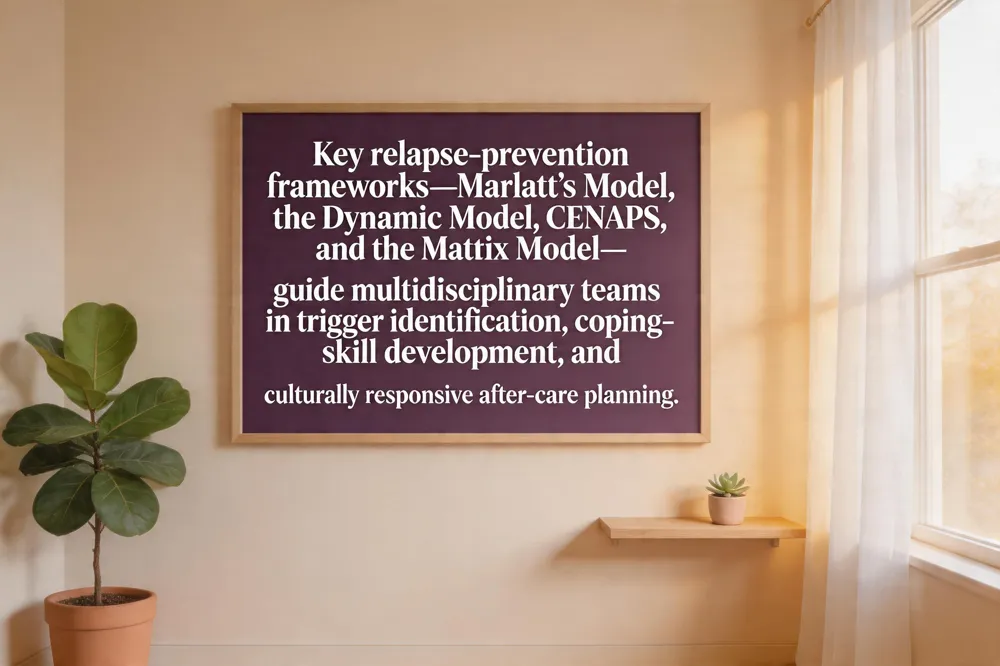 Relapse prevention in addiction treatment draws on several well‑studied frameworks that blend conventional medicine with holistic, patient‑centered care.
Marlatt’s Model & Dynamic Model – Marlatt’s high‑risk‑situations model (1996) teaches coping‑skill training and distinguishes acute from chronic prevention. The later Dynamic Model (Witkiewitz & Marlatt, 2004) expands this by mapping interacting behavioral, cognitive, affective, and environmental cues that shift a person from abstinence to lapse.
CENAPS & Matrix Model – Gorski’s CENAPS model integrates Cognitive, Emotional, Neurobiological, Affective, Physiological, and Social dimensions, offering a comprehensive map of relapse pathways. The Matrix Model, an intensive outpatient program, combines motivational interviewing, cognitive‑behavioral strategies, contingency management, and family involvement, providing structured, evidence‑based care.
Application in multidisciplinary teams – Nurses, physicians, mental‑health specialists, and wellness coaches use these models to conduct joint assessments, share trigger‑identification tools, and coordinate after‑care planning, ensuring consistent messaging across touchpoints.
Tailoring to cultural and individual needs – Compassionate, culturally responsive adaptations—such as trauma‑informed interviewing, language‑specific educational material, and inclusion of spiritual or community resources—enhance therapeutic alliance and lower dropout, thereby reducing relapse risk.
Answer to the key question – The four most widely referenced relapse‑prevention models are: (1) Marlatt’s Model, (2) the Dynamic Model, (3) Gorski’s CENAPS Model, and (4) the Matrix Model. Each provides a structured framework for identifying triggers, building coping skills, and creating personalized after‑care plans, guiding clinicians in designing holistic, evidence‑based relapse‑prevention strategies that align with integrative health approaches.
Practical Toolkit: Daily Habits for Sustained Sobriety
 A daily relapse‑prevention toolkit blends evidence‑based medicine with compassionate, holistic habits.
IdentifyTriggers and HALT awareness – Start each morning with a brief self‑check: H (hungry), A (angry), L (lonely), T (tired). Noting these states and any external cues (people, places, stressors) creates a personalized trigger list that can be reviewed before cravings arise.
Structured routine and healthy rewards – Build a predictable schedule that balances work, meals, sleep, and recovery activities. Celebrate small milestones with non‑substance rewards—stretch a favorite hobby, a nature walk, or a nutritious meal. Consistency reduces idle time, a common relapse trigger.
Mind‑body stress management – Incorporate at least one breathing exercise (e.g., 4‑by‑4 inhale‑hold‑exhale), a short yoga flow, or a guided meditation session daily. These practices calm the sympathetic nervous system, lower cortisol, and improve emotional regulation, making cravings easier to ride out.
Peer support, helplines, and after‑care check‑ins – Keep a list of trusted contacts: a recovery coach, a sponsor, or a peer‑support group. Schedule regular check‑ins—phone, video, or in‑person—and use resources like SAMHSA’s 24/7 national helpline (1‑800‑662‑HELP) for immediate guidance. Ongoing connection reinforces accountability and reduces isolation, a key relapse factor.
By weaving these four components into every day, individuals can nurture a compassionate, whole‑person approach that supports long‑term sobriety.
Building a Compassionate, Integrated Future for Addiction Care
Evidence shows that combining medication‑assisted treatment, motivational interviewing, and cognitive‑behavioral therapy with mindfulness, yoga, nutrition counseling, and acupuncture reduces cravings and relapse. Harm‑reduction practices such as safe syringe disposal and hepatitis screening build trust, while trauma‑informed, non‑judgmental communication strengthens therapeutic alliance. Nurses and clinicians are urged to embed compassionate, person‑centered training into daily practice and to collaborate across disciplines. Patients are encouraged to seek programs that blend medical care with holistic services, creating a supportive pathway toward lasting recovery for everyone.