Introduction
Personalization is no longer a luxury; it is a necessity in modern health care. Patients expect the same precision they receive when shopping online—care that reflects their genetic makeup, cultural background, lifestyle, and personal goals. When clinicians blend this precision with integrative, holistic practices, outcomes improve, adherence rises, and chronic illness can be prevented or managed more effectively. At Eclipse Wellness, we unite conventional medicine with evidence‑based complementary therapies such as mindfulness, yoga, nutritional counseling, and personalized detox programs. Our team tailors each plan to the individual’s risk factors, family history, and daily realities, using wearable data, AI insights, and open dialogue to keep goals realistic and achievable. By honoring the mind‑body‑spirit connection and fostering a supportive community, we empower patients to take charge of their health journey, creating sustainable habits that nurture the whole person.
Foundations of Personalized Healthcare
| 4 P’s | Description |
|---|---|
| Personalised | Tailor prevention, interventions, and lifestyle to genetics, environment, health history |
| Preventive | Early risk‑factor identification and proactive health measures |
| Predictive | Use genomics, biomarkers, AI to forecast future health trajectories |
| Participatory | Engage patients via digital tools and shared decision‑making |
| Key Companies | Focus |
|---|---|
| 23andMe, Helix | DNA‑focused testing |
| Everlywell | At‑home health testing |
| Virta Health | Digital disease‑reversal programs |
| Flatiron Health | Oncology data solutions |
| Medtronic, Roche | AI‑enabled diagnostics & remote monitoring |
| OK Capsule | Custom supplement packs |
| Patient‑Centred Principles |
|---|
| Shared decision‑making |
| Enabling choice |
| Social prescribing |
| Supported self‑management |
| Personalized care & support plans with health budgets |
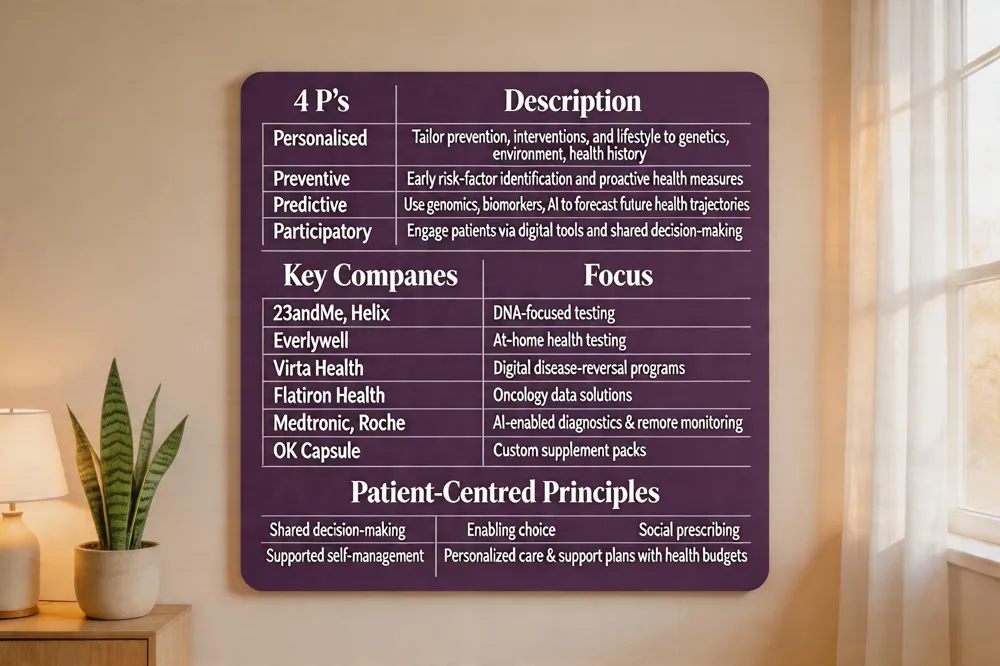 Personalized medicine rests on the 4 P’s – personalised, preventive, predictive, and participatory. Tailoring prevention, interventions, and lifestyle recommendations to each person’s genetics, environment, and health history is the personalised pillar. Preventive care shifts focus to early risk‑factor identification, while predictive analytics (genomics, biomarkers, AI) forecast future health trajectories. Participatory care invites patients to actively engage, using digital tools and shared decision‑making.
Key companies driving hyper‑personalization include DNA‑focused firms such as 23andMe and Helix, at‑home testing platforms like Everlywell, digital disease‑reversal programs from Virta Health, and oncology data solutions from Flatiron Health. Medtronic and Roche expand AI‑enabled diagnostics and remote monitoring, while startups such as OK Capsule deliver custom supplement packs based on personal nutrition needs.
Principles of truly patient‑centered care are built on shared decision‑making, enabling choice, social prescribing, supported self‑management, and personalized care and support plans with personal health budgets. These principles ensure care aligns with what matters to the individual, not just the disease, fostering adherence, empowerment, and better outcomes across physical, mental, and holistic health domains.
Empowering Patients and Families
| Empowerment Element | Example |
|---|---|
| Shared Decision‑Making | Clinician presents jargon‑free options, respects cultural values |
| Digital Self‑Monitoring | Wearables, symptom‑tracking apps, tele‑health platforms |
| AI‑Driven Dashboards | Personalised reminders & education based on real‑time data |
| Supportive Networks | Peer‑support groups, community wellness programs, virtual therapist matching (Talkspace) |
| Integrative Approach | Combines conventional care with mindfulness, movement, nutrition counseling |
| Culture of Change | Family‑wide accountability and sustained lifestyle shifts |
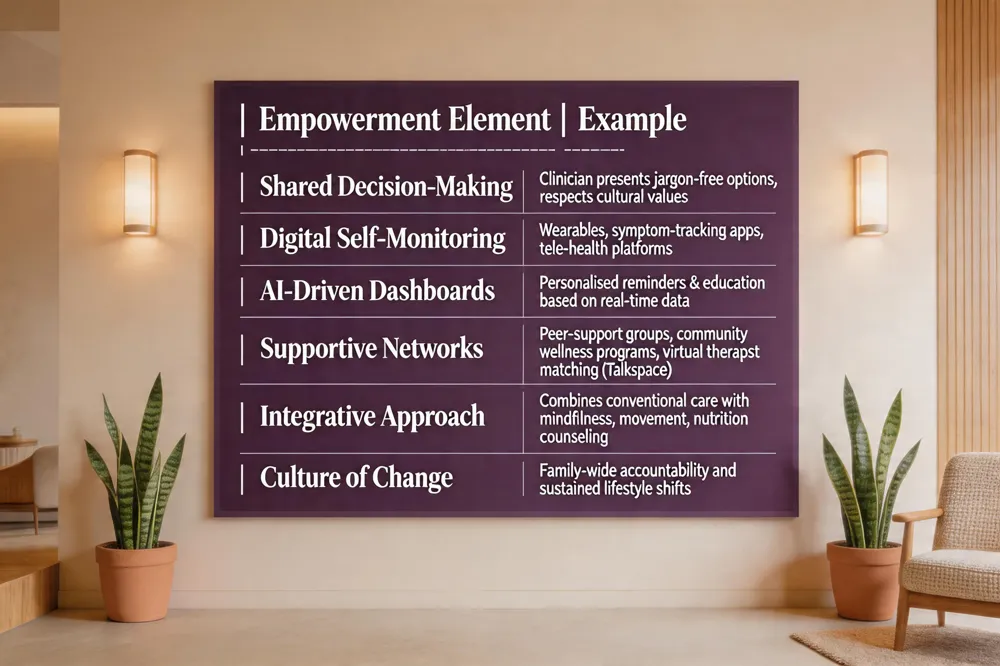 Shared decision‑making is the cornerstone of patient empowerment. Clinicians present clear, jargon‑free options, listen to cultural values and personal goals, and co‑create care plans that respect family dynamics. Digital self‑monitoring tools—wearable trackers, symptom‑tracking apps, and tele‑health platforms—give patients real‑time insight into movement, nutrition, stress, and medication adherence, enabling early adjustments and reducing missed appointments. These technologies also feed data into AI‑driven dashboards that personalize reminders and education. Building supportive networks involves linking families to peer‑support groups, community wellness programs, and resources such as hospital concierge services or virtual therapist matching (e.g., Talkspace). A collaborative, integrative approach that blends conventional care with mindfulness, movement, and nutrition counseling creates a “culture of change” at home, reinforcing accountability and sustained lifestyle shifts. By combining clear communication, technology‑enabled monitoring, and community connections, patients and families become active partners in every step of the health journey.
Integrative Health and Functional Medicine Explained
| Aspect | Integrative Health | Functional Medicine |
|---|---|---|
| Core Focus | Whole‑person (body, mind, spirit, lifestyle) | Biochemical, genetic, environmental roots |
| Primary Tools | Nutrition, movement, mind‑body techniques, supplements | Detailed lab testing, systems‑based analysis |
| Intervention Style | Holistic lifestyle changes | Targeted interventions based on diagnostic results |
| Collaboration | Works with primary‑care to create individualized plans | Works with primary‑care to create individualized plans |
| Goal | Restore optimal function, reduce chronic symptoms, promote long‑term wellness | Same, with deeper diagnostic insight |
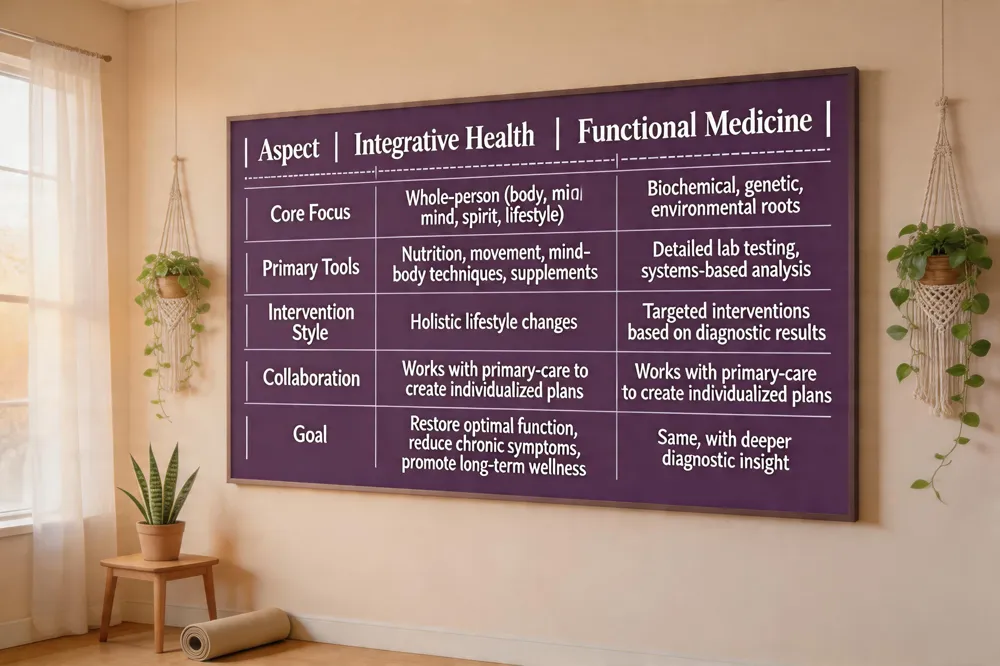 Integrative health blends conventional, evidence‑based medicine with complementary approaches that address the whole person—body, mind, spirit, and lifestyle—using nutrition, movement, mind‑body techniques, and targeted supplements. Functional medicine is a subspecialty of integrative care that digs deeper into the biochemical, genetic, and environmental roots of disease through detailed laboratory testing and systems‑based analysis. Both models emphasize personalized, preventive care, but functional medicine relies more heavily on diagnostic testing to uncover hidden imbalances, while integrative medicine focuses on holistic lifestyle interventions and whole‑system healing. Practitioners of each discipline collaborate with primary‑care physicians to create individualized treatment plans that combine conventional therapies with evidence‑informed, patient‑centered strategies. Together, they aim to restore optimal function, reduce chronic symptoms, and promote long‑term wellness.
Practical Daily Wellness Rules
| # | Tip |
|---|---|
| 1 | Eat a balanced, whole‑food diet rich in fruits, vegetables, whole grains, lean protein, healthy fats |
| 2 | Stay hydrated – ≈8 cups water daily (adjust for activity/climate) |
| 3 | Quit smoking & avoid second‑hand smoke |
| 4 | Get fresh‑air exposure & sunlight for vitamin D & mood |
| 5 | ≥150 min moderate exercise weekly (aerobic, strength, flexibility) |
| 6 | Maintain social connections – strong relationships double life expectancy |
| 7 | Keep brain active – learning, puzzles, creative hobbies |
| 8 | Schedule routine health check‑ups & age‑appropriate screenings |
| 9 | Practice mindfulness/relaxation (meditation, deep breathing, Yoga) |
| 10 | Prioritize 7‑9 hours restorative sleep each night |
Four Pillars of Integrative Medicine: Nutrition, Stress Management, Physical Activity, Sleep
Seven Domains of Integrative Health: Sleep; Resiliency; Environment; Movement; Relationships; Spirituality; Nutrition
3‑3‑3 Rule: 3 meals, 3 bottles of water, 3 hrs of movement per week
 What are 10 tips for good health?
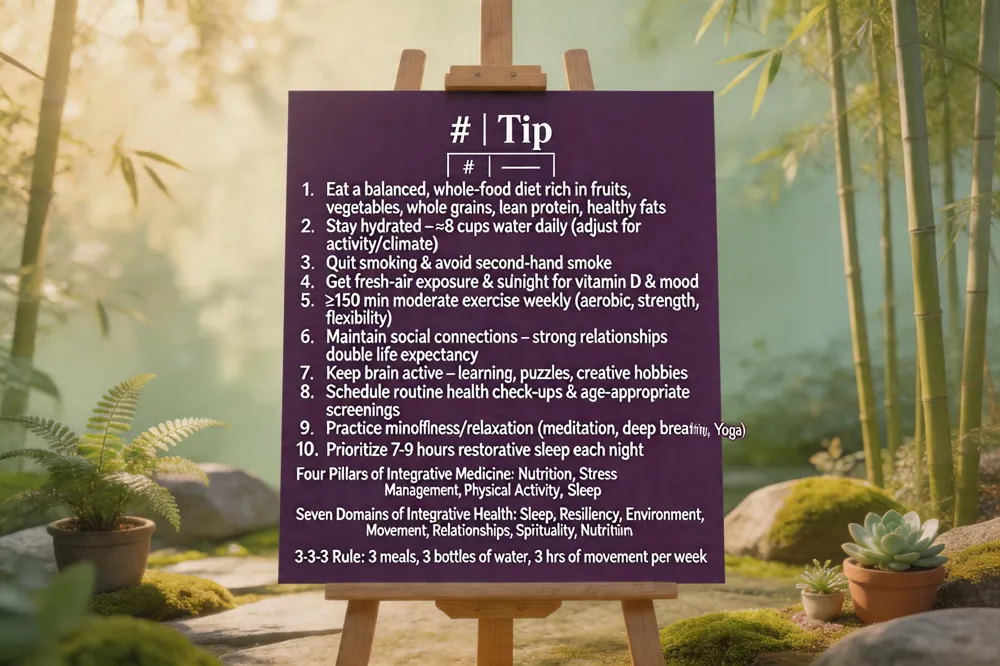
1️⃣ Eat a balanced, whole‑food diet rich in fruits, vegetables, whole grains, lean protein, and healthy fats. 2️⃣ Stay hydrated – aim for about 8 cups of water each day, adjusting for activity and climate. 3️⃣ Quit smoking and avoid second‑hand smoke to protect lung and cardiovascular health. 4️⃣ Get regular fresh‑air exposure and sunlight for vitamin D synthesis and mood regulation. 5️⃣ Engage in at least 150 minutes of moderate exercise per week, combining aerobic, strength, and flexibility work. 6️⃣ Maintain social connections and community involvement; strong relationships double life expectancy. 7️⃣ Keep the brain active with learning, puzzles, or creative hobbies. 8️⃣ Schedule routine health check‑ups and age‑appropriate screenings to catch issues early. 9️⃣ Practice mindfulness or relaxation techniques—meditation, deep breathing, or Yoga to lower cortisol and improve mental clarity. 🔟 Prioritize sleep, aiming for 7‑9 hours of restorative rest each night.
What are 10 tips for good health?
1️⃣ Eat a balanced, whole‑food diet rich in fruits, vegetables, whole grains, lean protein, and healthy fats. 2️⃣ Stay hydrated – aim for about 8 cups of water each day, adjusting for activity and climate. 3️⃣ Quit smoking and avoid second‑hand smoke to protect lung and cardiovascular health. 4️⃣ Get regular fresh‑air exposure and sunlight for vitamin D synthesis and mood regulation. 5️⃣ Engage in at least 150 minutes of moderate exercise per week, combining aerobic, strength, and flexibility work. 6️⃣ Maintain social connections and community involvement; strong relationships double life expectancy. 7️⃣ Keep the brain active with learning, puzzles, or creative hobbies. 8️⃣ Schedule routine health check‑ups and age‑appropriate screenings to catch issues early. 9️⃣ Practice mindfulness or relaxation techniques—meditation, deep breathing, or Yoga to lower cortisol and improve mental clarity. 🔟 Prioritize sleep, aiming for 7‑9 hours of restorative rest each night.
What are the four pillars of integrative medicine? Nutrition, stress management, physical activity (exercise), and sleep. These pillars work together to reduce inflammation, balance hormones, support musculoskeletal health, and enable cellular repair.
What are the 7 domains of integrative health? 1️⃣ Sleep; 2️⃣ Resiliency (stress management); 3️⃣ Environment (air, water, toxins); 4️⃣ Movement; 5️⃣ Relationships; 6️⃣ Spirituality; 7️⃣ Nutrition.
What is the 3‑3‑3 rule for health? Three meals, three bottles of water, and three hours of movement per week—an easy, flexible framework that reframes exercise as a cumulative weekly goal rather than a daily quota.
Women’s Health Resources and Toolkit
| Resource | Focus |
|---|---|
| Office on Women’s Health (womenhealth.gov) | Menopause, maternal health, mental‑wellness guides |
| ACOG (acog.org) | Pregnancy, birth control, pelvic health articles |
| CDC Women’s Office (cdc.gov/womenshealth) | Cardiovascular & reproductive health data |
| Apps | Clue (cycle tracking), MyFitnessPal (nutrition), Headspace (mindfulness) |
| Women’s Health Week Toolkit | Social‑media graphics, fact sheets, printable checklists for menopause, mental‑health, cancer awareness |
| Screening Checklist | Mammogram, Pap, bone density, hormone‑balance nutrition tips, stress‑reduction ideas |
| FAQ & Community Guide | Myth‑dispelling, counseling, detox, weight‑loss programs aligned with integrative approach |
Seven Wellness Pillars for Women: Sleep Optimization; Gut‑Brain Health; Mental‑Health; Personalized Nutrition; Generational Fitness; Environmental Stewardship; Purpose & Spiritual Connection
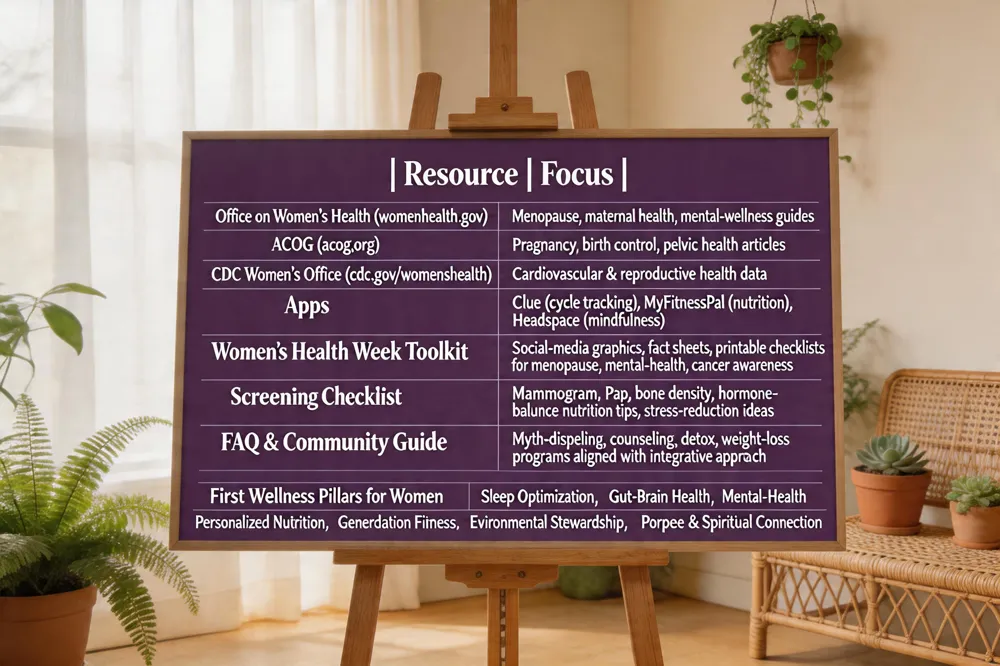 Trusted U.S. women’s‑health portals include the Office on Women’s Health (womenhealth.gov) with guides on menopause, maternal health, mental‑wellness; the American College of Obstetricians & Gynecologists (acog.org) offering articles on pregnancy, birth control and pelvic health; and the CDC Women’s Office (cdc.gov/womenshealth) providing data on cardiovascular and reproductive health. Apps such as Clue, MyFitnessPal and Headspace support wellness.
The free Women’s Health Week toolkit offers social‑media graphics, fact sheets and printable checklists for menopause, mental‑health and cancer awareness. It includes screening lists (mammogram, Pap, bone density), hormone‑balance nutrition tips, stress‑reduction ideas and links to local OB‑GYN clinics. An FAQ sheet dispels myths and a community guide lists counseling, detox and weight‑loss programs aligned with an integrative, holistic approach.
The seven wellness pillars for women are: 1) Sleep optimization – consistent rest; 2) Gut‑brain health – balanced microbiome for mood; 3) Mental‑health – mindfulness and emotional check‑ins; 4) Personalized nutrition – diet plans matching metabolic, hormonal and cultural needs; 5) Generational fitness – movement habits; 6) Environmental stewardship – caring for surroundings; 7) Purpose & spiritual connection – meditation, gratitude, community involvement.
Building Your Personalized Health Plan
| Step | Action |
|---|---|
| Baseline Metrics | Resting heart rate, mile walk‑time, push‑up count, waist circumference |
| Goal Setting | Specific, personalized targets (sleep, pain, weight) |
| Routine Design | ≥150 min moderate aerobic, 2 strength sessions, flexibility/core work per week |
| Progression | Increase intensity/duration ≤10 % weekly, schedule workouts as appointments |
| Nutrition for Weight‑Loss/Detox | Whole‑food, plant‑predominant meals, timed fasting, liver‑supportive herbs (turmeric, ginger), monitor blood work |
| Mental‑Health Integration | Combine therapy with mindfulness, yoga, Healing Touch, use tele‑health coaching |
| Community Support | Engage family/friends, use accountability groups |
| Ongoing Check‑Ins | Regular reviews with health coach/clinician to refine plan and align with evolving values |
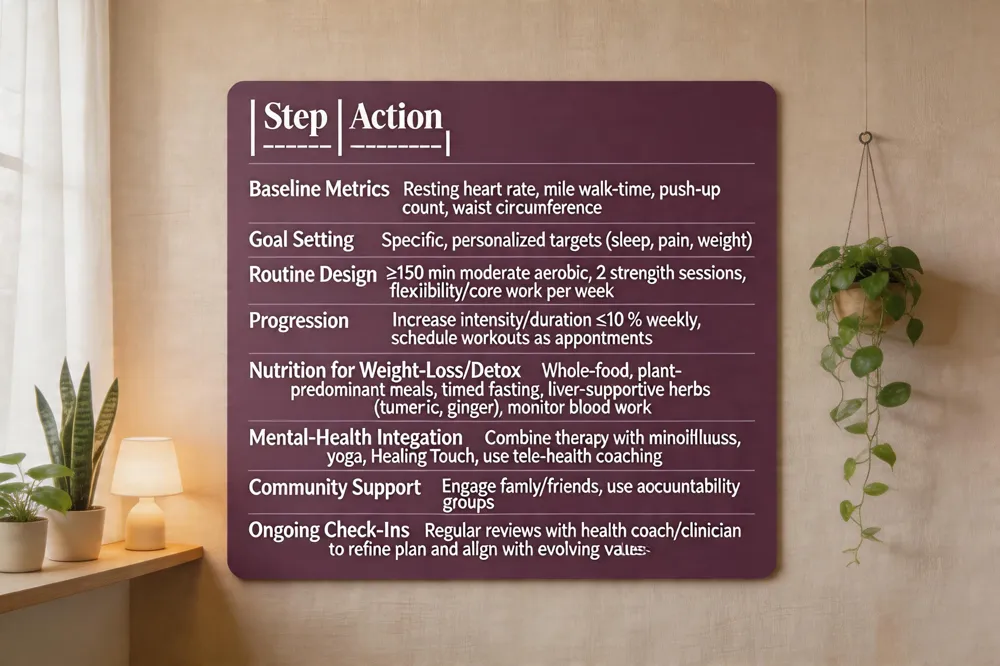 A successful health journey begins with a clear baseline. Record simple metrics—resting heart rate, walk‑time for a mile, push‑up count, waist circumference—to understand your current fitness level. Set specific, personalized goals (e.g., better sleep, pain reduction, weight loss) and design a balanced routine that includes at least 150 minutes of moderate aerobic activity, two weekly strength sessions, and flexibility or core work. Start slowly, increasing intensity or duration by no more than 10 percent each week, and schedule workouts like any appointment to ensure consistency.
For weight‑loss and detox, tailor nutrition to your metabolic profile, cultural food preferences, and hormone balance. Incorporate whole‑food, plant‑predominant meals, timed fasting windows, and liver‑supportive herbs (e.g., turmeric, ginger) while monitoring blood work to adjust as needed. Small daily actions—daily movement, mindful eating, stress‑management techniques—can modify genetic risk factors and improve outcomes.
Integrative mental‑health support blends conventional therapy with mindfulness, yoga, or energy‑based practices such as Healing Touch. Use telehealth platforms for convenient coaching, and engage supportive community or family members to boost accountability and emotional resilience. Regular check‑ins with a health coach or clinician help refine your plan, ensuring it stays aligned with evolving goals and personal values.
Conclusion
Personalized, integrative care blends your genetic, cultural, and lifestyle background with evidence‑based conventional and complementary therapies. The key takeaways are: (1) Tailored assessments—genetic risk, family history, and social determinants—guide precise prevention and treatment plans; (2) Small, consistent actions such as daily movement, mindfulness, and balanced nutrition can modify genetic risk and improve outcomes; (3) Integrative tools—wearables, AI‑driven insights, telehealth, and holistic modalities like yoga, Feldenkrais, and herbal support—provide real‑time feedback and reduce reliance on opioids; (4) Strong communication, community support, and shared decision‑making boost adherence and satisfaction.
Next steps for Eclipse Wellness readers: schedule a comprehensive wellness assessment, use our patient portal to share your health data, and work with a care coach to set SMART goals that reflect your unique values. Explore our integrative services—nutrition counseling, movement classes, and mind‑body therapies—and regularly track progress through our digital dashboard to keep your personalized plan dynamic and effective.