Setting the Stage: Outpatient Detox in Modern Care
Outpatient detox is a medically supervised withdrawal process that lets individuals stay in their own homes while clinicians monitor vital signs, adjust medication‑assisted treatment (MAT) and provide crisis support. By avoiding overnight hospitalization, patients can keep up with work, school, or family duties, preserving the routine and social connections that reinforce motivation. Modern programs blend traditional medical oversight with telehealth check‑ins, daily urine drug screens and 24/7 virtual access to physicians and counselors, ensuring safety without sacrificing flexibility. This hybrid model reduces the cost of care, minimizes disruption to daily life, and creates a smoother transition to the next phase of recovery—whether intensive outpatient therapy, peer‑support groups, or after‑care planning. Ultimately, outpatient detox honors each person’s unique circumstances, delivering compassionate, personalized care that addresses both the physical withdrawal and the broader life context in which sobriety unfolds.
What Does Outpatient Detox Mean?
 Outpatient detox is a medically supervised withdrawal program that lets individuals stay at home while clinicians monitor their health. The key components include regular vital‑sign checks, urine drug screens, and medication‑assisted treatment (MAT) such as buprenorphine or naltrexone, delivered during scheduled clinic or telehealth visits. Eligibility requires stable housing, reliable transportation, and a motivated patient who can follow safety protocols without 24‑hour supervision. Compared with inpatient care, outpatient detox is far more cost‑effective—often 30‑50 % cheaper—while preserving daily responsibilities like work or school. Research shows that combining outpatient detox with holistic services (yoga, mindfulness, nutrition counseling) improves retention and reduces relapse. In short, outpatient detox offers a flexible, affordable bridge from physical stabilization to longer‑term, whole‑person recovery.
The Holistic Approach to Addiction Recovery
 The holistic approach to addiction recovery treats the whole person—body, mind, spirit, social, and intellectual health—by weaving evidence‑based therapies with complementary modalities. Medically supervised outpatient detox provides a safe, at‑home withdrawal foundation, while yoga, tai chi, acupuncture, massage, and regular exercise restore physical strength, improve sleep, and reduce cravings. Emotional healing is nurtured through individual counseling, group therapy, art therapy, and breathing exercises that teach stress‑management and emotional regulation. Social wellness grows through sober networks, family therapy, and group therapy that break isolation and rebuild trust. Spiritual practices such as meditation, gratitude journaling, and guided imagery foster purpose and inner peace, reinforcing motivation for lasting change. Intellectual growth is supported by psycho‑education, skill‑building workshops, and relapse‑prevention planning, empowering patients to set realistic goals and develop new coping strategies. By integrating these whole‑person elements into a personalized treatment plan, holistic recovery enhances treatment retention, lowers relapse risk, and promotes sustained well‑being alongside traditional medical care.
Integrating Holistic Therapies into Outpatient Detox
 A holistic approach to detoxing treats the whole person—body, mind, and spirit—rather than only eliminating the substance. Mind‑body practices such as yoga, mindfulness meditation, and tai chi improve circulation, reduce anxiety, and teach patients healthier ways to cope with cravings. Complementary therapies like acupuncture, therapeutic massage, and infrared sauna help ease withdrawal‑related aches, balance the nervous system, and support lymphatic flow. Nutrition counseling restores electrolytes, B‑complex vitamins, magnesium, and other nutrients depleted by chronic use, while personalized meal plans stabilize blood sugar and promote brain healing. Sleep hygiene and stress‑reduction techniques—including guided imagery, progressive muscle relaxation, and evening wind‑down routines—enhance restorative rest, a critical factor for recovery. Finally, telehealth check‑ins provide 24/7 access to clinicians, allowing rapid medication adjustments, virtual counseling, and continuous encouragement, which together increase treatment retention and lower relapse risk.
Does Outpatient Detox Work? Evidence and Outcomes
 Research consistently shows that medically supervised outpatient detox yields retention rates 30 % higher and relapse rates 25 % lower when combined with holistic services such as yoga, mindfulness, and nutrition counseling. Medication‑assisted treatment (e.g., buprenorphine n naltrexone, benzodiazepines) is safely administered in outpatient settings, easing cravings and stabilizing neurochemistry. Telehealth check‑ins, daily vital‑sign monitoring, and regular urine drug screens provide continuous safety oversight while allowing patients to stay at home and keep work or school responsibilities. Compared with inpatient care for mild‑to‑moderate withdrawal, outpatient detox delivers comparable symptom control and cost savings—often 30‑50 % less expensive—without compromising outcomes when a stable home environment and reliable transportation are present. Thus, for appropriately screened individuals, outpatient detox works effectively as a first step toward sustained recovery, especially when paired with comprehensive, personalized, holistic interventions.
Stopping Addiction Naturally: Practical Steps
 Self‑assessment and trigger identification – Begin by honestly acknowledging the addiction and mapping the people, places, emotions, or routines that spark cravings. A brief journal or a guided questionnaire can reveal patterns that become the roadmap for change.
Building sober support networks – Connect with peer groups, family counseling, or social support that understand recovery. Regular meetings, either in‑person or via telehealth, reduce isolation and provide accountability.
Healthy habits: exercise, mindfulness, creative outlets – Incorporate daily movement—walking, yoga, or tai chi—to release endorphins and improve sleep. Mindfulness meditation and creative activities such as art, music, or writing cultivate emotional regulation and a sense of purpose.
Natural stress‑relief: deep breathing, yoga, journaling – When urges arise, practice deep‑breathing or a short yoga sequence to calm the nervous system. Journaling thoughts and feelings helps process triggers without turning to substances.
Gradual supervised detox or integrative‑health program – Consider a medically supervised outpatient detox that blends medication‑assisted treatment with holistic therapies (nutrition counseling, acupuncture, mindfulness). This safe, step‑by‑step approach supports physical stabilization while addressing the whole person.
How to stop addiction naturally? – Start with honest self‑assessment, replace triggers with sober support and healthy habits, use natural stress‑relief techniques, and pursue a gentle, supervised detox or integrative‑health program. Track progress, celebrate small victories, and stay focused on the long‑term benefits of improved physical, mental, and emotional wellbeing.
What Is the Most Effective Treatment for Addiction?
 Effective addiction treatment is not a single modality but a coordinated, patient‑centered model that blends evidence‑based behavioral therapies with FDA‑approved medications when appropriate. Core behavioral approaches—individual, family and group counseling, CBT, DBT, and mindfulness‑based stress reduction—teach coping skills, address triggers, and rebuild healthy relationships. Medications such as buprenorphine, naltrexone, methadone, or gabapentin alleviate cravings and stabilize brain chemistry, allowing patients to engage fully in therapy. Each plan is tailored to co‑occurring conditions; for example, depression, anxiety, PTSD, chronic pain, or metabolic issues are treated simultaneously through psychotherapy, psychiatric medication, nutrition counseling, exercise, and complementary therapies like yoga or acupuncture. A seamless continuum of care begins with thorough screening, moves through medically supervised outpatient detox, continues with intensive counseling, and ends with after‑care support including peer groups, relapse‑prevention planning, and primary‑care linkage. Supportive services such as risk‑reduction education, infectious‑disease testing, and vaccination further protect health and sustain recovery. When all components operate together, outcomes rival those of other chronic diseases.
Hardest Addictions, Medicaid Access, and Red Rock Recovery
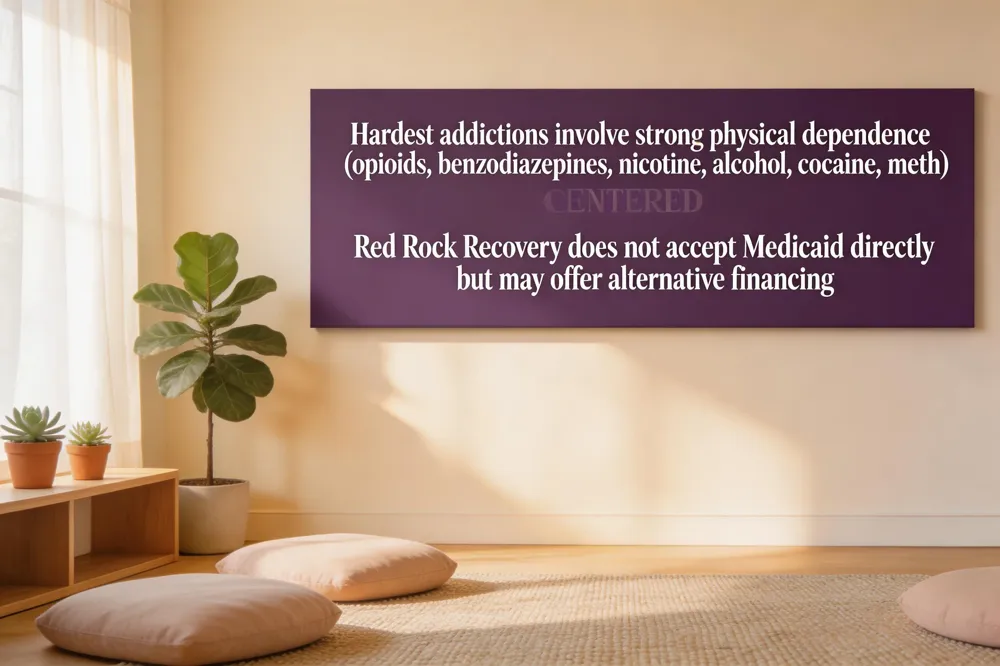 Outpatient detox allows individuals to undergo medically supervised withdrawal while living at home, providing flexibility and continuity with daily responsibilities. Strong physical dependence and life‑threatening withdrawal—such as heroin, prescription opioids, benzodiazepines, alcohol, nicotine, cocaine, and methamphetamine—are generally the hardest to quit. These drugs profoundly alter brain dopamine pathways, leading to intense cravings and high relapse risk even after short abstinence.
Question: What is the hardest addiction to quit?
Answer: Addictions that involve strong physical dependence and intense, often life‑threatening withdrawal symptoms are generally the hardest to quit. Substances such as heroin and prescription opioids, cocaine, methamphetamine, benzodiazepines, nicotine, and alcohol produce profound changes in brain dopamine pathways, making cravings and relapse likely even after short periods of abstinence. Opioid withdrawal can cause flu‑like symptoms, severe anxiety, and muscle aches, while benzodiazepine detox may trigger seizures and extreme agitation. Nicotine’s rapid onset of cravings and its pervasive presence in daily life make it one of the most persistent addictions, and alcohol withdrawal can lead to delirium tremens and other serious complications. Because of these powerful physical and psychological forces, quitting these drugs typically requires medically supervised detox, long‑term therapy, and comprehensive support.
Question: Does Red Rock Recovery accept Medicaid?
Answer: Red Rock Recovery Center is a private treatment facility that does not hold a direct contract with Medicaid. Because it is not a Medicaid‑participating provider, you cannot simply use Medicaid benefits as a standard payment method there. However, the center says it offers several alternative programs and financing options for patients who are on Medicaid. Their admissions team can work with you to explore these options and determine eligibility may. You should contact Red Rock Recovery Center directly to discuss how they can assist you if you rely on Medicaid.
Putting It All Together: A Path Forward
Outpatient detox serves as a flexible, medically supervised entry point that lets individuals stay at home while safely withdrawing from alcohol, opioids, benzodiazepines or other substances. By providing regular monitoring, medication‑assisted treatment and telehealth check‑ins, clinicians can adjust doses, manage cravings and prevent complications without disrupting work, school or family responsibilities. Once stabilized, holistic therapies—such as yoga, mindfulness meditation, acupuncture, nutrition counseling, exercise and spiritual practices—address the physical, emotional, social and intellectual dimensions of recovery, reducing stress, improving sleep and fostering a sense of purpose. Personalized, integrated care plans weave these modalities together, tailoring interventions to each person’s medical history, co‑occurring mental health conditions and lifestyle goals. Ongoing support is essential; the SAMHSA 24/7 helpline (1‑800‑662‑HELP) connects callers to local outpatient detox providers, while telehealth platforms ensure continuous counseling, peer groups and relapse‑prevention resources wherever patients reside. Together, these elements create a roadmap to lasting recovery.