Why Real‑Time Dashboards Matter Today
The Rise of Real‑Time Health Dashboards
The remote patient monitoring (RPM) market was valued at $5.2 billion in 2023 and is projected to grow at a compound annual growth rate of 18.6% from 2024 to 2030. This growth reflects how real‑time health dashboards are becoming central to patient care.
What clinical advantages come from immediate data access?
Real‑time dashboards enable faster response times that can save lives. Studies report that remote monitoring and telemedicine integration are associated with a 65% reduction in hospital admissions and a 72% decrease in emergency room visits. Continuous monitoring has been linked to a 43.11% increase in nurses' time available for direct patient care, allowing clinicians to focus on personalized treatment adjustments. For patients with chronic conditions, immediate data access supports early detection of deterioration and empowers self‑management by visualizing health trends.
What are some examples of public‑health dashboards?
Examples of public‑health dashboards include the AHRQ Network of Patient Safety Databases (NPSD) Dashboards, which offer insights on patient safety and quality improvement. The WHO’s Global Digital Health Monitor and Tuberculosis platform track disease burdens and health system performance. At the hospital level, the EmergInsight dashboard optimizes emergency department operations by integrating performance indicators, geospatial maps, and predictive tools to manage patient flow and resource allocation. Bold BI provides a unified health monitoring dashboard that integrates data from EHR systems, wearable devices, and labs, enabling clinicians to filter by patient ID and track trends in vitals and wellness metrics for holistic care planning.
Integrating Wearables and FDA‑Approved RPM Devices
Vitaliti™ and other FDA‑cleared wearables for continuous monitoring platforms lead the way in connected care.
The Vitaliti™ wearable is a standout example of continuous monitoring, transmitting five vital signs—blood pressure, heart rate, body temperature, blood oxygen saturation, and respiratory rate—plus raw ECG, PPG, and accelerometer data via Bluetooth to the RemoteHealthConnect web dashboard. Ethical approval from the Sheridan College Research Ethics Board and NSERC funding underscore its research-backed design. Beyond Vitaliti™, other FDA‑cleared devices include the Medtronic BioButton®, a multi‑parameter biosensor that can alert clinicians to early signs of patient deterioration up to 14 hours before an event, and the VitalPatch, which monitors eight vitals including single‑lead ECG, respiratory rate, and fall detection.
Remote patient monitoring devices FDA‑approved: which types of monitoring devices are cleared for home use?
Regulatory clearance falls into three categories. First, FDA‑cleared wearables such as the Medtronic BioButton® (510(k) pathway) and VitalPatch (Class 2 disposable biosensor). Second, implantable systems like the CardioMEMS pulmonary artery pressure monitor (premarket approval) for heart failure management. Third, connected point‑of‑care tools including Bluetooth blood pressure cuffs (e.g., Welch Allyn), glucometers (Abbott, Dexcom), pulse oximeters (Nonin), and wireless scales. During the COVID‑19 pandemic, several pulse oximeters and thermometers gained Emergency Use Authorizations (EUA) to support hospital‑at‑home models.
Regulatory pathways: 510(k), Premarket Approval (PMA), and Emergency Use Authorizations (EUA) enable safe remote care.
The 510(k) pathway is common for devices deemed substantially equivalent to a predicate—applying to most wearables and Bluetooth cuffs. Premarket Approval (PMA) is required for higher‑risk implantables like CardioMEMS. During the pandemic, FDA granted EUAs to expand access to pulse oximeters and thermometers for home use. Integration standards such as HL7 FHIR and ISO/IEEE 11073 further support interoperability, ensuring patient data flows securely from approved devices into clinical dashboards.
| Device Category | Example | Regulatory Pathway | Key Clinical Use |
|---|---|---|---|
| Wearable patch | Medtronic BioButton® | 510(k) | Early deterioration detection (respiratory rate, heart rate) |
| Wearable patch | VitalPatch | 510(k) / Class 2 | Eight‑vital‑sign monitoring including ECG and fall detection |
| Implantable | CardioMEMS | PMA (premarket approval) | Hemodynamic monitoring in heart failure |
| Connected cuff | Bluetooth blood pressure monitor | 510(k) | Hypertension management at home |
| Connected scale | Wireless body‑weight scale | 510(k) | Fluid retention and weight monitoring |
| Connected oximeter | Pulse oximeter (Nonin) | 510(k) / EUA (for COVID-19) | Oxygen‑saturation tracking for COPD, COVID‑19 |
| Connected glucometer | Dexcom G6 (CGM) | 510(k) | Diabetes glucose monitoring |
Designing User‑Centric Dashboards
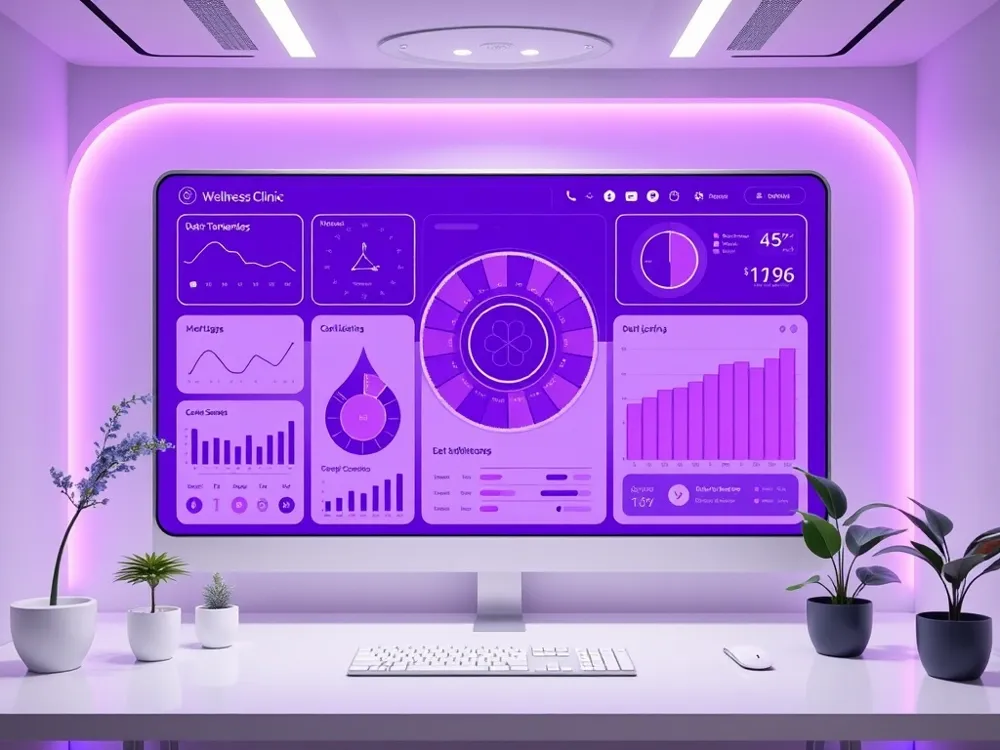
What Makes a Health Dashboard Usable? Evidence from RemoteHealthConnect
RemoteHealthConnect's usability study shows how design translates into real‑world acceptance. The multi‑tier system integrates the Vitaliti™ wearable, a bedside application, and a web dashboard to track five vital signs alongside raw ECG, PPG, and accelerometer data. Across 30 participants, the dashboard achieved a System Usability Scale score of 71.5, significantly above the health‑technology average of 67.5 (p = .001).
Custom visualizations proved critical for rapid interpretation.
- 70 % of participants found the radial chart for 24‑hour trends.
- 70 % gave positive feedback on the color‑coding scheme (green = normal, yellow = warning, red danger).
- 80 % reported the interface was easy to navigate.
Condition‑specific tabs (cardiovascular, respiratory, activity) help clinicians select relevant data in a single view. This lay‑out reduces cognitive load, supporting quick clinical decisions. With the remote patient monitoring market projected to grow at 18.6 % annually through 2030, evidence from studies like RemoteHealthConnect provides a template for building user‑friendly, person‑centred dashboards that improve both staff workflow and patient confidence.
Design Principles for Engaging Healthcare Dashboards
Person‑centred dashboards turn continuous data streams into actionable insights. Best‑practice design starts with involving clinicians early through co‑design, ensuring templates reflect real‑world workflows. Customizable layouts, modular components, and the ability to edit data in real time align with both clinical needs and patient self‑management goals.
Tailoring views for different roles is essential.
- Summary and detail levels – A fast overview for quick checks, plus a deeper view for in‑depth analysis.
- Live trendlines and comparison tools – Progress charts – Progress charts side‑by‑side current and previous assessments, and highlighted outliers based on clinical thresholds.
- Visualization variety – Radial charts, heat maps, line graphs, and donut charts all serve distinct purposes.
- Accessibility features – Color‑blind friendly palettes, large fonts, and responsive designs for mobile and desktop.
- Security and governance – HIPAA compliance, role‑based access, audit logs, and encrypted data transmission.
Clinicians in multidisciplinary teams benefit from dashboards that reduce duplicate assessments and streamline communication. Including data from family members or caregivers adds valuable context. Light gamification, personalised widgets, and measurable health goals further engage patients, fostering accountability and shared decision‑making.
Condition‑Specific Monitoring for Holistic Care
How can condition‑specific tabs support whole‑person care?
Many modern dashboards allow clinicians to view a patient’s data through dedicated tabs—such as cardiovascular, respiratory, or activity—that surface the most relevant vitals and waveform data for each area. For example, the RemoteHealthConnect system presents a single view of ECG, heart rate, and blood pressure under its cardiovascular tab, while a respiratory tab highlights oxygen saturation and respiratory rate. This design helps care teams focus on immediate clinical questions without being overwhelmed by unrelated data.
Integrating lab results, wellness metrics, and self‑reported data
A truly holistic dashboard goes beyond device‑captured vitals. Platforms like Bold BI and Arcadia merge lab results (e.g., cholesterol, HbA1c), wellness metrics (sleep duration, daily steps), and patient‑reported outcomes (mood scales, symptom surveys) into a single interface. This integration lets clinicians see how lifestyle factors interact with chronic conditions, supporting personalized treatment plans rather than isolated metric reviews.
Supporting pain, mental health, detox, and weight‑loss pathways
For integrative care, dashboards can be tailored to track pain scores, depression screenings (PHQ‑9), anxiety levels (GAD‑7), and weight‑loss progress alongside traditional vitals. CreateAbility’s My Emotional Navigator, for instance, visualizes real‑time emotional states and trendlines, while other platforms allow providers to monitor detox markers and stress indicators. By bringing clinical, behavioral, and lifestyle data together, the dashboard empowers care teams to adjust nutrition, supplement, or mind‑body protocols based on continuous feedback.
| Condition‑Specific Tab | Key Metrics Tracked | Typical Data Sources |
|---|---|---|
| Cardiovascular | Heart rate, blood pressure, ECG, HRV | Wearable, BP cuff, EHR |
| Respiratory | SpO₂, respiratory rate, peak flow | Pulse oximeter, spirometer |
| Activity & Wellness | Steps, sleep duration, calorie burn | Wearable accelerometer, patient self‑report |
| Mental Health | PHQ‑9, GAD‑7, mood scores | Patient portal questionnaires, app inputs |
| Pain / Detox / Weight | Pain scale, weight, detox markers | Bluetooth scale, patient‑reported outcomes |
Operational and Management Dashboards
Healthcare Management dashboard: What does it aggregate and track for wellness clinics?
A Healthcare Management dashboard is a real-time data visualization tool that aggregates information from sources like electronic health records, billing systems, and patient check-ins to provide a holistic view of operations. It tracks key metrics such as patient volume, staff utilization, bed occupancy, treatment costs, and readmission rates, enabling informed decision-making. For an integrative wellness provider, this dashboard helps monitor patient flow, resource allocation, and personalized care outcomes across pain management, mental health, detox, and weight loss services. By consolidating data, administrators can spot capacity issues, improve operational efficiency, and enhance the patient experience without juggling multiple systems. Ultimately, it serves as a live command center to optimize clinical, financial, and administrative performance.
Healthcare dashboard templates free download: Where to find them?
You can find many free healthcare dashboard templates for download from platforms like UI Bakery, BootstrapDash, and Freepik. These templates cover use cases such as patient data management, appointment scheduling, hospital performance monitoring, and resource utilization. For example, UI Bakery offers a customizable template for healthcare data analysis, while BootstrapDash provides Plus Admin and Star Admin 2 for clinic management. Freepik also hosts free vector and PSD dashboard designs suitable for medical admin panels. Most templates are ready to customize and integrate with your existing data systems for efficient workflow management.
Remote Monitoring Impact on Clinical Outcomes
Virtual care platforms are increasingly evaluated not just by their technical features but by their direct impact on patient outcomes and clinical workflows. Evidence from recent usability and clinical studies demonstrates that well-designed systems can significantly improve both care quality and operational efficiency.
What evidence supports the effectiveness of RPM platforms like RemoteHealthConnect?
Usability testing of the RemoteHealthConnect RemoteHealthConnect system, which integrates with the Vitaliti™ wearable Vitaliti™ wearable to monitor five vital signs, provides concrete data on user acceptance. A study involving 30 participants produced a mean System Usability Scale (SUS) score of 71.5 System Usability Scale (SUS) score of 71.5 — notably above the industry average of 67.5 for health technologies average SUS score of 67.5 for health technologies. This statistically significant result (p = .001) indicates high user satisfaction. Critically, 70% of users found the color-coded vital ranges (green/yellow/red) and the 24-hour radial bar chart intuitive for rapid status interpretation, which supports faster clinical decision-making. The system also achieved an 80% ease-of-navigation rating, highlighting the value of patient-centered interface design.
What quantitative reductions in admissions and ER visits does RPM enable?
Aggregated data from multiple RPM implementations shows substantial reductions in acute care utilization. Studies cited in the literature report a 65% reduction in hospital admissions and a 72% decrease in emergency room visits when remote monitoring and telemedicine integration are employed. Specific examples include Arcadia’s platform, which documented a 41.5% reduction in emergency department visits for COPD patients Arcadia reports a 41.5% reduction in emergency department visits for COPD patients through real-time monitoring and intervention. These figures underscore RPM’s role in shifting care from reactive, episodic treatment to proactive, continuous management of chronic conditions.
How does RPM improve nurse capacity and patient safety perceptions?
Beyond patient metrics, RPM demonstrably enhances clinical workflow efficiency. Implementation of remote monitoring systems has been associated with a 43.11% increase in nurses’ time available for direct patient care, reducing the burden of manual charting and spot-checking. Furthermore, 89% of healthcare professionals reported improvements in patient safety perceptions improve patient safety perceptions for 89% of healthcare professionals after adopting these technologies. This aligns with findings that continuous monitoring can detect early signs of deterioration (e.g., a drop in oxygen saturation or rise in blood pressure) up to 14 hours before a critical event, enabling timely, personalized intervention. These outcomes directly support a holistic, patient-centered model of care by preventing crises and keeping individuals safer in their own homes.
Data Integration, Security, and Interoperability
How do dashboards in healthcare ensure data integration and security?
Healthcare dashboards aggregate data from diverse sources—EHRs, lab systems, and wearables—into a unified view. To ensure security, platforms rely on HIPAA compliance, including end-to-end encryption and role-based access controls. Row-level security restricts data visibility to authorized personnel, while audit logs track every access event. These measures protect sensitive health information while enabling real-time clinical decision-making.
What frameworks support secure dashboard integration?
Interoperability standards like HL7 FHIR and HL7 are critical for seamless data exchange between dashboards and existing health IT systems. They allow dashboards to ingest data from multiple devices and platforms without manual entry. Secure transmission over Wi‑Fi, Bluetooth, and cellular networks ensures patient-generated data reaches the dashboard promptly and safely, supporting continuous monitoring in integrative care settings.
Future Trends: AI, Predictive Analytics, and Personalized Care
How will predictive analytics reshape patient monitoring?
Predictive analytics is moving from reactive alerts to forecasting events. ARIMA models already forecast daily emergency department demand, helping administrators plan staffing and bed capacity. Future models using LSTM (Long Short-Term Memory) and GRU networks will analyze streaming physiological data, such as heart rate variability and oxygen saturation, to predict deterioration hours before it becomes critical. This shift allows clinicians to intervene proactively, transforming monitoring from a surveillance tool into a preventive care engine.
What role will generative AI play in clinical workflows?
Generative AI is being explored to summarize unstructured clinical notes, turning lengthy narrative documentation into concise, actionable summaries. This reduces the cognitive onerous burden of data entry and lets clinicians focus on direct patient interaction rather than screen time. AI-driven tools that automatically draft progress notes or highlight relevant changes in a patient's history will streamline care coordination across multidisciplinary teams.
Which emerging technologies are connecting the dots?
| Technology | Application | Benefit |
|---|---|---|
| LSTM/GRU neural networks | Real-time analysis of vital sign streams | Early detection of deterioration, up to 14 hours before an adverse event |
| Generative AI | Automated summarization of clinical notes | Reduced documentation burden, improved clinician focus, concise information capture |
| IoT and wearable multi-sensor patches | Continuous monitoring of biochemical and vital signs | Holistic view of health, enabling personalized adjustments to diet or medication |
| Edge-cloud hybrid architectures | Local processing of sensor data with cloud analytics | Sub-100ms alert latency for rapid intervention |
How does AI support personalized chronic care?
Decision-support systems are incorporating validated predictive models, such as the Seattle Heart Failure Score or Archimedes Diabetes Model, to generate personalized alerts. For example, a prediction of heart failure decompensation can trigger a same-day check-in or medication adjustment. These AI-driven pathways use patient-specific historical data to fine-tune thresholds, reducing alarm fatigue and ensuring that each alert is clinically meaningful.
What are the key barriers to adoption?
Integration with existing electronic health records remains a top challenge. Predictive tools must fit naturally into clinician workflows without adding cognitive load. Interoperability standards such as HL7 FHIR are enabling smoother data exchange, but many legacy systems still require manual data entry. Privacy concerns also persist; end-to-end encryption and role-based access are essential to maintain patient trust.
Implementing Dashboards in an Integrative Practice
How can you co‑design with clinicians and patients a dashboard?
Integrative practices benefit when dashboards are shaped by those who use them. Co‑design studies, such as those for Parkinson’s disease, show that clinicians prefer two‑level views: a summary for rapid assessment and a detailed view for deeper analysis. Involving clinician teams from nursing, physiotherapy, and nutrition early in the process ensures the dashboard aligns with real‑world workflow needs. Patients also benefit from seeing their own data, such as trendlines for blood pressure, sleep, or stress, which can improve self‑management and adherence. Including features like customizable templates, modular components, and real‑time editing during visits helps the tool feel like a natural part of care rather than an extra task.
What does a step‑by‑step deployment roadmap look like?
A practical deployment path to implementation starts with defining clear objectives and selecting priority use cases, such as monitoring hypertension or diabetes. Next, map the data architecture—connecting EHR systems, wearables, and lab results using standards like FHIR or HL7. Then, build and validate a prototype with a small user group, ensuring the interface is intuitive and respects clinical workflows. Train the care team and patients on dashboard use, emphasizing how it fits into daily routines. Finally, launch the dashboard, monitor adoption, and iterate based on feedback. Starting with a scalable pilot focused on one condition (e.g., reducing readmissions for heart failure) can reduce risk and build momentum.
How do you approach training, change management, and continuous improvement?
Training should be practical and role‑specific: clinicians learn how to interpret trend graphs and alerts, while patients discover how their data connects to lifestyle goals. Change management works best when staff see clear benefits—like reduced manual data entry or faster identification of at‑risk patients. Continuous improvement involves regular feedback loops, updating alert thresholds as clinical insights evolve, and adding new data sources or visualizations over time. Successful practices treat the dashboard not as a one‑time project but as a living tool that adapts to the needs of both care teams and the patients they serve.