Introduction
Patient empowerment, tailored healthcare, and integrative medicine converge to create a whole‑person approach that places the individual at the center of care. Empowerment, as defined by the World Health Organization, is a process through which people gain greater control over health decisions, fostering self‑efficacy and shared decision‑making. Tailored—or personalized—healthcare builds on this by using each patient’s genetic, lifestyle, and psychosocial data to design interventions that match their unique needs and preferences. Integrative medicine expands the therapeutic toolbox, blending evidence‑based conventional treatments with complementary modalities such as nutrition counseling, mindfulness, acupuncture, and movement therapies. Together, these elements form a holistic framework that addresses biological, behavioral, social, and environmental determinants of health. By encouraging active participation, co‑creating goals, and delivering customized, non‑invasive options, this model improves adherence, satisfaction, and clinical outcomes while honoring the mind‑body connection that lies at the heart of true wellness.
Defining Personalized Care and Tailored Treatment
 Personalized care is a patient‑centered model that adapts health services to each individual’s genetics, lifestyle, preferences, and goals. By blending predictive, preventive strategies with collaborative planning, patients and providers co‑create a personal health plan that addresses the whole person—medical, mental‑health, nutrition, and wellness components. This approach empowers patients, improves adherence, and reduces unnecessary interventions.
Tailoring treatment means customizing a therapeutic plan to fit a patient’s unique physical, emotional, and lifestyle characteristics. Clinicians assess health history, current symptoms, and personal objectives, then select appropriate modalities, dosages, and interventions—whether they involve pain‑management strategies, mental‑health support, detox protocols, or weight‑loss programs. The result is a more effective, side‑effect‑reduced regimen that fosters engagement and adherence.
Personalized healthcare expands this concept to prevention, diagnosis, and treatment, using genetic information, biomarkers, and personal health data to guide precise, targeted interventions. In an integrative, holistic setting, it also considers social determinants, nutrition, and mental well‑being, creating a comprehensive, patient‑centered plan that supports long‑term health, reduces costs, and strengthens the therapeutic alliance.
Building a Personal Wellness Plan
 A personal wellness plan can be organized around key life domains such as physical health, emotional health, spiritual health, community connection, living situation, and job/education, each with a clear goal, actionable steps, supportive people, and a target date. For example, under Physical Health you might set the goal "Exercise 30 minutes five days a week," list steps like "join a local walking group and schedule workouts in my calendar," involve a friend as an accountability partner, and aim to achieve it within three months. In Emotional Health you could aim to "Practice daily gratitude journaling for 10 minutes," with steps that include "buy a notebook, set a reminder each night," and enlist a therapist for monthly check‑ins, targeting a two‑month completion. Spiritual Wellness might involve "Meditate for 15 minutes every morning," with steps such as "download a guided meditation app and create a quiet space," and a supportive family member to encourage consistency, with a six‑week deadline. Finally, a Community Connection goal could be "Attend a drug‑free support group twice a month," outlining steps like "research local groups, sign up, and arrange transportation," and setting a three‑month timeline for regular attendance. A "Personal Wellness Plan PDF" is a printable worksheet that helps you map out your health goals, track progress, and identify support systems across physical, emotional, intellectual, and spiritual dimensions. It typically includes sections for current status, measurable objectives (e.g., weight, blood pressure, cholesterol), daily routines, stress‑coping strategies, and preventive exams, together with a “Plan of Action” for how to return to wellness when challenges arise. The template also prompts you to list warning signs, external triggers, and the people you can rely on for encouragement, problem‑solving, or emergency assistance. By filling out the PDF regularly, you create a personalized, holistic roadmap that aligns with integrative health services such as pain management, mental‑health care, detox, and weight‑loss programs. Download the PDF, customize it to your needs, and review it weekly with your health‑care provider to stay accountable and make adjustments as needed.
Patient Empowerment in Practice
 Patient empowerment research explores how actively involving patients in their own care improves outcomes, reduces costs, and increases satisfaction. Recent studies differentiate empowerment from engagement and involvement, emphasizing self‑determination, responsibility, and the ability to act on personal health decisions. Evidence shows empowered individuals adhere better to treatment plans, make healthier lifestyle choices, and collaborate effectively with providers across pain‑management, mental‑health, detox, and weight‑loss programs. Strategies include education, advocacy, financial literacy, and participation to build capacity for patients and the broader health system.
Patient empowerment examples include: collaborating with clinicians to select treatment options that align with personal values; receiving clear educational resources like videos or guides; using self‑monitoring tools (wearables, apps) to share real‑time data with care teams; co‑creating personalized wellness plans that integrate detox, mind‑body practices, and nutrition counseling with measurable SMART goals; and joining support groups or peer‑mentor programs for shared experiences and advocacy.
In healthcare, empowerment is the process by which individuals gain greater control over decisions affecting their health. It rests on four components—role understanding, knowledge, self‑management skills, and a supportive environment. Empowered patients engage in shared decision‑making, adhere to plans, and experience higher satisfaction, reduced anxiety, and better overall wellness, aligning with integrative, holistic care models.
Integrative Medicine and Tailored Care
 Integrative medicine blendsIntegrative medicine blends conventional medical care with a broad suite of complementary therapies that address the mind, body, and spirit. Integrative medicine examples include acupuncture for pain and nausea, yoga and tai‑chi for stress reduction, massage and aromatherapy for relaxation, nutrition counseling, herbal supplements, mindfulness‑based stress reduction, chiropractic care, and even animal‑assisted therapy. These modalities are often combined with physical therapy, medication management, and surgical care to create a whole‑person plan.
What does integrative medicine incorporate? It incorporates evidence‑based practices such as acupuncture, massage, yoga, tai‑chi, meditation, and mindfulness, alongside nutrition counseling, herbal/supplement therapy, lifestyle coaching, psychotherapy, and spiritual counseling. Physical modalities like chiropractic and specialized movement therapies are coordinated with standard medical treatments, fostering a collaborative, patient‑centered approach.
Benefits of integrative medicine include reduced fatigue, pain, nausea, and anxiety; improved quality of life for cancer, chronic pain, and diabetes patients; enhanced self‑efficacy; and stronger therapeutic alliances. The team‑based model ensures safe integration of complementary therapies with conventional care, supporting personalized, preventive health strategies.
Is integrative medicine legitimate? Yes—when it relies on therapies proven safe and effective through rigorous research. Leading centers such as the Mayo Clinic and the Cleveland Clinic integrate acupuncture, yoga, mindfulness, and other evidence‑based modalities alongside standard care. These therapies complement, not replace, conventional treatment, and patients should discuss them with their providers to ensure coordinated, safe care.
Future Directions and Resources
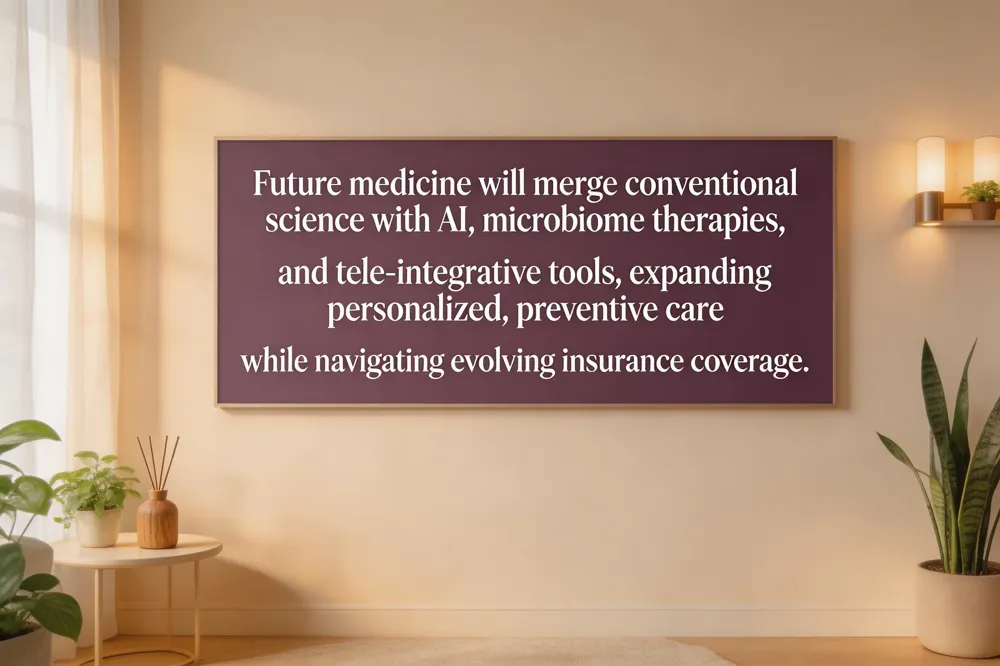 The future of medicine lies in merging conventional science with traditional, complementary, and integrative approaches to address lifestyle‑driven epidemics. Whole‑person care—nutrition, mind‑body techniques, herbal medicine, and personalized coaching—will prevent illness, reduce drug events, and cut costs. Emerging frontiers such as microbiome‑based therapies, AI‑driven health monitoring, and integrative tele‑medicine will enable real‑time, individualized interventions that respect genetic, emotional, and environmental context.
Insurance coverage for integrative medicine varies. Many commercial plans, Medicare, and Medicaid reimburse services like acupuncture, chiropractic, and massage, often with limits or referral requirements. Medicare Part B, for instance, covers up to 12 acupuncture sessions for chronic low‑back pain and manual spinal manipulation. Coverage for naturopathic and other complementary services is less common and state‑dependent.
Personalized healthcare companies use technology to tailor treatment: Medtronic offers adaptive devices and smart insulin pens; OK Capsule creates custom supplement packs; Nurx (Thirty Madison) provides tele‑health‑driven medication delivery; Roche integrates genomics, digital tools, and AI for targeted therapies.
An integrative‑medicine specialist is a fully licensed MD or DO who has completed medical school, residency, and additional integrative‑medicine training, often board‑certified. They can prescribe, order tests, and incorporate evidence‑based complementary therapies, offering a comprehensive, patient‑centered approach.
Conclusion
Patient empowerment is the cornerstone of modern health care, giving individuals the knowledge, confidence and agency to shape decisions that affect their wellbeing. When patients are equipped with accurate information, digital tools and supportive environments, they become active partners rather than passive recipients. Tailored, or personalized, care builds on this foundation by using genetic, lifestyle and psychosocial data to design interventions that match each person’s preferences and needs. Integrative medicine complements tailored approaches, weaving evidence‑based complementary therapies—such as mindfulness, nutrition counseling and acupuncture—into conventional treatment plans to address the whole person: body, mind, spirit and community. Together, these elements point toward a future where health systems are truly patient‑centered, fostering shared decision‑making, preventive focus and sustainable behavior change for lasting health.