Brief Overview
Outpatient detox is a medically supervised withdrawal process that lets patients stay at home while clinicians monitor vital signs, adjust medication, and provide counseling. Staying in a familiar environment preserves work, school, and family routines, reducing stress and promoting continuity of life. Costs are typically 30‑50 % lower than inpatient stays, and many insurers, Medicaid, and Medicare cover the services, making care accessible. Personalized plans integrate medication‑assisted treatment with holistic tools such as yoga, mindfulness, nutrition counseling, and peer support, creating a network that sustains sobriety.
Understanding Outpatient Detox: Foundations and Benefits
 Outpatient detox is a medically supervised program that lets individuals manage withdrawal while staying at home. After a comprehensive assessment, a personalized plan is created that includes FDA‑approved medications such as buprenorphine for opioids or benzodiazepines for alcohol, regular vital‑sign checks, and scheduled clinic or tele‑health visits. This safety net minimizes severe complications like seizures or delirium tremens and allows rapid escalation to inpatient care if needed. The Substance Abuse and Mental Health Services Administration (SAMHSA) endorses outpatient detox as an evidence‑based option for patients with mild‑to‑moderate withdrawal severity who have a stable, substance‑free environment and reliable support. Because patients avoid overnight hospitalization, costs are substantially lower—averaging $1,200‑$3,500 versus $5,000‑$20,000 for residential stays—while still meeting national safety standards, as shown by Joint Commission accreditation at many centers.
What does outpatient detox mean?
Outpatient detox is a medically supervised program that helps a person safely manage withdrawal symptoms while living at home. Patients visit a clinic or connect with clinicians regularly for assessments, vital‑sign monitoring, and medication adjustments as needed. The care team creates an individualized plan that includes symptom‑relief drugs, safety instructions, and a schedule of follow‑up appointments. This approach is suitable for individuals with mild‑to‑moderate dependence who have a stable home environment and reliable support. Once withdrawal subsides, the outpatient detox serves as a bridge to further therapy, counseling, or long‑term recovery services.
Is outpatient detox effective?
Outpatient detox can be an effective first step in recovery for many individuals, especially when it includes physician‑managed medical stabilization and evidence‑based medication‑assisted treatment. Its flexibility allows patients to maintain work, school, or family responsibilities while receiving regular monitoring, group therapy, and individual counseling. Research and clinical practice show that when a person has a stable home environment, reliable transportation, and is motivated to engage in treatment, outpatient detox can safely reduce withdrawal symptoms and lower the risk of relapse. However, its success is less certain for those with severe dependence, complex medical issues, or co‑occurring mental‑health disorders that may require 24‑hour supervision. An initial assessment by a qualified addiction specialist is essential to determine whether outpatient detox is the appropriate level of care for each patient.
Medical Treatments in Outpatient Detox
 Outpatient detox relies on medication‑assisted treatment (MAT) to keep withdrawal safe while patients stay at home. For opioid dependence, FDA‑approved agents such as buprenorphine (often combined with naloxone) and methadone are the cornerstone, reducing cravings and blunting the surge of withdrawal symptoms. Alcohol withdrawal is typically managed with benzodiazepines—chlordiazepoxide, diazepam, lorazepam, or oxazepam—to prevent seizures and delirium tremens; adjunctive anticonvulsants like carbamazepine, gabapentin, or valproic acid may be added for seizure control and anxiety relief. Benzodiazepine tapering strategies involve a gradual dose reduction of the same benzodiazepine, sometimes transitioning to longer‑acting agents such as phenobarbital for smoother tapering. After the acute phase, supportive medications (acamprosate, naltrexone, disulfiram) help maintain abstinence.
What drugs are used in medical detox?
Medical detox typically employs a range of prescription medications to ease withdrawal and prevent complications. For opioid use disorder, methadone and buprenorphine (often combined with naloxone) are the standard agents that reduce cravings and lessen withdrawal intensity. Alcohol detox commonly uses benzodiazepines such as chlordiazepoxide (Librium), diazepam (Valium), lorazepam (Ativan), or oxazepam, as well as anticonvulsants like carbamazepine, gabapentin, valproic acid, and vigabatrin to prevent seizures and curb cravings. Benzodiazepine dependence may also be managed with a taper of the same class of drugs, while phenobarbital is an alternative for both alcohol and benzodiazepine withdrawal in some settings. Supportive medications such as acamprosate, disulfiram, and naltrexone are often introduced after the acute detox phase to aid long‑term abstinence.
Inpatient vs Outpatient Detox: Choosing the Right Level of Care
 Outpatient detox lets patients stay at home while receiving medically supervised withdrawal, usually with daily or several‑times‑a‑week visits for vital‑sign checks, medication‑assisted treatment (MAT) and counseling. Monitoring is intermittent and patients rely on a support network and rapid‑access emergency plans. Inpatient detox requires residence at a facility 24/7, offering continuous nursing, IV fluids, and immediate medication adjustments for severe symptoms such as seizures or delirium tremens.
Cost differs sharply: Outpatient detox costs $1,200‑$3,500 for a medically supervised course, whereas inpatient stays can cost $5,000‑$20,000 because of round‑the‑clock staffing and room‑and‑board expenses.
Eligibility hinges on withdrawal severity, medical stability, home environment, and co‑occurring mental health conditions. Mild‑to‑moderate cases with a safe, sober home qualify for outpatient care; moderate‑to‑severe dependence, unstable housing, or high medical risk warrants inpatient treatment.
The Medicare “60 % rule” applies only to inpatient rehabilitation facilities (IRFs). To retain IRF status, at least 60 % of discharges must involve one of 13 qualifying medical conditions (e.g., stroke, traumatic brain injury). Facilities that miss this threshold are reimbursed at lower acute‑care rates, emphasizing the importance of appropriate level‑of‑care placement.
Evidence‑Based Recovery Programs: CBT and Beyond
 Outpatient detox and intensive programs rely on evidence‑based therapies to turn relapse into lasting change. Cognitive‑behavioral therapy (CBT) consistently yields the highest success, with 70‑75 % of participants staying abstinent at six months. Contingency‑management, rewarding clean‑urine tests, follows closely at 60‑65 % success, while other approaches such as dialectical‑behavior therapy and motivational interviewing add 55‑60 % benefits. When CBT is paired with medication‑assisted treatment—buprenorphine for opioids, benzodiazepines for alcohol—withdrawal symptoms lessen and cravings drop, creating a stable foundation for recovery. Holistic wellness services—mindfulness meditation, yoga, nutrition counseling, acupuncture—address mind‑body balance and reduce anxiety, reinforcing therapeutic gains. Patients who integrate these elements report higher satisfaction and lower relapse risk.
Is outpatient rehab better than inpatient rehab? Neither is universally superior; inpatient offers 24‑hour medical safety for severe cases, while outpatient provides flexibility to keep work, school, and family roles. The best choice depends on withdrawal severity, co‑occurring conditions, and personal support, so a personalized, integrative plan is essential. Choosing the right program empowers recovery, nurtures hope, and sustains wellness.
Practical Strategies for Maintaining Sobriety
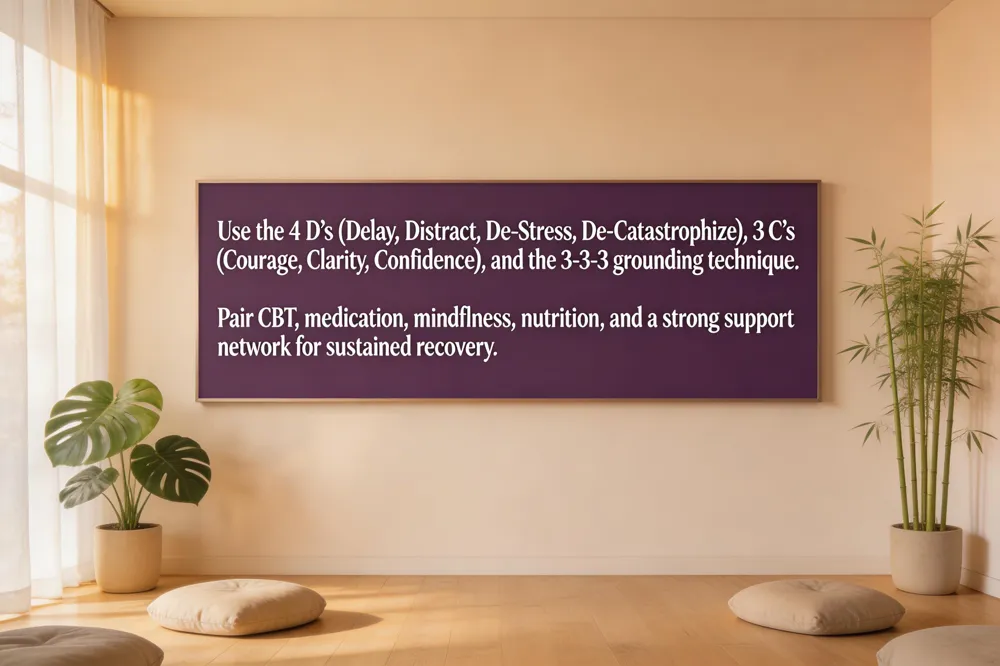 Outpatient detox is the first step, but lasting sobriety needs daily tools. 4 D’s of sobriety – Delay, Distract, De‑Stress, De‑Catastrophize – give a quick, evidence‑based pause when cravings hit. 3 C’s of sobriety – Courage, Clarity, Confidence – build inner strength; courage to face fear, clarity to see values and triggers, confidence that grows with each sober milestone. The 3‑3‑3 grounding technique anchors you in the present: name three things you see, three sounds you hear, and move three parts of your body. Effective coping and prevention strategies blend conventional and holistic care: regular medical check‑ins, medication‑assisted treatment, and CBT for thought patterns; mindfulness meditation, yoga, nutrition counseling, and acupuncture to soothe body and mind; a reliable support network of family, peers, and 12‑step groups; and a structured after‑care plan that includes sober‑living options and relapse‑prevention planning. By combining these practices patients can navigate triggers, maintain treatment adherence, and create a meaningful, drug‑free life. Remember, each day is an opportunity to reinforce health, deepen connection, and celebrate progress toward lasting recovery.
Navigating the Early Days of Sobriety
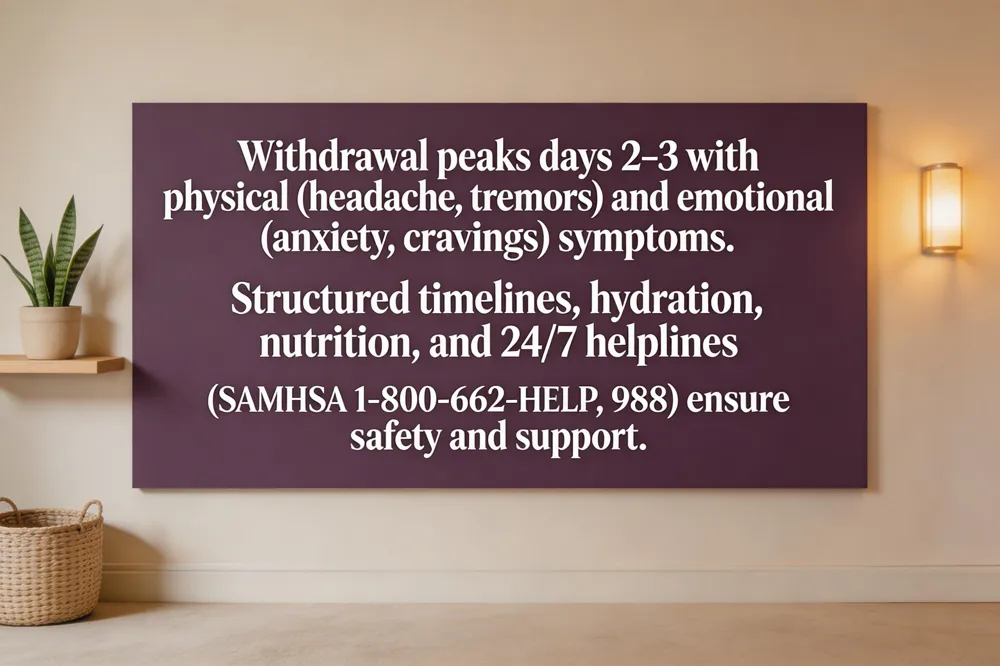 The first 2–3 days after you stop drinking are usually the toughest. Physical withdrawal peaks around day 3 with headaches, nausea, tremors, sweating and rapid heart rate; emotionally, irritability, anxiety and intense cravings surface. For heavy drinkers this period can become life‑threatening, so medical supervision—often provided through an outpatient detox with FDA‑approved medications like benzodiazepines—is strongly advised.
Withdrawal typically eases after the first week, with physical symptoms receding and mental clarity returning. A structured timeline helps patients anticipate changes and plan coping strategies such as hydration, nutrition, mindfulness or yoga.
If cravings or panic become overwhelming, immediate help is just a call away. The SAMHSA National Helpline (1‑800‑662‑HELP) and the 988 Suicide & Crisis Lifeline operate 24/7, offering confidential referrals to local outpatient detox, counseling and crisis support.
A treatment intervention begins by outlining the harmful patterns and their impact, then presents a clear, step‑by‑step plan—often combining medication‑assisted detox, CBT, DBT and holistic therapies—while setting consequences for refusal. Professionals guide the individual toward sustained sobriety with empathy and accountability.
Integrative and Holistic Elements in Outpatient Detox
 Outpatient detox programs now blend evidence‑based medicine with mind‑body therapies such as yoga, mindfulness meditation, acupuncture, and personalized nutrition counseling. These integrative tools help ease anxiety, improve sleep, and support physical recovery while patients practice coping skills in their own home environment, a strategy shown to lower relapse risk (SAMHSA, NIDA).
Telehealth and virtual check‑ins expand access to daily vital‑sign monitoring, medication adjustments, and counseling, especially for those in remote areas. Real‑time video visits and remote monitoring apps allow clinicians to intervene quickly if withdrawal complications arise, maintaining safety without overnight hospital stays.
Facilities accredited by the Joint Commission meet national standards for patient safety, medication management, and quality of care. Accreditation ensures that outpatient detox services follow rigorous protocols, providing confidence that the medical and holistic components are delivered by qualified professionals.
For immediate assistance, the SAMHSA 24/7 helpline (1‑800‑662‑HELP) offers free, confidential referrals to certified outpatient detox centers. Their online treatment locator and HELP4U text service (text 435748) help individuals find nearby programs, verify insurance coverage, and connect with supportive networks—critical steps toward a personalized, recovery‑focused plan.
Final Thoughts
Outpatient detox lets patients withdraw at home while staying connected to work, family and community, reducing costs and avoiding hospital complications. Programs blend FDA‑approved medications with therapies such as CBT, DBT and mindfulness, and often add nutrition counseling, yoga or acupuncture to support recovery. Because each person’s history, health status and goals differ, multidisciplinary teams tailor treatment plans that address substance use and mental issues. If you recognize the need for change, reach out to a provider or SAMHSA helpline to explore a detox pathway.