Why Outpatient Detox Matters
Outpatient detox is one of several medically supervised withdrawal pathways, alongside inpatient programs that require 24‑hour residential care. For individuals with mild‑to‑moderate withdrawal severity, outpatient settings provide the same safety monitoring—vital‑sign checks, medication‑assisted treatment, and counseling—while allowing patients to stay at home. This model aligns naturally with integrative, holistic care: multidisciplinary teams incorporate yoga, mindfulness, nutrition counseling, and acupuncture, fostering a mind‑body connection that supports overall wellness. Because patients remain in their everyday environments, they can preserve employment, education, and family responsibilities, reducing financial strain and social disruption. The flexibility of evening or weekend appointments empowers personal autonomy, lets patients practice coping skills in real‑world contexts, and promotes stronger family involvement. In short, outpatient detox delivers effective, cost‑efficient withdrawal management that respects patient independence and integrates holistic therapies into a personalized recovery plan.
Understanding Inpatient Detox
Understanding Inpatient Detox
| Aspect | Details |
|---|---|
| Setting | Residential medical facility with 24‑hour stay |
| Monitoring | Continuous vital‑sign checks, withdrawal‑symptom tracking, immediate response to seizures or delirium tremens |
| Medication‑Assisted Treatment | Benzodiazepines (alcohol), buprenorphine (opioids), adjunctive agents for anxiety/insomnia; dosing adjusted in real time |
| Comprehensive Assessment | Substance‑use history, physical health, psychiatric status, social supports → personalized detox plan |
| Holistic Elements | Counseling, nutrition, yoga, mindfulness, other complementary therapies |
| Outcome Goal | Safe withdrawal, stabilization, seamless transition to next phase of recovery |
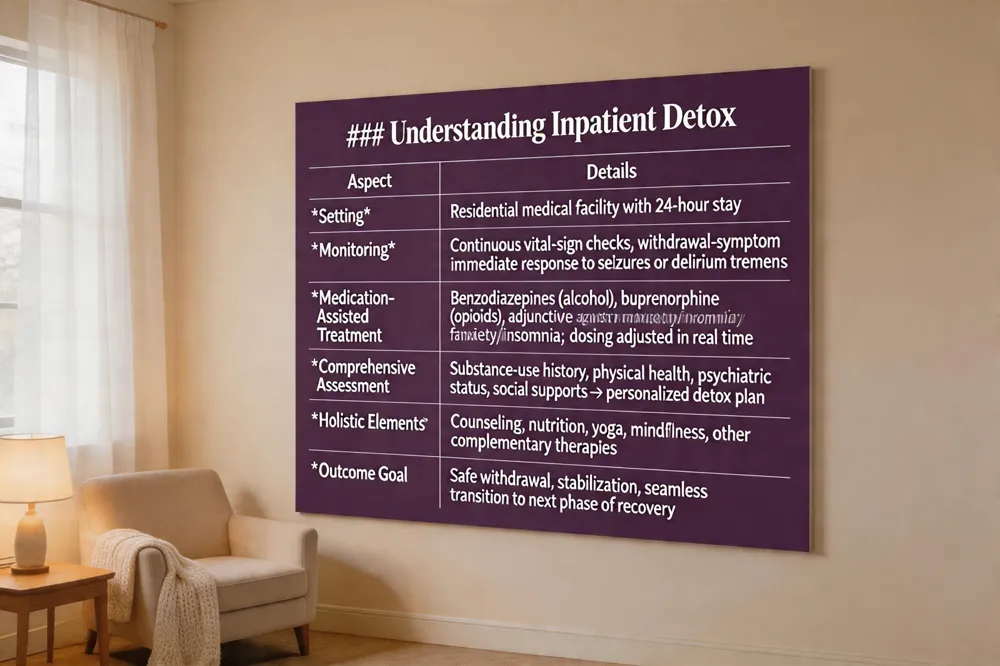 Inpatient detox takes place in a residential setting where patients stay overnight in a medical facility. 24‑hour monitoring is a cornerstone of this approach: nurses and physicians continuously check vital signs, track withdrawal symptoms, and intervene immediately if complications such as seizures or delirium tremens arise. This constant supervision ensures safety for people with severe‑problematic withdrawal patterns.
Medical supervision includes medication‑assisted treatment tailored to the individual’s substance, co‑occurring mental health conditions. Medications such as benzodiazepines for alcohol withdrawal, buprenorphine for opioid dependence, or adjunctive agents for anxiety and insomnia are administered under physician direction, with dosing adjusted in real time based on frequent assessments.
A comprehensive health assessment is performed at admission and throughout the stay. Clinicians evaluate the patient’s substance‑use history, physical health, psychiatric status, and social supports. This holistic intake informs a personalized detox plan that integrates medical care with counseling, nutrition, and, when appropriate, complementary therapies such as yoga or mindfulness.
What happens during inpatient detox? Patients are admitted to a medical facility where clinicians continuously monitor vital signs and withdrawal symptoms. A physician‑directed plan may include medications to ease cravings, prevent seizures, and stabilize mood while nurses track progress around the clock. Round‑the‑clock support for hydration, nutrition, and comfort is provided, along with counseling for co‑occurring mental health concerns. A comprehensive health assessment tailors the detox to each person’s substance‑use history, overall health, and personal goals, after which a seamless transition to the next phase of personalized, holistic recovery care is planned.
Benefits of Outpatient Treatment
Benefits of Outpatient Treatment
| Benefit | Description |
|---|---|
| Home & Community Integration | Patients stay at home, work, or school while receiving treatment |
| Flexible Scheduling | Evening/weekend sessions, IOP or PHP formats; practice coping skills in real‑world settings |
| Cost‑Effectiveness | 30‑70 % lower cost than inpatient; avoids room‑and‑board fees |
| Insurance Coverage | Medicaid, Medicare, and many private plans cover a larger share of outpatient services |
| Family Involvement | Regular education sessions and opportunities for loved‑ones to support recovery |
| Holistic, Patient‑Centered | Balances medical safety with personal autonomy to sustainable abstinence |
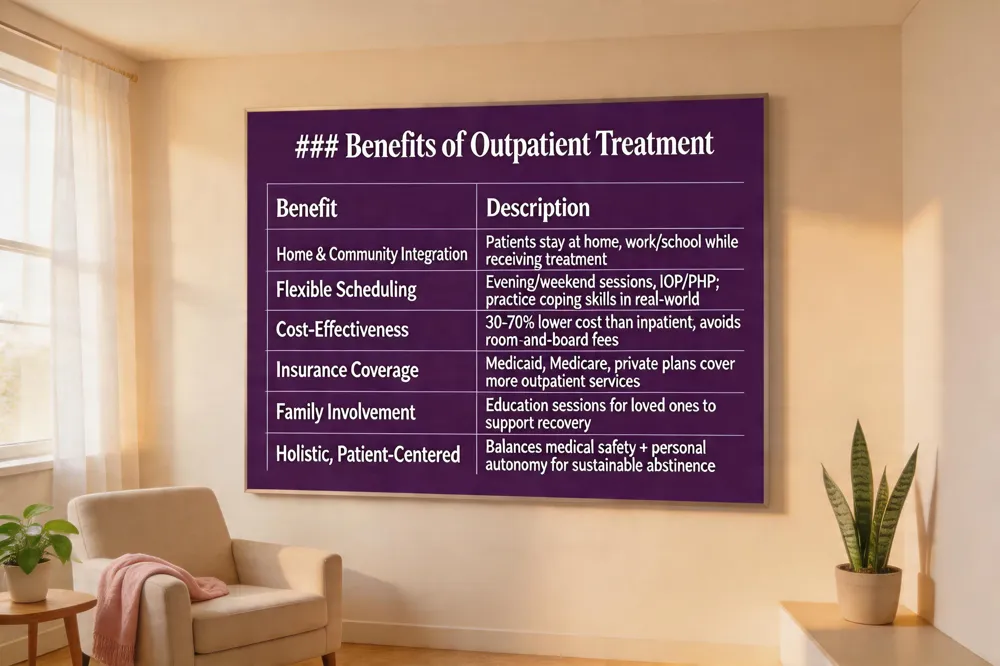 Outpatient treatment lets patients stay at home, work, or school while receiving medically supervised withdrawal and counseling, preserving daily responsibilities and reducing disruption. Flexible scheduling—often evening or weekend sessions, intensive‑outpatient (IOP) or partial‑hospitalization (PHP) formats—allows individuals to practice coping skills in real‑world settings, enhancing skill generalization and confidence. Cost‑effectiveness is a major advantage: outpatient programs avoid room‑and‑board fees and 24‑hour staffing, typically costing 30‑70 % less than inpatient care; many insurers, Medicaid, and Medicare cover a larger share of outpatient services, making treatment more accessible for those with limited insurance. Family involvement is built into most programs, with regular education sessions and opportunities for loved ones to support the patient’s recovery, strengthening the home network and reducing relapse risk. Together, these elements create a patient‑centered, holistic approach that balances medical safety with personal autonomy, helping individuals achieve sustainable abstinence while maintaining employment, education, and social connections.
Inpatient vs. Outpatient Detox: Key Differences
Inpatient vs. Outpatient Detox: Key Differences
| Dimension | Inpatient Detox | Outpatient Detox |
|---|---|---|
| Living Situation | Residential stay (full‑time) | Home or sober‑living housing |
| Monitoring | 24‑hour medical supervision | Intermittent clinic visits (several times/week) |
| Medication Management | Rapid adjustments, immediate response to complications | Scheduled dosing, patient self‑management between visits |
| Ideal Candidates | Severe dependence, co‑occurring conditions, high relapse risk | Mild‑to‑moderate withdrawal, stable home, strong support network |
| Cost | $5,000–$15,000 per stay | $1,000–$3,000 per week (30‑70 % less) |
| Insurance Likelihood | Often covered but higher out‑of‑pocket | More frequently covered by standard plans |
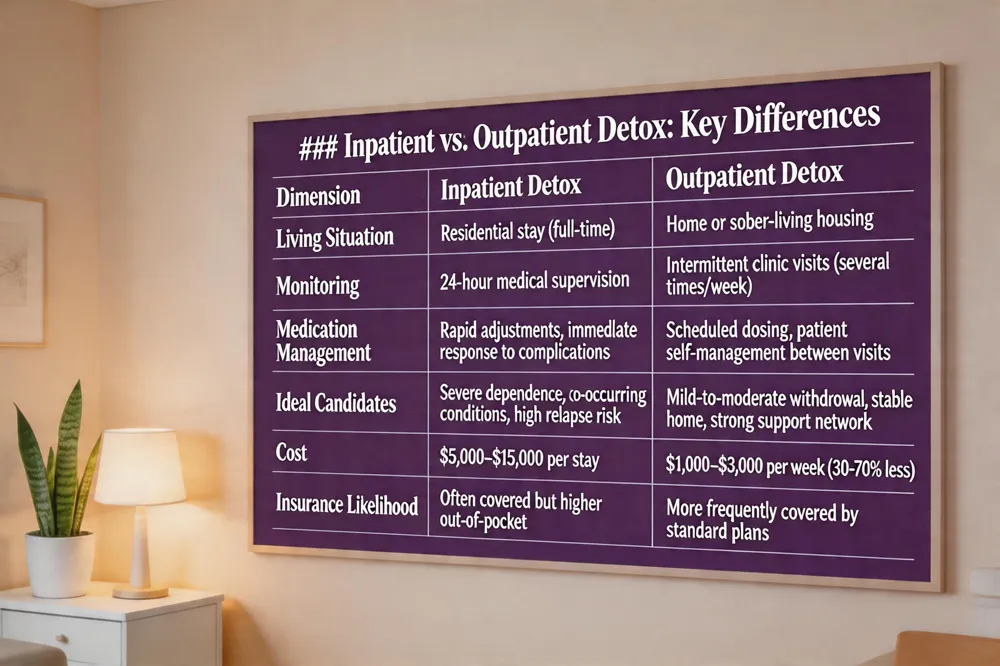 Inpatient detox occurs in a residential facility where the client lives full‑time for the medically supervised withdrawal period. This setting delivers 24‑hour monitoring, rapid medication adjustments, and immediate response to complications such as seizures or delirium tremens. It is recommended for patients with severe dependence, co‑occurring medical or psychiatric conditions, or a high relapse risk. Outpatient detox allows the client to stay at home (or in sober‑living housing) and attend scheduled clinic visits, typically several times a week. Medical supervision is intermittent, and the individual must manage daily responsibilities between appointments. Outpatient care is best suited for mild‑to‑moderate withdrawal, stable home environments, and strong support networks. Cost‑wise, inpatient detox is considerably more expensive—often $5,000–$15,000 per stay—while outpatient programs cost 30‑70 % less, ranging from $1,000–$3,000 per week, and are more likely to be covered by standard insurance plans. Both approaches aim for safe substance clearance, yet they differ markedly in supervision intensity, suitability based on severity, and financial impact.
Goals of an Effective Detox Program
Goals of an Effective Detox Program
| Goal | How It Is Achieved |
|---|---|
| Safe Withdrawal Management | Medically supervised symptom control, vital‑sign monitoring |
| Physical Stability | Medication‑assisted treatment, hydration, nutrition |
| Psychological Steadiness | Counseling, crisis support, mindfulness practices |
| Personalized After‑Care Roadmap | Links to intensive outpatient, MAT, community groups (AA, SMART) |
| Holistic Integration | Yoga, nutrition counseling, family education, mind‑body therapies |
| Minimize Disruption | Flexible options (especially outpatient) to keep work/school/family responsibilities |
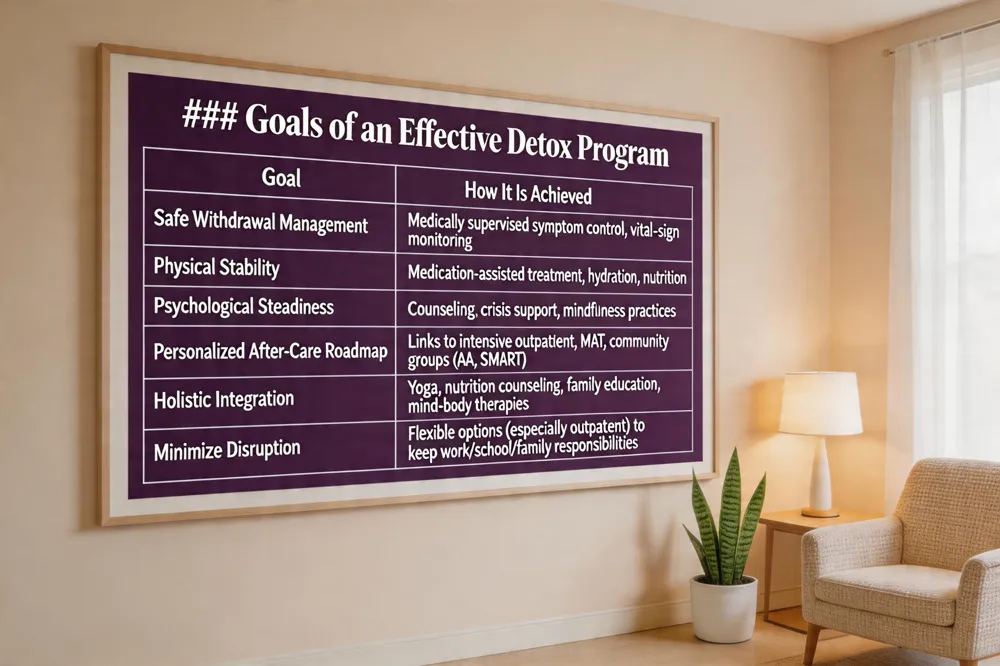 A good detox program’s primary aim is safe withdrawal management—providing medically supervised symptom control so the body can clear alcohol, opioids, or other substances without life‑threatening complications. Whether delivered outpatient or inpatient, the program must ensure physical stability (vital‑sign monitoring, medication‑assisted treatment) and psychological steadiness (counseling, crisis support) while patients remain in a familiar environment.
Treatment for ongoing recovery is built into the plan: patients receive a personalized roadmap that links detox to intensive outpatient counseling, medication‑assisted treatment, and community support groups such as AA or SMART Recovery. The holistic, patient‑centered approach integrates nutrition counseling, mindfulness, yoga, and family education to address mind‑body connections and foster lasting motivation. By minimizing disruption to work, school, and family life—especially in outpatient settings—detox becomes both affordable and accessible, laying a stable, compassionate foundation for long‑term sobriety.
Detox Services: What Happens in a Program
Detox Services: What Happens in a Program
| Phase | Activities |
|---|---|
| Intake & Evaluation | Comprehensive medical assessment, severity grading, support‑system review |
| Stabilization | Medication‑assisted withdrawal (buprenorphine, naltrexone, benzodiazepines) |
| Therapeutic Interventions | Individual counseling, CBT, group therapy, coping‑skill training |
| Holistic Modalities | Yoga, mindfulness meditation, nutrition counseling, acupuncture |
| Discharge Planning | Personalized after‑care plan, referrals to IOP, community support, tele‑health follow‑ups |
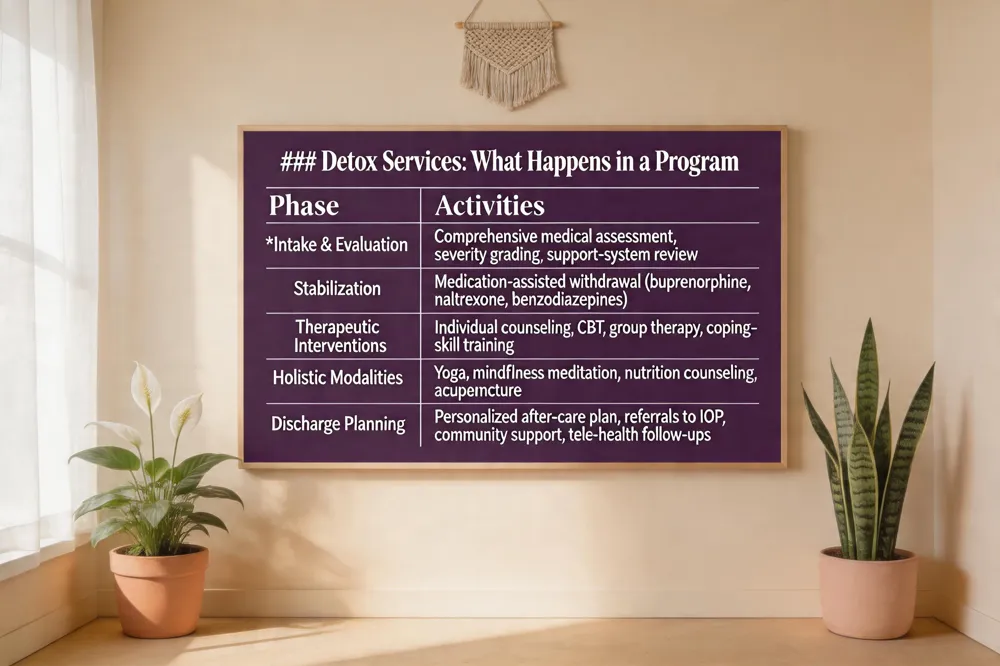 A detox program starts with a comprehensive intake and medical evaluation to identify the severity of withdrawal, any co‑occurring psychiatric or medical conditions, and the patient’s home support (Hayashida et al., 1989; ASAM guidelines). Based on this assessment, physicians provide medication‑assisted withdrawal—using FDA‑approved agents such as buprenorphine, naltrexone, or benzodiazepines—to safely manage anxiety, tremors, nausea, and insomnia while the patient remains at home (Eclipse Wellness, SAMHSA). Throughout the stabilization phase, a multidisciplinary team delivers counseling, cognitive‑behavioral therapy, and group sessions that teach coping skills and address triggers (SAMHSA, CeDAR). Holistic modalities—yoga, mindfulness meditation, nutrition counseling, acupuncture—are often woven into the schedule to support mind‑body healing and promote personal empowerment (Eclipse Wellness, Recovery Centers of America). Before discharge, a personalized after‑care plan is created, linking the patient to intensive outpatient programs, community support groups, and tele‑health follow‑ups to sustain sobriety and prevent relapse.
Effectiveness of Outpatient Detox
Effectiveness of Outpatient Detox
| Factor | Evidence / Reason |
|---|---|
| Safety | Comparable to inpatient for mild‑to‑moderate withdrawal when MAT is used |
| Abstinence Rates | Similar long‑term outcomes to inpatient for appropriate candidates |
| Completion Rates | High when medication, counseling, and holistic services are integrated |
| Flexibility | Allows continuation of work, school, family duties, reducing financial strain |
| Support Networks | Family involvement, peer groups, intensive outpatient or tele‑health follow‑up critical for sustained sobriety |
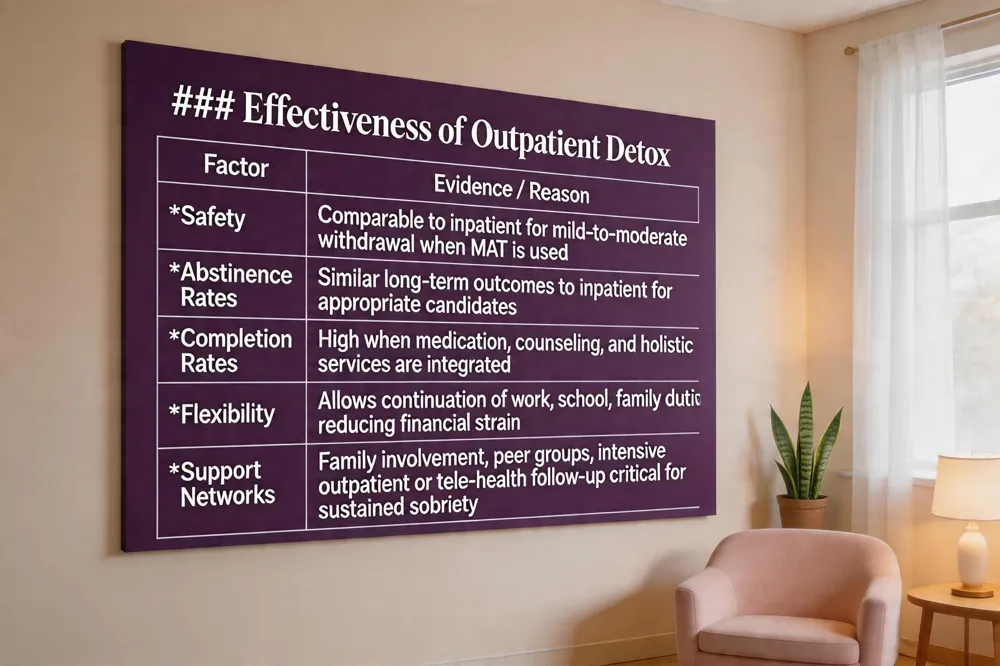 Outpatient detox is an evidence‑based approach that works well for mild‑to‑moderate withdrawal when patients have a stable home, reliable support, and can attend regular appointments. Studies show comparable safety and long‑term abstinence rates to inpatient care for this group, with similar completion and relapse outcomes when medication‑assisted treatment (MAT) such as buprenorphine, naltrexone, or benzodiazepines is used. The flexibility of outpatient schedules lets patients keep work, school, or family responsibilities, reducing disruption and financial strain. Integrating a multidisciplinary team—physicians, nurses, addiction counselors, and holistic practitioners—provides medical stabilization, counseling, and complementary therapies (yoga, nutrition, mindfulness). Strong support networks, including family involvement, peer groups, and continuity of care through intensive outpatient or telehealth follow‑up, are critical for maintaining sobriety after detox. When matched to the right candidate, outpatient detox offers a safe, convenient, and effective pathway toward sustained recovery.
Continuing Care After Outpatient Rehab
Continuing Care After Outpatient Rehab
| Component | Description |
|---|---|
| Follow‑Up Appointments | Scheduled medical and counseling check‑ins |
| Medication‑Assisted Treatment | Ongoing buprenorphine, naltrexone, or other MAT as needed |
| Intensive Outpatient / PHP | Structured therapy sessions to deepen skills |
| Therapy Modalities | Individual, group, family therapy for relapse‑prevention |
| Community Resources | Peer‑support meetings, sober‑living homes, family education |
| Holistic Practices | Daily mindfulness, nutrition counseling, coping‑skill rehearsal |
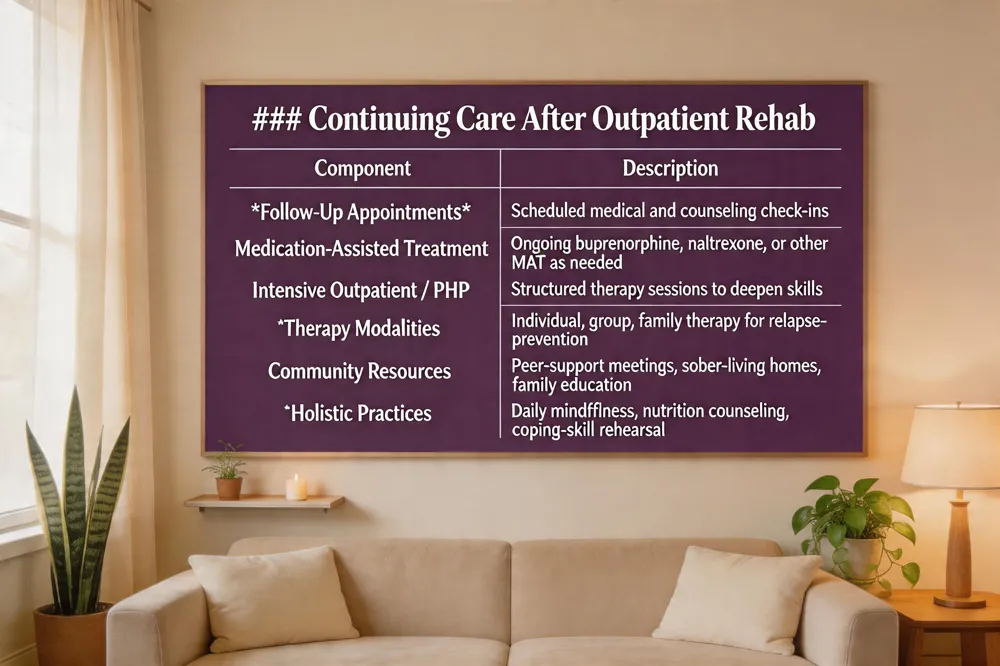 After outpatient rehab ends, patients receive a personalized discharge plan that bridges the transition home or to the next level of care. The plan typically includes scheduled follow‑up appointments, medication‑assisted treatment, and a schedule for intensive outpatient or partial‑hospitalization sessions. Continued therapy—both individual and group—provides ongoing skill‑building, while community resources such as peer‑support meetings, sober‑living homes, and family education reinforce a supportive network. Long‑term relapse‑prevention strategies are woven into daily routines, using mindfulness, nutrition counseling, and coping‑skill practice in real‑world settings. By integrating medical monitoring, holistic wellness, and community involvement, the after‑care continuum helps sustain abstinence and promotes lasting recovery.
Additional Considerations: Cost, Holistic Therapies, and Support Resources
Additional Considerations: Cost, Holistic Therapies, and Support Resources
| Consideration | Details |
|---|---|
| Cost | Outpatient: $1,000‑$3,000/week (30‑70 % less than inpatient $5,000‑$15,000 stay) |
| Insurance | Medicaid, Medicare, private plans often reimburse outpatient detox; sliding‑scale options available |
| Holistic Therapies | Yoga, mindfulness, nutrition counseling, acupuncture integrated to support mind‑body healing |
| Support Resources | SAMHSA National Helpline (1‑800‑662‑HELP, 24/7 confidential referrals; text service available |
| Telehealth | Remote vitals monitoring, counseling, and follow‑up expand access |
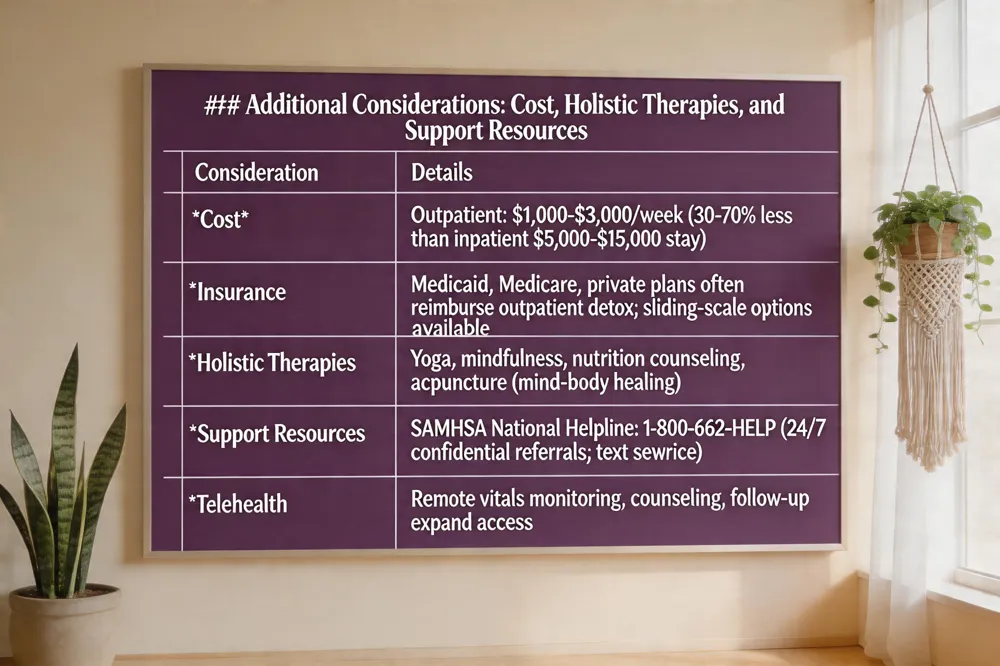 Outpatient detox costs 30‑70 % less than inpatient care, with weekly fees of $1,000‑$3,000 versus $5,000‑$15,000 for residential stays. This affordability lets patients keep jobs, school, or family duties while receiving medical supervision. Many programs weave integrative therapies—yoga, mindfulness, nutrition counseling, acupuncture—into the withdrawal plan, supporting the mind‑body connection and easing stress. The SAMHSA National Helpline (1‑800‑662‑HELP) offers 24/7, confidential referrals, crisis support, and can be accessed by text (zip‑code to 435748). Telehealth expands access, allowing remote vitals monitoring and counseling. Insurance coverage is common; Medicaid, Medicare, and private plans often reimburse outpatient detox, and self‑pay or sliding‑scale options are available for those without coverage. These features together promote continuity of care and empower patients to stay engaged in recovery while balancing everyday life.
Final Thoughts on Choosing Detox Care
Choosing between inpatient and outpatient detox is a balance of safety, cost, and everyday life. For most individuals with mild‑to‑moderate withdrawal, medically supervised outpatient care provides comparable safety outcomes while costing 30‑70 % less and allowing patients to keep work, school, and family responsibilities. When severe symptoms, seizures, or delirium tremens are a risk, inpatient admission offers 24‑hour monitoring and rapid intervention.
A personalized, integrative approach blends evidence‑based medication‑assisted treatment with holistic modalities such as yoga, mindfulness, nutrition counseling, and acupuncture. Multidisciplinary teams—physicians, nurses, addiction counselors, and holistic practitioners—tailor schedules, medication regimens, and therapeutic activities to each patient’s medical history, home environment, and recovery goals.
Next steps: assess withdrawal severity, secure a supportive home setting, and contact resources such likepline helplineHH line ( free center662662TRANSFER hel upHelpSA‑ optional prioritize of assistance, SAM Helps to locate low‑cost programs. Begin with a brief medical evaluation and then choose the level of care that aligns with safety needs, financial resources, and lifestyle preferences, ensuring a smooth transition to ongoing outpatient counseling and community support.