Integrative Solutions in Primary Care
Anxiety and depression affect roughly one‑in‑five U.S. adults each year, making primary‑care the first point of contact for most patients. Routine use of validated screens such as the PHQ‑9 and GAD‑7 enables early detection and monitoring of symptom change. Collaborative care models—whether the PCBH, CoCM, or team‑based approaches that embed mental‑health clinicians, dietitians, and movement specialists—have been shown to cut depressive scores by 30‑40% and improve adherence. Whole‑person strategies that blend evidence‑based psychotherapy (e.g., CBT), mindfulness‑based stress reduction, aerobic exercise, nutrition counseling, and safe supplements (omega‑3, vitamin D, magnesium) address mind‑body chemistry, lifestyle, and social determinants. Personalized, culturally sensitive plans empower patients, reduce costs, and foster lasting mental‑health recovery.
Personalized Pharmacologic Choices for Women
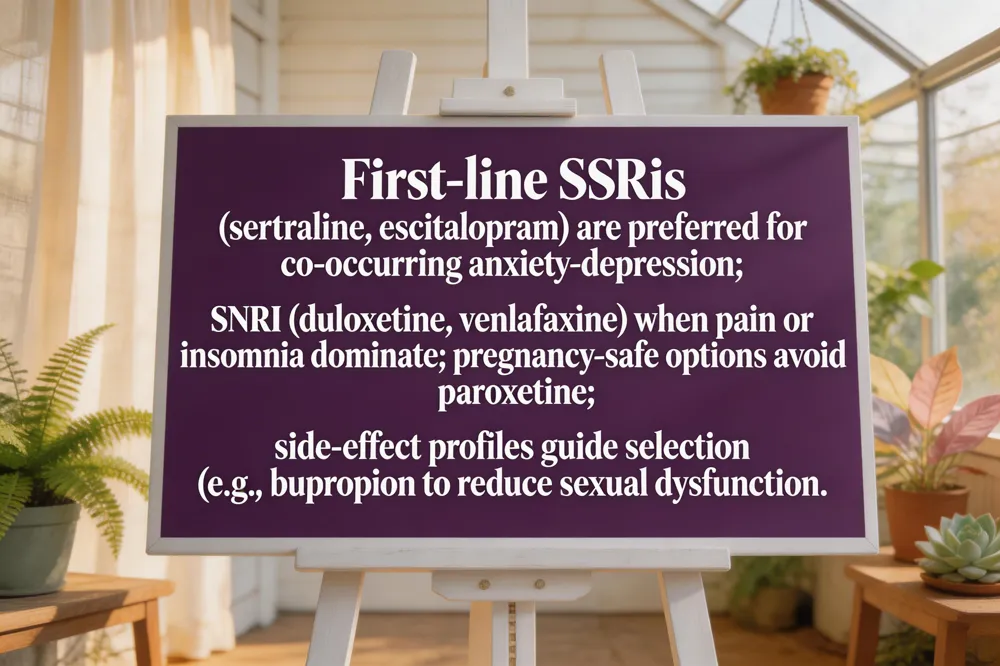 Women with co‑occurring anxiety and depression often benefit from a first‑line selective serotonin reuptake inhibitor (SSRI) such as sertraline or escitalopram, which are well‑studied, generally well‑tolerated, and address both mood and anxiety. When insomnia, chronic pain, or fibromyalgia dominate the clinical picture, a serotonin‑norepinephrine reuptake inhibitor (SNRI) like duloxetine or venlafaxine can be preferable because it also improves sleep quality and musculoskeletal discomfort. Pregnancy‑safe options avoid agents with higher teratogenic risk (e.g., paroxetine); sertraline and escitalopram are frequently used after a risk‑benefit discussion. Side‑effect profiles guide individual preferences: escitalopram and sertraline have milder sexual dysfunction and weight‑gain concerns, while bupropion may be chosen to avoid these effects but is less potent for pure anxiety. All choices should be made within an integrated care model that includes routine PHQ‑9 / GAD‑7 screening, collaborative care coordination, and adjunctive mind‑body therapies (mindfulness, yoga, aerobic exercise) and nutritional counseling (omega‑3, magnesium) to enhance outcomes and reduce medication dose. A personalized, patient‑centered plan, regularly reassessed, yields the best balance of efficacy and tolerability.
Integrative Care Models and Insurance
 Collaborative care and behavioral‑health integration embed mental‑health clinicians, dietitians, and movement specialists within primary‑care teams, allowing coordinated treatment plans that combine CBT, mindfulness‑based stress reduction, exercise, and nutrition counseling.
Many insurers now cover evidence‑based integrative services—such as acupuncture, yoga therapy, and dietitian visits—when a qualified provider codes the encounter and a physician’s referral establishes medical necessity.
Patients can also use flexible‑spending or health‑savings accounts for out‑of‑pocket costs. The SAMHSA 24‑hour helpline (1‑800‑662‑HELP) offers free referrals to community resources, including integrative‑health programs, ensuring rapid access for persons in crisis. Integrated models have demonstrated cost‑effectiveness, saving an average of $1,200 per patient per year by reducing specialty referrals, emergency visits, and hospitalizations.
Does insurance pay for integrative medicine? Yes—coverage varies by plan but often includes acupuncture, chiropractic, and other CPT‑coded modalities when deemed medically necessary.
Alternative treatments for anxiety and depression: Mind‑body practices (yoga, meditation, MBSR), omega‑3 and vitamin‑D supplementation, dietary counseling, and evidence‑based psychotherapy are effective adjuncts or stand‑alone options.
A need for a holistic approach: Mental health is intertwined with metabolic, immune, and lifestyle factors; addressing nutrition, sleep, and stress alongside conventional therapy yields more durable outcomes.
Non‑drug treatment for anxiety and depression: CBT, regular aerobic exercise, sleep hygiene, Mediterranean‑style diet, acupuncture, and guided relaxation provide robust symptom relief without medication.
Finding Local Holistic Mental‑Health Services
 Primary‑care clinicians can start a holistic mental‑health search by using trusted provider directories such as Psychology Today, state health‑department listings, or the insurer’s online search tool. In many states, integrative clinics appear in these databases, offering combined psychotherapy, nutrition counseling, yoga, meditation, and acupuncture. Telehealth expands access—programs like the Center for Solutions and state‑run tele‑mental‑health networks deliver evidence‑based CBT, mindfulness‑based stress reduction, and medication management via video across rural and urban areas. The SAMHSA National Helpline (1‑800‑662‑HELP) provides 24/7, confidential referrals to local integrative resources, support groups, and crisis services, and its text service (HELP4U, 435748) can locate nearby options by zip code. Sample regional programs include the DBT Center of Wyoming (in‑person DBT, EMDR, equine therapy, and statewide telehealth), Behavioral Health Services at Campbell County Health (sliding‑scale counseling, group DBT, Medicaid/Medicare), and Harmony Hills in Florida, which blends conventional therapy with yoga, art, and nutrition counseling. Contact each center to verify insurance acceptance, fee structures, and the ability to tailor a personalized, whole‑person treatment plan.
Mind‑Body and Lifestyle Interventions
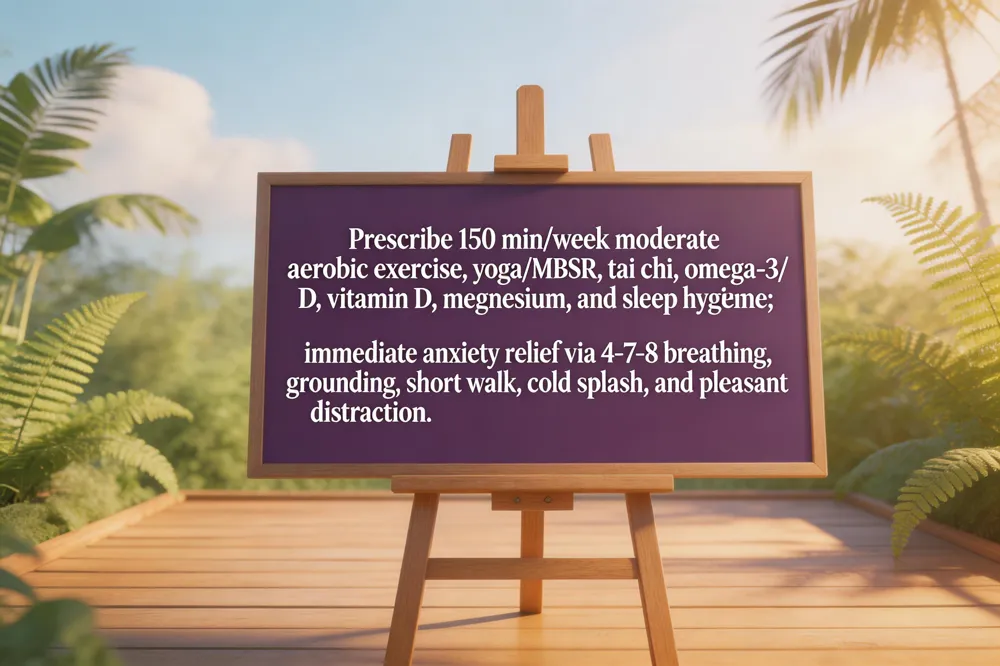 Integrative primary‑care teams blend evidence‑based psychotherapy with mind‑body practices such as yoga, mindfulness‑based stress reduction (MBSR) and tai chi, which have been shown to lower cortisol and improve mood. A prescription of 150 minutes of moderate aerobic exercise each week (brisk walking, cycling, swimming) reduces the odds of major depressive disorder by ≈ 25 % and eases anxiety. Nutrient‑dense diets rich in omega‑3 fatty acids, vitamin D and magnesium support neurotransmitter balance; supplementation (EPA/DHA ≈ 1 g/day, vitamin D 2 000‑5 000 IU, magnesium 250 mg at bedtime) yields modest symptom relief. Sleep hygiene—consistent bedtime, limiting screens, and a cool dark room—combined with stress‑reduction techniques (4‑7‑8 breathing, progressive muscle relaxation, grounding 5‑4‑3‑2‑1) offers rapid anxiety relief.
How to reduce anxiety immediately: Use the 4‑7‑8 breath, then the 5‑4‑3‑2‑1 grounding exercise, move with a short walk or stretches, splash cold water, and engage a pleasant distraction while naming or writing the feeling.
Holistic approach to mental‑health recovery: Pair psychotherapy with nutrition, regular exercise, sleep hygiene, mindfulness, yoga, acupuncture or art therapy, creating a personalized roadmap for lasting well‑being.
Holistic approach to anxiety and panic attacks: Begin with breath‑work, grounding, gentle yoga or tai chi, add mindfulness or guided imagery, consider short‑term herbal aids (chamomile, passion‑flower) after clinician review, and use complementary modalities like lavender aromatherapy or acupuncture when appropriate.
Finding scholarly articles: Search PubMed/Google Scholar with terms “holistic mental health,” “integrative psychiatry,” “mind‑body interventions.” Prioritize recent systematic reviews in journals such as Frontiers in Psychiatry, PLOS Mental Health, and Healthcare (Basel).
Herbal, Nutritional, and Home Remedies
 Evidence‑based herbs and supplements: St. John’s wort aids mild‑to‑moderate depression; valerian, passionflower, chamomile, lavender, and lemon balm provide modest anxiety relief. Omega‑3s, magnesium, and vitamin D3 are safe adjuncts. Safety and interaction considerations: Many herbs (e.g., St. John’s wort, kava) affect drug metabolism or cause liver toxicity; always consult a clinician before use, especially during pregnancy, breastfeeding, or when on prescription meds. Simple home‑based stress‑relief techniques: Warm lavender baths, chamomile or lemon‑balm tea, progressive muscle relaxation, mindful breathing, short walks, music, and a personal “joy list.” Age‑specific recommendations: Teens benefit from aerobic exercise, guided meditation, omega‑3s, and low‑dose chamomile or lemon‑balm tea; adults may add valerian or passionflower; seniors should prioritize magnesium and gentle yoga. Talking with supportive others releases oxytocin and lowers cortisol, making conversation a proven, low‑cost stress reducer.
Special Populations and Integrated Care
 Men’s mental‑health barriers – Cultural expectations of stoicism often cause men to hide depressive symptoms, expressing them instead as irritability, substance use, or over‑working. Routine, non‑judgmental screening (PHQ‑9 and GAD‑7) and open‑ended conversations can break down these barriers. Integrative tools such as (**mindfulness‑based stress reduction (MBSR) and yoga practices, and supportive community groups encourage men to share feelings and receive personalized care.
Adolescent and teenage considerations – Youth visit providers more often than adults and frequently present with comorbidities like IBS or obesity. Screening with (PHQ‑9 and GAD‑7, brief CBT, and mind‑body interventions (MBSR, progressive muscle relaxation**) are effective. Lifestyle counseling that includes sleep hygiene, reduced caffeine, and regular aerobic activity (150 min/week) supports both mental and physical health.
Weight‑gain concerns with antidepressants – Bupropion (Wellbutrin) and fluoxetine (Prozac) are the least likely to cause weight gain, while paroxetine and citalopram carry higher risk. Discussing side‑effects, diet, and exercise with patients helps tailor treatment.
Comprehensive medication list – First‑line agents: SSRIs (sertraline, escitalopram, fluoxetine, citalopram, paroxetine) and SNRIs (venlafaxine, duloxetine). Alternatives: bupropion, mirtazapine, buspirone, short‑term benzodiazepines, hydroxyzine, beta‑blockers, gabapentin/pregabalin for specific anxiety. Integrative care models that combine these with nutrition, exercise, and mind‑body practices improve adherence and outcomes.
Future Directions and Resources
 Holistic approach to mental health scholarly articles – Use keywords like “holistic mental health” in databases, prioritize systematic reviews from journals such as Frontiers in Psychiatry and PLOS Mental Health, and filter for the last five years.
Holistic approaches in mental health and wellness journal – This peer‑reviewed journal publishes interdisciplinary research on mindfulness, nutrition, exercise, spirituality, and complementary therapies integrated with conventional care.
What are examples of holistic mental health care? – Art therapy, CBT, yoga, breath‑work, massage, nutritional counseling, herbal supplements, and lifestyle coaching together address mind, body, and spirit.
Holistic mental health practitioner – A licensed professional (psychiatrist, psychologist, social worker) with additional certifications in nutrition, acupuncture, mindfulness, or energy healing who delivers personalized, evidence‑based, integrative care.
Moving Forward: Whole‑Person Care
Patient‑centered treatment plans begin with a thorough biopsychosocial assessment that respects cultural values, preferred therapies, and co‑occurring medical conditions. In primary‑care settings the clinician collaborates with behavioral‑health consultants, dietitians, movement specialists, and, when appropriate, integrative practitioners to co‑design a personalized roadmap that may combine CBT, mindfulness, exercise, nutrition counseling, and evidence‑based supplements. Community and crisis resources—such as the SAMHSA National Helpline (1‑800‑662‑HELP), local support groups, and tele‑health crisis lines—are documented in the patient’s record so rapid assistance is available during acute episodes. Continuous outcome monitoring employs validated tools (PHQ‑9, GAD‑7) at each visit, supplemented by patient-reported progress logs and wearable‑derived activity or sleep data, allowing the care team to adjust interventions in real time and sustain long‑term well‑being.