Why an Integrated Approach Matters
Workplace mental‑health disorders affect roughly 15 % of working‑age adults at any moment and cost the global economy about USD 1 trillion each year in lost productivity, absenteeism and health expenditures. An integrated strategy tackles this burden by addressing three overlapping domains. First, the "prevent harm" domain reduces psychosocial hazards through primary, secondary and tertiary prevention—screening for stressors, redesigning jobs, and offering early‑intervention resources. Second, the "promote the positive" domain builds strengths such as psychological capital, meaningful work, and a supportive climate with tools like the Psychological Capital Questionnaire or Workplace PERMA Profiler. Third, the "respond to problems" domain enhances mental‑health literacy, reduces stigma, and provides return‑to‑work pathways, using instruments such as the Mental Health Literacy Workplace Scale. Implementing these domains is most effective when guided by the Knowledge‑to‑Action (KTA) framework, which directs organizations to identify gaps, design tailored interventions, and continuously monitor, review and improve outcomes. Aligning instruments (e.g., FlourishDX or Guarding Minds at Work) with KTA activities ensures that each domain is measured, refined, and sustained, delivering a healthier, more productive workforce.
Mapping the Triple‑Domain Framework
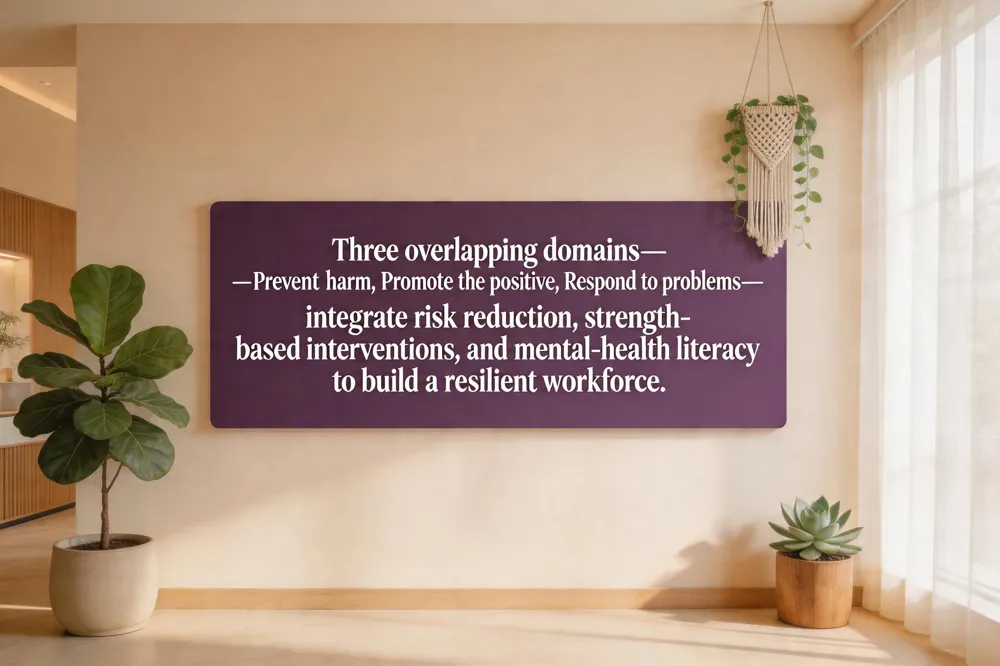 An integrated approach to workplace mental health is built on three overlapping domains that together create a resilient, thriving workforce.
Prevent harm – This domain targets the reduction of work‑related risk factors such as psychosocial hazards, excessive workload, and role ambiguity. Primary, secondary, and tertiary prevention strategies (e.g., ergonomic redesign, clear job‑role definition, and early screening with tools like the NIOSH Worker Well‑Being Questionnaire) lower the incidence of stress‑related disorders and protect employees from burnout.
Promote the positive – Here the focus shifts to strength‑based interventions that boost psychological capital, meaning‑centered social connected and a, climate. Instruments such as the Psychological Capital Questionnaire and the Workplace PERMA Profiler help organizations cultivate optimism, purpose, and social support—key drivers of well‑being and productivity.
Respond to problems – This domain ensures that mental‑health literacy, stigma reduction, and help‑seeking pathways are readily available. Programs that include mental‑health literacy training, peer‑support groups, and return‑to‑work plans (e.g., using the **Mental Health Literacy Workplace Scale enable timely support for employees experiencing difficulties.
Which of the following are external factors that can contribute to chronic stress?
External stressors arise outside an individual’s internal thoughts. Among the options, a. finding fault with others and b. local or national events (economic downturns, natural disasters, political upheavals) are external contributors, whereas expecting events to go a certain way and recalling painful memories are internal processes.
Tools for Monitoring, Review, and Improvement
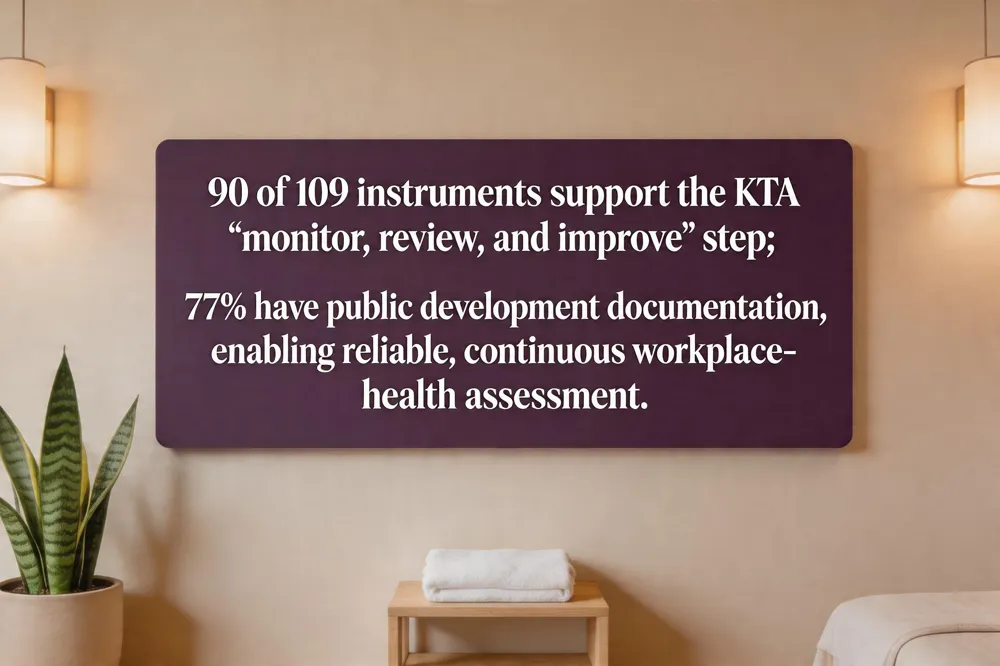 In the KTA cycle, the majority of the 109 identified instruments support the “monitor, review, and improve” activity—90 of them, especially within the prevent‑harm domain. By regularly administering these measures, organizations can pinpoint gaps, design targeted interventions, and evaluate outcomes, thereby closing the loop between data collection and continuous improvement.
Approximately 77% of the instruments have “publicly available development documentation”, which is essential for assessing reliability, validity, and cultural relevance. Transparent documentation enables HR and wellness teams to select tools that meet rigorous psychometric standards and to justify their use to leadership and stakeholders.
Stress management handouts are printable, evidence‑based resources that give employees quick, actionable strategies for reducing anxiety and building resilience. Typical content includes tip sheets (e.g., “21 Ways to Reduce Stress During the Workday”), guided meditation links, gratitude journal prompts, and simple breathing or imagery exercises. Tailored to workplace tension, chronic pain, or other specific concerns, these handouts empower individuals to practice mindfulness, healthy coping, and self‑care on a daily basis. When integrated into a holistic wellness program, they support both mental and physical health while fostering long‑term stress‑management skills.
Building Resilience at Home and at Work
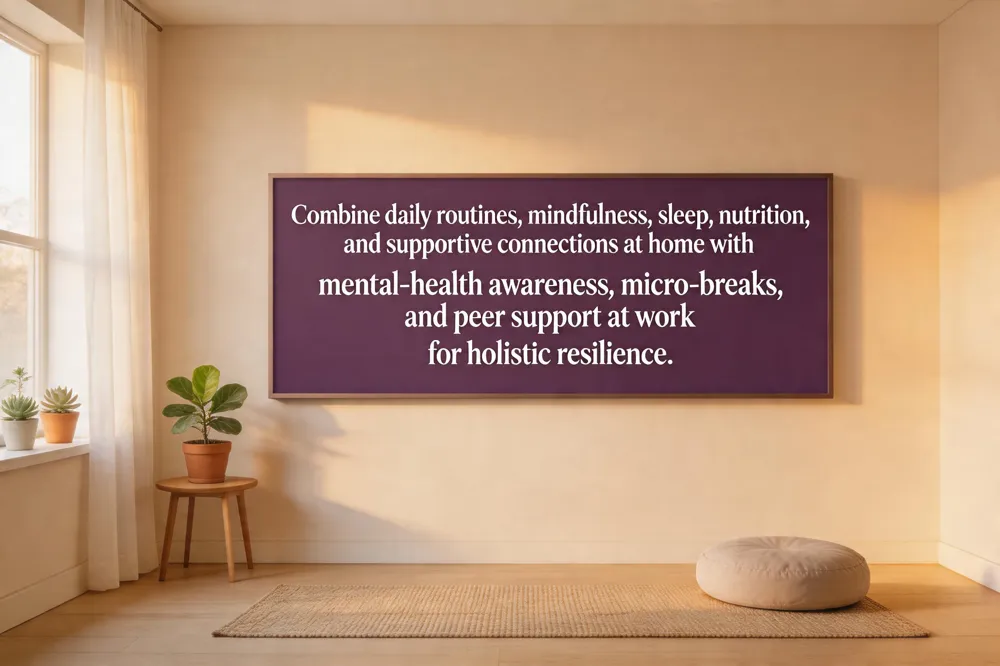 Resilience is a skill that can be nurtured both inside the home and within the workplace, and a blend of evidence‑based psychological techniques with holistic lifestyle habits yields the strongest outcomes.
Resilience at home – Begin by establishing a predictable daily routine that balances work, rest, and enjoyable activities, which gives the body and mind a sense of stability. Simple mindfulness practices such as gratitude journaling, a five‑minute breathing exercise, or a brief meditation each day strengthen emotional regulation and lower cortisol. Foster supportive connections by checking in regularly with family members, sharing feelings, and offering help. Prioritize the basics of self‑care: 7‑9 hours of sleep, nutrient‑dense meals rich in omega‑3s and B‑vitamins, regular movement (walking, yoga, or strength training), and adequate hydration. Finally, set small, achievable goals for everyday challenges to reinforce a growth mindset and confidence that setbacks can be managed.
How to build resilience at work – Cultivate mental‑health awareness by noticing negative self‑talk and replacing it with empowering statements that focus on solutions. When a challenge appears, pause, assess the situation objectively, and choose a measured response rather than reacting impulsively. Keep perspective by reminding yourself that setbacks are often temporary and can be reframed as learning opportunities aligned with long‑term goals. Break larger tasks into clear, attainable steps to maintain motivation and purpose. Build supportive relationships through peer‑support groups, mentorship, and regular check‑ins, and protect work‑life harmony with scheduled breaks, flexible scheduling, and access to employee assistance programs. Mindfulness micro‑sessions before meetings or during the day can recharge the nervous system and improve focus.
Integrating these home‑based and work‑based practices with personalized integrative health services—such as counseling, nutrition coaching, and mind‑body therapies—creates a comprehensive resilience framework that honors the whole person.
Practical Resilience Activities and Programs
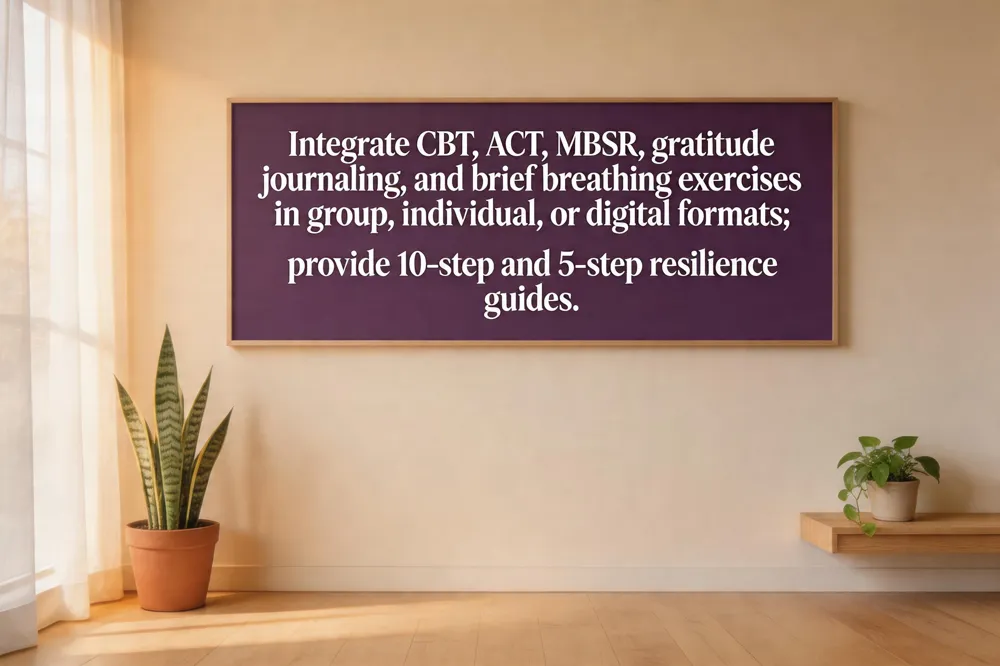 Evidence‑based resilience activities blend psychological training with holistic, mind‑body practices. Programs often include CBT techniques for cognitive flexibility, ACT‑based values‑driven actions, and mindfulness‑based stress reduction (MBSR) to lower cortisol and improve emotional regulation. Strength‑based tools such as the Psychological Capital Questionnaire or the Workplace PERMA Profiler help employees identify optimism, purpose, and social support, while gratitude journaling, self‑compassion breaks, and brief breathing exercises reinforce positive affect.
Both group and individual formats are effective. Face‑to‑face group sessions foster peer connection, shared learning, and accountability; individual coaching offers personalized feedback and goal‑setting. Digital delivery—online modules, micro‑learning videos, and mobile mindfulness apps—expands reach, supports flexible scheduling, and maintains engagement through reminders and gamified progress tracking.
10 ways to build resilience
- Build strong connections with family, friends, or community groups, and be willing to both give and receive support.
- Reframe crises as challenges you can manage, focusing on what you can change rather than what you cannot.
- Accept that change is inevitable and adjust your goals and expectations accordingly.
- Set realistic, incremental goals and take consistent, purposeful actions toward them each day.
- Cultivate self‑discovery by reflecting on hardships, nurturing a positive self‑view, and maintaining optimism and perspective.
- Keep perspective, avoid catastrophizing, and stay hopeful about the future.
- Prioritize self‑care through regular exercise, relaxation, and activities that bring joy.
- Practice mindfulness, meditation, or spiritual habits to reinforce inner calm and resilience.
- Write about your thoughts and feelings to process trauma and strengthen emotional insight.
- Take decisive, thoughtful action when faced with stressors, rather than withdrawing or ignoring the problem.
5 ways to build resilience
- Cultivate strong, supportive relationships by staying connected with family, friends, or community groups.
- Give each day purpose by setting clear, attainable goals and engaging in activities that bring a sense of achievement and meaning.
- Reflect on past challenges, journal your coping strategies, and learn what worked so you can apply those lessons to future setbacks.
- Prioritize self‑care: maintain regular physical activity, balanced nutrition, adequate sleep, and stress‑relief practices such as yoga, meditation, or deep breathing.
- Take proactive action when problems arise—identify the issue, create a step‑by‑step plan, and move forward rather than avoiding or ignoring the difficulty.
Core Pillars and Components of Mental Resilience
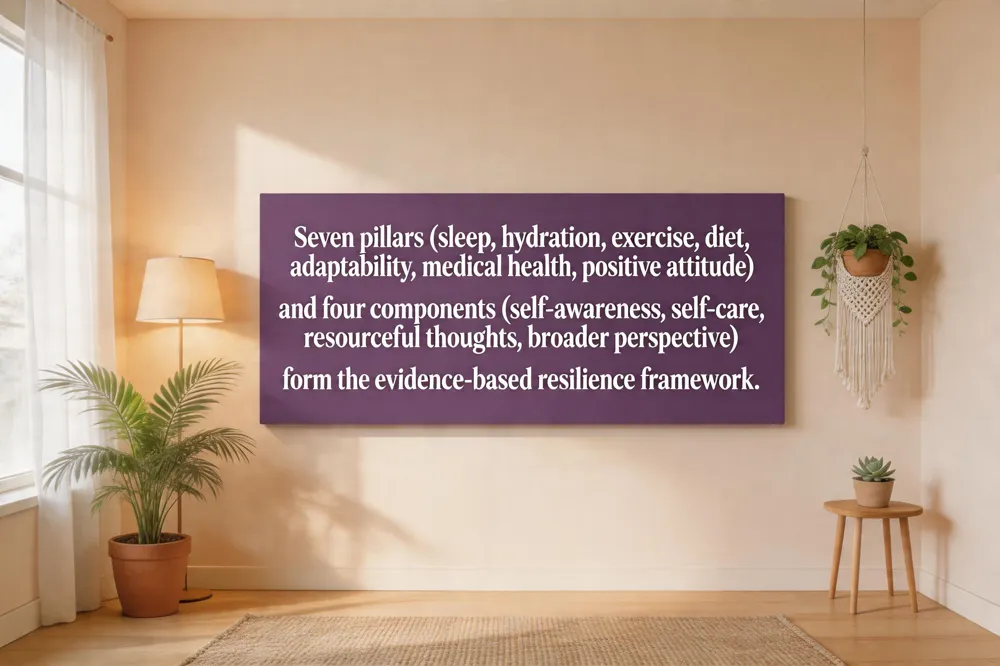 A resilient workforce rests on a clear, evidence‑based framework that blends conventional health safeguards with holistic, mind‑body practices. The seven‑pillar model identifies sleep, hydration, regular exercise, a balanced diet, adaptability, medical health, and a positive mental attitude as the foundational habits. Quality sleep restores cognitive function; adequate water supports concentration; movement and nutrient‑dense foods supply the physical energy that buffers stress. Adaptability enables rapid adjustment to shifting demands, while proactive medical care prevents physical setbacks that erode mental strength. A positive mental attitude reinforces optimism, coping skill, and meaning, completing the holistic foundation for well‑being.
The four‑component model further refines resilience into self‑awareness, self‑care, resourceful thoughts, and a broader perspective. Self‑awareness allows non‑judgmental detection of bodily and emotional signals. Self‑care—regular physical, mental, and emotional nurturing—replenishes the energy needed for challenge. Resourceful thoughts cultivate adaptive, solution‑focused cognition, turning setbacks into opportunities. A broader perspective keeps purpose and meaning in view, preventing tunnel vision during crises.
Both models map directly onto an integrative health approach: the pillars guide everyday lifestyle choices, while the components shape the cognitive and emotional skills taught in resilience‑training programs such as CBT, ACT, and mindfulness‑based interventions. Together, they provide a patient‑centered, personalized roadmap for sustaining mental health resilience the modern workplace.
Evidence‑Based Interventions and Instruments
A recent scoping review identified 109 workplace‑mental‑health instruments that can help organizations adopt the three‑domain integrated approach (prevent harm, promote the positive, respond to problems). Most tools (72, 66%) focus on primary‑prevention of psychosocial hazards, while a smaller share address strength‑based promotion (14, 13%) or problem‑response (13, 12%). Only two instruments—FlourishDX and Guarding Minds at Work—cover all three domains, making them the most comprehensive options for a truly integrated strategy.
These instruments map onto the Knowledge‑to‑Action (KTA) framework. The majority (90 of 109) support the “monitor, review, and improve” activity, especially within the prevent‑harm domain. Fewer (15) aid in “identifying gaps and opportunities” or “designing new/enhanced interventions,” again concentrated in prevent‑harm and respond‑to‑problems areas. Importantly, about 77% of the tools provide publicly available development documentation, allowing organizations to assess reliability and validity before implementation.
Resilience in the workplace PDF – The free e‑book "Resilience in the Workplace" (John Liptak) outlines five resilience dimensions—physical, social, mental, emotional, occupational—and offers lifestyle, communication, and work‑life‑balance strategies backed by research. It can be downloaded from reputable e‑book libraries such as bookboon.com.
Resilience in the workplace Google Scholar – Recent studies (e.g., Acta Psychologica 2022) show that supportive learning climates mediate the link between trait resilience and resilient work behavior, highlighting the role of organizational environments in activating personal resilience resources. Google Scholar searches reveal a growing evidence base on leadership, feedback, and training programs that bolster resilience and improve employee well‑being.
Integrative, Holistic Practices to Boost Resilience
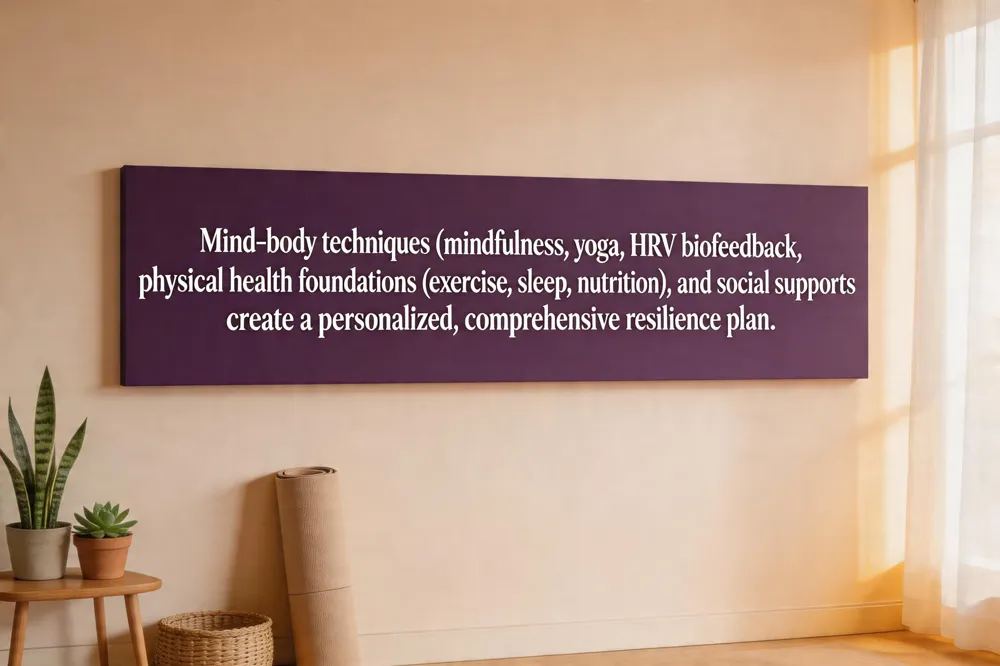 Resilience thrives when mind‑body techniques, solid physical foundations, and supportive environments are woven together.
Mind‑body techniques – Mindfulness meditation, yoga, tai chi, qigong, and heart‑rate‑variability biofeedback calm the nervous system and increase emotional regulation. Progressive muscle relaxation and guided breathing (e.g., 4‑4‑6 pattern) lower physiological arousal, while gratitude journaling and self‑compassion breaks shift focus from rumination to positivity. These practices are safe for most adults and can be delivered in brief 10‑minute micro‑learning modules or blended online‑in‑person programs.
Physical health foundations – Regular aerobic activity (brisk walking, cycling) and strength training boost endorphins and brain‑derived neurotrophic factor, enhancing mood and cognitive flexibility. Adequate sleep (7‑9 hours) restores neural pathways, and a nutrient‑dense diet rich in omega‑3s, B‑vitamins, magnesium, and antioxidants supports neurotransmitter synthesis and reduces inflammation. Limiting alcohol and caffeine further stabilizes stress hormones.
Social and environmental supports – Strong social connections, mentorship circles, and peer‑to‑peer check‑ins create psychological safety and lower burnout risk. Flexible work schedules, clear role expectations, and safe spaces for connection enable workers to set boundaries and recover. Leadership modeling of healthy coping, transparent communication, and recognition of “Resilience Champions” reinforce a culture where seeking help is normalized.
Evidence‑based stress management interventions – Relaxation techniques (progressive muscle relaxation, HRV biofeedback, guided meditation) consistently reduce self‑reported anxiety and stress. Yoga, tai chi, and qigong provide modest adjunctive benefits.
Physicalstrength, good sleep, balanced nutrition, and social support amplify these effects, forming a personalized, holistic resilience plan.
Organizational Strategies and Policy Essentials
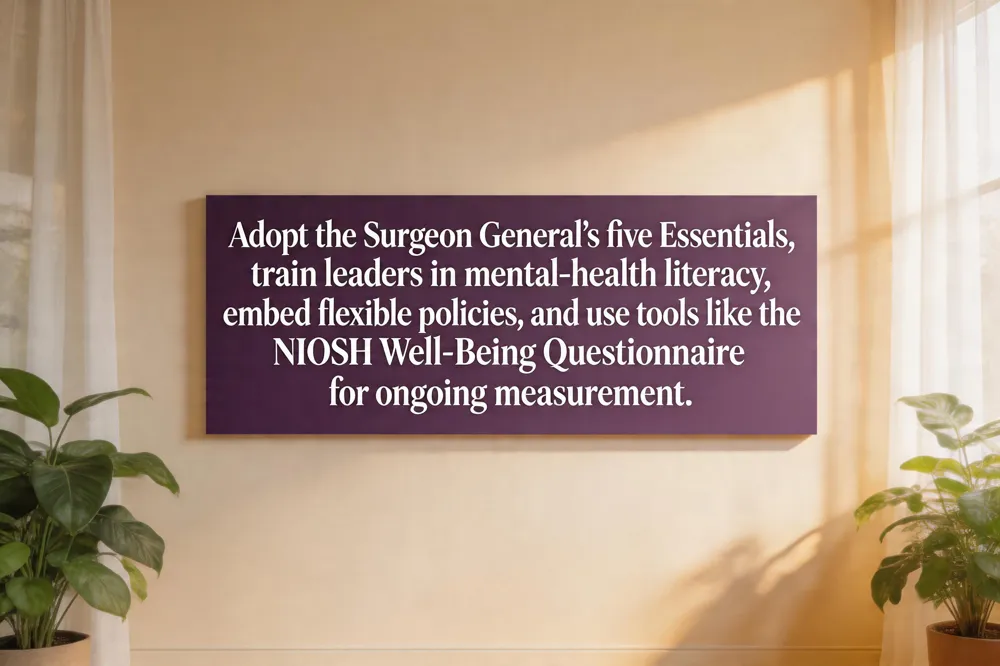 The U.S. Surgeon General’s Framework for Workplace Mental Health outlines five Essentials—Protection from Harm, Connection and Community, Work‑Life Harmony, Mattering at Work, and Opportunity for Growth—that serve as a blueprint for any organization. Embedding these Essentials into mission statements, policies, and daily practice moves mental‑health from a side conversation to a core cultural element.
Leadership training and cultural change are critical levers. Managers who receive mental‑health literacy, trauma‑informed leadership, and psychological‑first‑aid training can spot early signs of burnout, model healthy coping, and create psychologically safe spaces where employees feel valued and heard. Inclusive, transparent communication—such as regular town‑hall updates, peer‑support circles, and visible leadership participation—reduces stigma and normalizes help‑seeking.
Measurement and continuous improvement close the loop. Organizations should conduct baseline well‑being assessments (e.g., the Headington Institute Organizational Resilience Assessment) and track key indicators—absenteeism, turnover, employee‑engagement scores—using tools like the NIOSH Worker Well‑Being Questionnaire or the Copenhagen Psychosocial Questionnaire. Periodic review of these data informs iterative refinements to interventions, ensuring they remain responsive to emerging gaps and opportunities.
What are some workplace strategies to support mental health?
- Understand legal obligations and provide parity‑compliant benefits.
- Lead from the top with visible commitment and modeling of healthy behaviors.
- Offer flexible work options and clear work‑life boundaries.
- Foster a culture of open dialogue through regular check‑ins and anonymous feedback channels.
- Embed mental‑health considerations into all policies and procedures.
- Promote training and awareness for all staff, especially supervisors.
- Encourage supportive return‑to‑work pathways after mental‑health‑related absences.
Importance of mental health in the workplace
Mental health underpins productivity, engagement, and creativity. When employees struggle with stress, anxiety, or depression, absenteeism rises and turnover costs soar, contributing to an estimated $1 trillion loss in U.S. productivity each year. Conversely, a psychologically healthy workforce is more motivated, collaborative, and innovative, strengthening organizational resilience and long‑term success. Prioritizing mental‑wellness through safe, inclusive environments, supportive leadership, and accessible resources protects both individual well‑being and the company’s bottom line.
Putting It All Together: A Blueprint for Eclipse Wellness
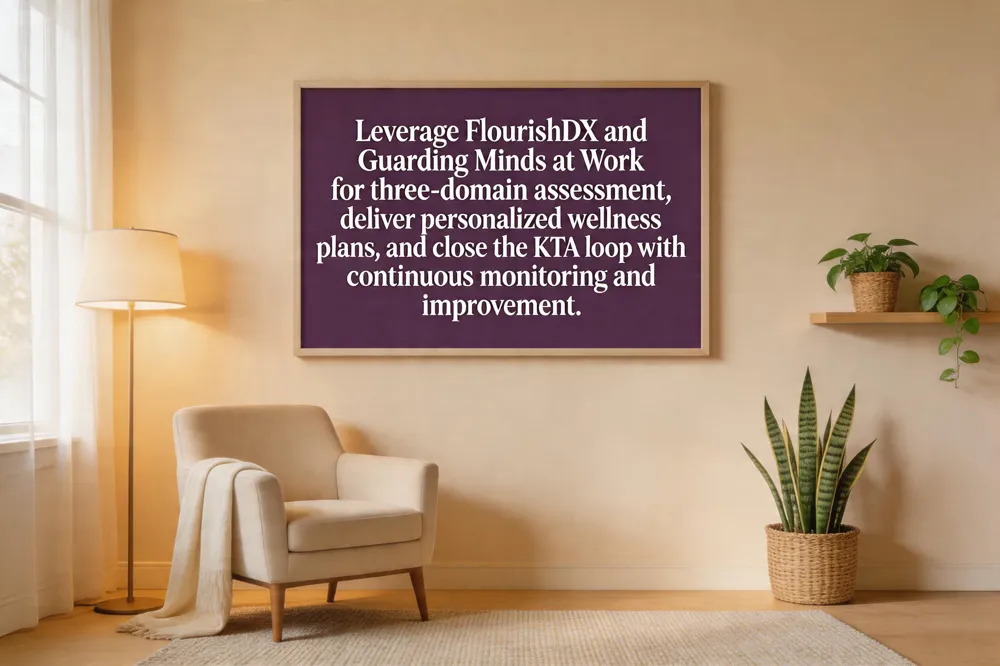 Eclipse Wellness can achieve a truly integrative mental‑health strategy by first adopting the only comprehensive instruments that span all three domains of the integrated approach—FlourishDX and Guarding Minds at Work. These tools simultaneously assess psychosocial hazards, promote psychological capital, and gauge help‑seeking readiness, giving leaders a clear baseline for the Knowledge‑to‑Action (KTA) cycle.
Personalized Wellness Plans
Based on assessment data, each employee receives a customized plan that weaves together nutrition (omega‑3‑rich foods, B‑vitamins), sleep hygiene (7‑9 hours, screen‑free wind‑down), and movement (aerobic activity, yoga, brief walking breaks). The plan also incorporates mindfulness, gratitude journaling, and social‑support moments—evidence‑based practices that lower cortisol by up to 30 % and boost job satisfaction.
Continuous KTA Cycle and Outcome Tracking
Eclipse will monitor, review, and improve interventions using the KTA framework: gaps are identified via the instruments, interventions are designed (e.g., micro‑learning modules, resilience workshops), and outcomes are tracked with the same tools, ensuring reliability and validity.
Resilience in the Workplace Toolkit
The Resilience at Work (R@W) Toolkit offers three complementary measures—Individual, Team, and Leader—rooted in the Sustain 7 Model. Quick to administer, it delivers actionable feedback that aligns with holistic health by addressing physical, cognitive, emotional, and spiritual well‑being, supporting a culture of purpose and connection.
Mental Health in the Workplace Research Paper
APA’s 2023 Work in America™ Survey reveals that 92 % of U.S. workers prioritize employers who support mental health, yet 43 % fear retaliation for disclosure. Gaps in break policies, respect for time off, and managerial support highlight the need for transparent, proactive wellness programs that integrate assessment, personalized care, and continuous improvement.
Moving Forward with Integrated Resilience
Creating a lasting resilience culture starts with making mental‑health and well‑being a core part of the organization’s mission, vision and values. Leaders model psychological safety, recognize “Resilience Champions,” and embed strength‑based practices—such as gratitude walls, peer‑support circles, and regular micro‑learning on coping—into daily routines. Policies that guarantee flexible scheduling, equitable workload distribution, and access to integrative resources (mindfulness, yoga, nutrition counseling) reinforce the message that every employee’s mind‑body health matters.
Data‑driven continuous improvement keeps the program responsive. Using the Knowledge‑to‑Action cycle, employers can identify gaps with instruments like the NIOSH Worker Well‑Being Questionnaire, design interventions (e.g., CBT‑based stress inoculation, ACT mindfulness modules), and monitor outcomes through the 109 validated tools identified in recent scoping work. Regular review of metrics—stress scores, absenteeism, turnover—allows rapid refinement and ensures that both preventive and responsive domains evolve with employee needs.
Employers are urged to commit resources to an integrated approach, train managers in mental‑health literacy, and provide transparent pathways for help‑seeking. Employees, in turn, should engage with offered practices, track personal progress, and share feedback. Together, a coordinated, evidence‑based and holistic strategy will sustain resilience, boost productivity, and nurture a healthier, more adaptable workforce. By integrating clinical evidence, personalized wellness plans, and ongoing measurement, organizations can create a living system where resilience thrives, employees feel supported, and the whole enterprise benefits from reduced turnover, lower health costs, and a culture of thriving. Start today by mapping your current practices, selecting the right tools, and inviting every team member to join the resilience journey.