The Power of Integrative Healing
Integrative medicine matters because it tackles the root causes of disease—like chronic inflammation—while honoring each patient’s unique story. For conditions such as rheumatoid arthritis, ankylosing spondylitis, or persistent pain, holistic tools (anti‑inflammatory herbs, plant‑based nutrition, acupuncture, yoga, mindfulness) complement conventional therapies to restore balance. Patient‑centered care models weave these modalities into personalized plans, fostering a collaborative mind‑body partnership that empowers individuals to heal on their own terms.
Real‑World Chronic Pain Transformations
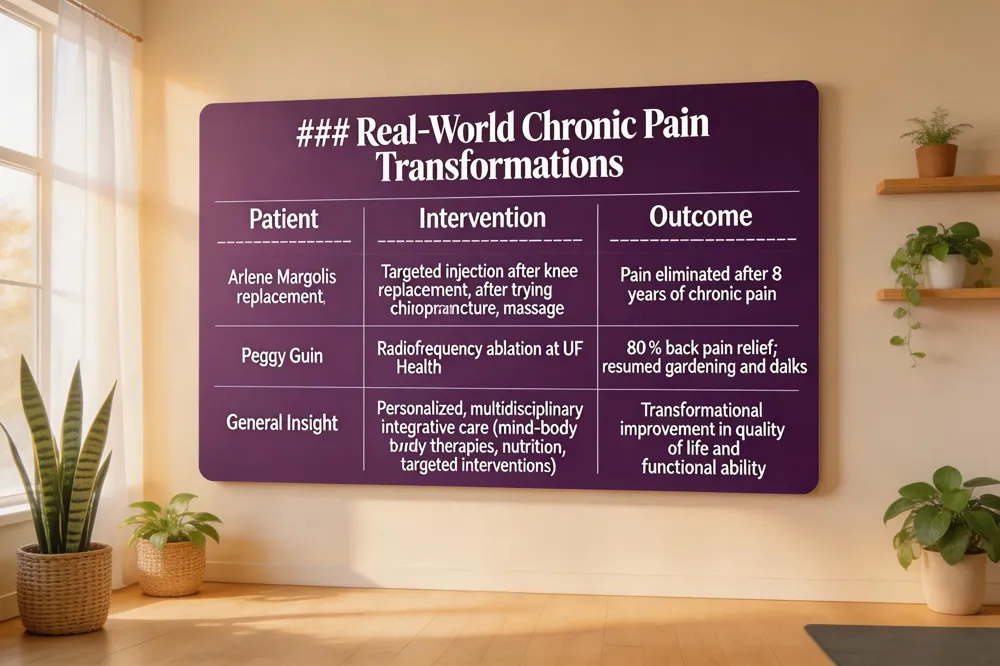
Real‑World Chronic Pain Transformations
| Patient | Intervention | Outcome |
|---|---|---|
| Arlene Margolis | Targeted injection after knee replacement, after trying chiropractors, acupuncture, massage | Pain eliminated after 8 years of chronic pain |
| Peggy Guin | Radiofrequency ablation at UF Health | 80 % back pain relief; resumed gardening and daily walks |
| General Insight | Personalized, multidisciplinary integrative care (mind‑body therapies, nutrition, targeted interventions) | Transformational improvement in quality of life and functional ability |
Chronic pain patient stories
Living with chronic pain often means years of misdiagnosis and limited relief. Arlene Margolis endured eight painful years after knee replacement, trying chiropractors, acupuncture and massage until a targeted injection at UAMS eliminated her pain. Peggy Guin achieved 80 % back relief from radiofrequency ablation at UF Health, letting her garden and walk daily. These stories show how personalized, multidisciplinary care can transform lives.
How does integrative care improve patient outcomes?
Integrative care improves outcomes by treating the whole person—mind, body, spirit, and environment. It blends conventional medicine with evidence‑based mind‑body therapies, nutrition counseling, meditation, massage, acupuncture, and herbal supplements, fostering trust, adherence, and lower costs, with studies showing better chronic‑pain results.
Four pillars of integrative medicine
Four pillars of integrative medicine are nutrition, physical activity, stress management, and sleep, each supporting cellular repair, immune function, and mental well‑being.
What are the 4 P's of pain management?
The 4 P’s of pain management are Prevention, Precision, Personalization, and Participation—early lifestyle changes, targeted diagnostics, individualized plans, and active patient involvement.
Integrative medicine diet
Integrative medicine diet emphasizes whole, nutrient‑dense foods, anti‑inflammatory spices, and personalized supplements, often following a Mediterranean or anti‑inflammatory pattern to reduce inflammation.
Integrative and Internal Medicine Services Explained
Integrative and Internal Medicine Services Explained
| Service | Core Components | Benefits |
|---|---|---|
| Functional Medicine | Lab‑driven diagnostics, personalized nutrition, herbal supplements | Early detection, root‑cause focus, reduced medication reliance |
| Pain Management | Acupuncture, mindfulness, yoga, nutrition counseling | Lower pain scores, improved functional outcomes |
| Mental‑Health Support | Coaching, mindfulness, stress‑reduction techniques | ↓ Perceived stress (≈23 %), ↓ depressive scores (≈50 %) |
| Weight‑Management | Diet planning, IV nutrient therapy, physical activity coaching | Sustainable weight loss, improved metabolic markers |
| Telehealth | Virtual visits, remote monitoring | Increased access, continuity of care |
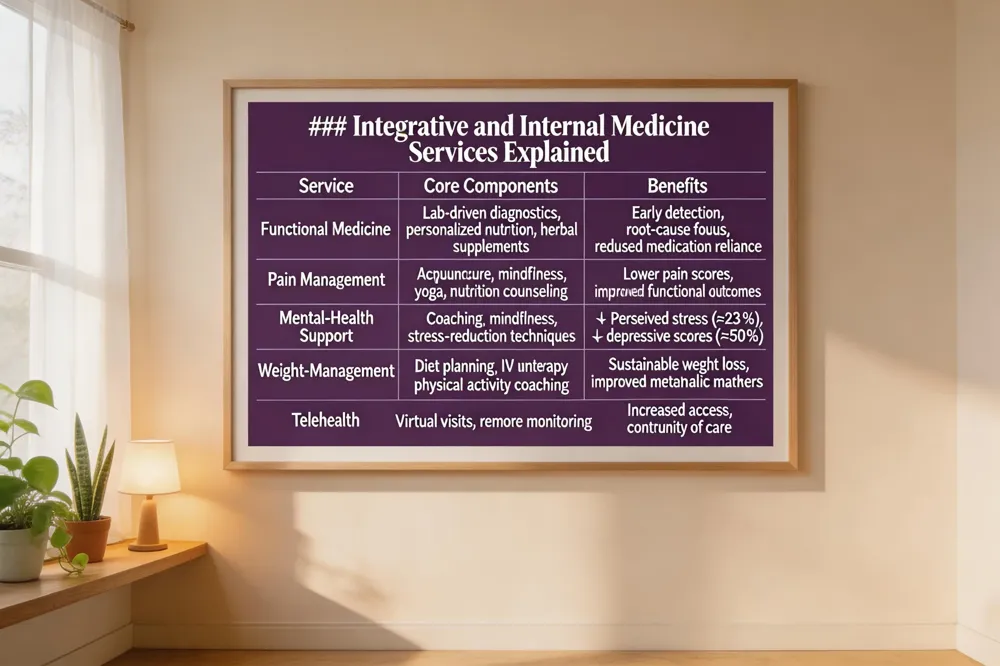 Integrative and internal medicine services blend evidence‑based conventional care with complementary whole‑person therapies to address physical, emotional, and spiritual health. They provide comprehensive adult evaluations, early detection, and personalized treatment of chronic conditions such as pain, anxiety, metabolic disorders, and weight‑management. Modalities include nutrition counseling, herbal supplements, acupuncture, mindfulness, yoga, and tai chi, supporting the body’s innate healing while maintaining rigorous medical standards. The approach emphasizes a collaborative doctor‑patient partnership, tailoring plans to each individual’s history, lifestyle, and goals, aiming to reduce reliance on unnecessary medications and promote sustainable, long‑term wellness.
The Center for Integrative Health is a multidisciplinary clinic that blends conventional medicine with evidence‑based holistic therapies to target root causes of chronic illness. Services span functional medicine, pain management, mental‑health support, detox, weight‑loss counseling, acupuncture, nutrition counseling, and osteopathic manipulative therapy, delivered in‑person and via telehealth.
Integrative health and wellness coaching partners with you to uncover core values, set goals, and overcome obstacles. Coaches use powerful questions, personalized action plans, and accountability to translate medical advice into daily habits, integrating nutrition, movement, stress management, sleep, relationships, and self‑compassion. Research shows coaching can lower perceived stress by 23 %, reduce depressive scores by 50 %, and improve activity, blood‑sugar control, and BMI.
The four pillars of integrative medicine are nutrition, physical activity, stress management, and sleep—each essential for cellular repair, hormone balance, immune function, circulation, inflammation reduction, and restorative recovery.
Nutrition, Anti‑Inflammatory Diets and Sample Menus
Nutrition, Anti‑Inflammatory Diets and Sample Menus
| Food Category | Anti‑Inflammatory Examples | Key Nutrients |
|---|---|---|
| Leafy Greens | Kale, spinach | Vitamins A, C, K, antioxidants |
| Berries | Blueberries, strawberries | Anthocyanins, fiber |
| Omega‑3 Fish | Salmon, sardines | EPA/DHA, anti‑inflammatory eicosanoids |
| Nuts & Seeds | Walnuts, flaxseed, chia | Omega‑3, magnesium |
| Spices | Turmeric, ginger, rosemary | Curcumin, gingerol, antioxidant polyphenols |
Sample Daily Menu
- Breakfast: Steel‑cut oatmeal with blueberries, flaxseed, walnuts, green tea
- Snack: Apple with almond butter
- Lunch: Kale‑spinach salad with grilled salmon, quinoa, olive oil, lemon
- Snack: Soy milk and dark chocolate
- Dinner: Stir‑fried mushrooms with garlic, ginger, turmeric, brown rice, roasted Brussels sprouts, optional red wine
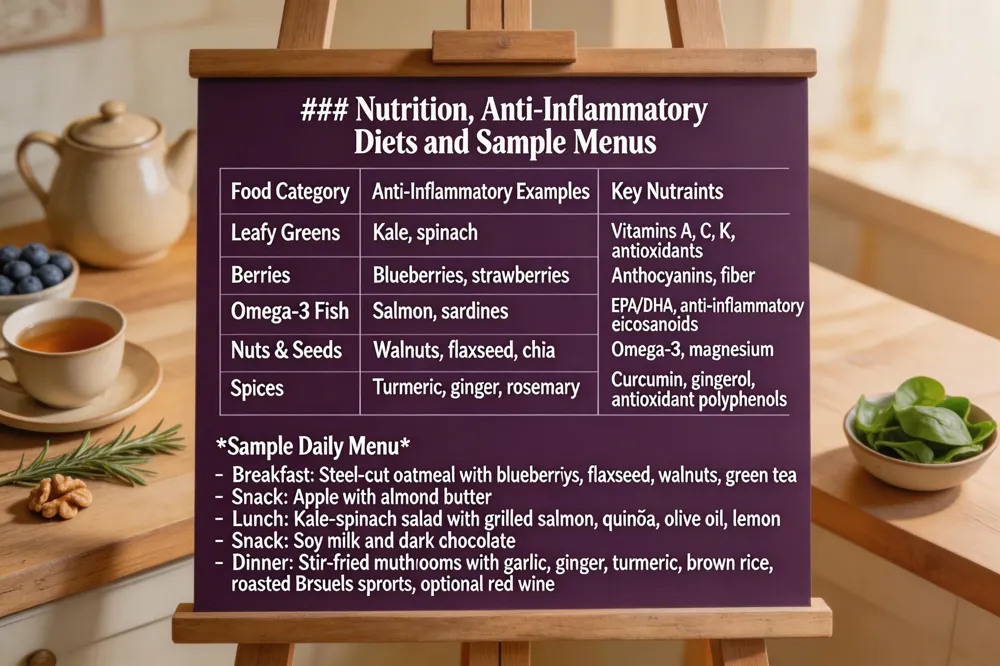 Anti‑inflammatory foods such as leafy greens, berries, omega‑3‑rich fish, nuts, seeds, and spices like turmeric, ginger, and rosemary help lower cytokine activity. Herbal protocols—holy basil, ginger, turmeric, rosemary, barberry, Chinese skullcap—provide antioxidant and anti‑inflammatory support; supplements like omega‑3 oil, curcumin, and vitamin D can be added based on labs. Practical meal planning starts with a balanced breakfast, mid‑day snacks, and dinner that combine whole grains, vegetables, lean protein, and healthy fats while limiting sugar and refined carbs. Dr. Weil’s sample menu illustrates this: steel‑cut oatmeal with blueberries, flaxseed, walnuts and green tea; apple with almond butter; kale‑spinach salad with grilled salmon, quinoa, olive oil, lemon; soy milk and dark chocolate; stir‑fried mushrooms with garlic, ginger, turmeric, brown rice, roasted Brussels sprouts, and optional red wine. Integrative medicine diet blends evidence‑based nutrition with personalized lifestyle, using functional‑medicine assessments to tailor foods, herbs, and supplements to each patient’s genetics and health goals. This holistic approach supports gut health, reduces chronic inflammation, and promotes overall wellbeing.
Health Coaching and Patient Engagement
Health Coaching and Patient Engagement
| Coaching Element | Description | Measurable Impact |
|---|---|---|
| Goal Setting | Collaborative, realistic health goals | ↑ Patient adherence |
| Accountability | Regular check‑ins, progress tracking | ↑ Engagement, ↓ dropout |
| Lifestyle Integration | Nutrition, movement, stress, sleep plans | ↓ Clinicalreported stress (≈23 %), ↓ depressive scores (≈50 %) |
| Testimonials | Collect & showcase patient stories | Builds trust, attracts new patients |
| Provider Referral | Online directories, primary‑care referrals | Expands provider network |
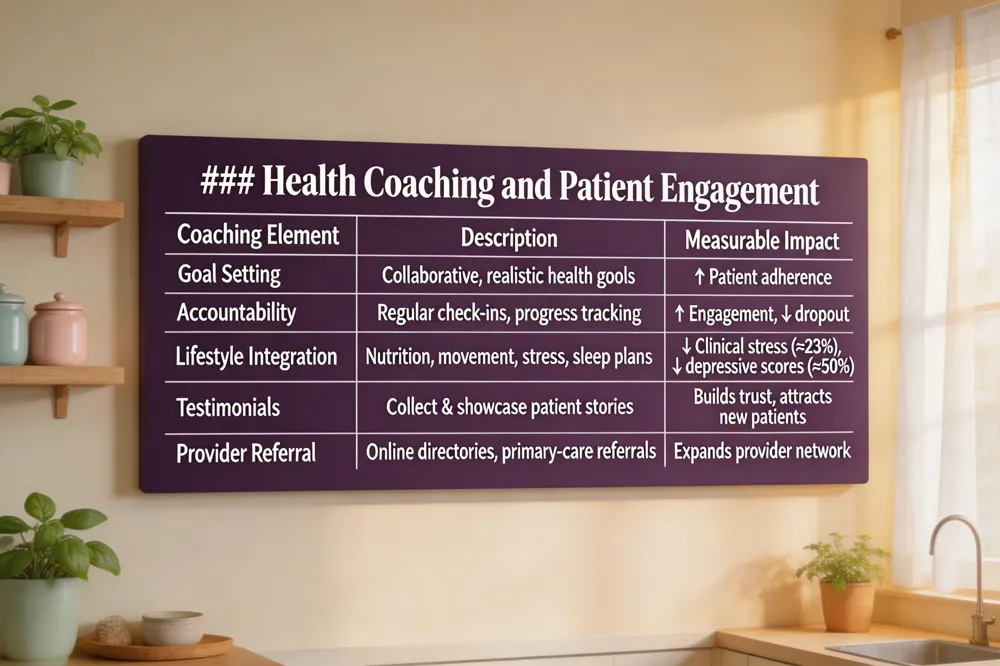 Integrative health coaches serve as compassionate guides who address the whole person—physical, mental, emotional, and environmental factors—to help clients achieve lasting wellness. By blending evidence‑based conventional medicine with complementary tools such as nutrition counseling, stress‑management techniques, and lifestyle coaching, they create personalized, sustainable plans for weight loss, pain management, detox, and overall well‑being. Coaches conduct structured assessments, set realistic goals, and provide ongoing accountability, empowering patients to take charge of their health journeys.
Gathering patient testimonials is essential for building trust and showcasing real‑world outcomes. Promptly request feedback after a successful visit, use one‑click links to Google Reviews or simple online forms, and train staff to explain the value of testimonials. Celebrate shared quotes on your website, social media, and newsletters, and always thank contributors to reinforce community and encouragement.
Finding qualified integrative providers starts with online directories that filter for “integrative medicine” or “holistic medicine,” looking for certifications in functional or integrative care. Ask primary‑care physicians for referrals, and verify that clinicians accept new patients, offer telehealth, and provide convenient scheduling. For those in the Lehigh Valley, Dr. Natalie M. Bieber, DO, exemplifies a family‑medicine physician who integrates these practices into her care.
Success Stories Across Conditions
Success Stories Across Conditions
| Condition | Patient | Intervention Highlights | Outcome |
|---|---|---|---|
| Fibromyalgia | Ben Ahrens (former surfer) | Nutrition, targeted therapy, mindfulness, exercise | Returned to active lifestyle, reduced pain |
| Type II Diabetes | Caplan Health Institute patient | Plant‑based diet, IV nutrients, lifestyle coaching | Reversal of diabetes, weight loss, better blood‑sugar control |
| Chronic Pain | Multiple patients | Integrative plan (acupuncture, massage, supplements) | Decreased pain scores, improved function |
| General Wellness | Various | Holistic approach (mind‑body, nutrition, movement) | Lower blood pressure, improved mood, sustained health improvements |
 Fibromyalgia success stories – Real‑life accounts show many move from debilitating fibromyalgia to health with an integrative plan. Ben Ahrens, a former surfer, reclaimed activity after nutrition, targeted therapy, stress‑reduction, and movement. Another survivor credits mindfulness, sleep hygiene, and exercise for turning “bedbound” days into ones. They illustrate that a holistic approach—diet, mental health, detox, and movement—can reset the nervous system and improve quality of life.
Caplan Health Institute reviews – Patients praise its integrative care that yields results. Reviewers report reversal of Type II diabetes, weight loss, and reduced inflammation after Dr. Brent Caplan’s protocols. Staff guidance is highlighted as key to energy, improved blood‑sugar control, and quality of life.
Does holistic health really work? – Yes. Holistic health blends therapies with a person focus, addressing physical, mental, and social factors. Studies show that adding yoga, acupuncture, massage, and mindfulness to conventional medicine reduces stress, improves pain management, and can lower blood pressure. Lifestyle, nutrition, and behavioral recommendations promote adherence and improvement, making holistic care a complement to traditional treatment.
Integrative Care in Practice: Clinics and Practices
Integrative Care in Practice: Clinics and Practices
| Location | Clinic | Core Services | Notable Features |
|---|---|---|---|
| Georgia (general) | Georgia Integrated Health Center (Acworth) | Lab‑driven nutrition, hormone balancing, IV therapy, acupuncture, environmental medicine | Coordinated care with primary physicians, variable insurance coverage |
| Alpharetta, GA | Center for Internal and Integrative Medicine (401 S. Main St., Suite B3) | Weight‑loss, hormone therapy, nutrition counseling, IV nutrients, mental‑health support | Multilingual staff, telemedicine, high patient‑satisfaction ratings |
| Sandy Springs, GA | Tremedy Integrative Medicine & Wellnest MD | Acupuncture, IV nutrients, ketamine‑assisted therapy, nutrition, hormone balancing, cryotherapy, peptide therapy | Evidence‑based complementary therapies, root‑cause analysis |
| Marietta, GA | Elysion Health, Southeast Integrative Medicine, Flowers Medical (Dr. Lynn Flowers) | Nutrition plans, acupuncture, mindfulness, IV hydration, exosome therapy, infrared sauna, red‑light therapy | Preventive, patient‑centered care focusing on chronic disease management |
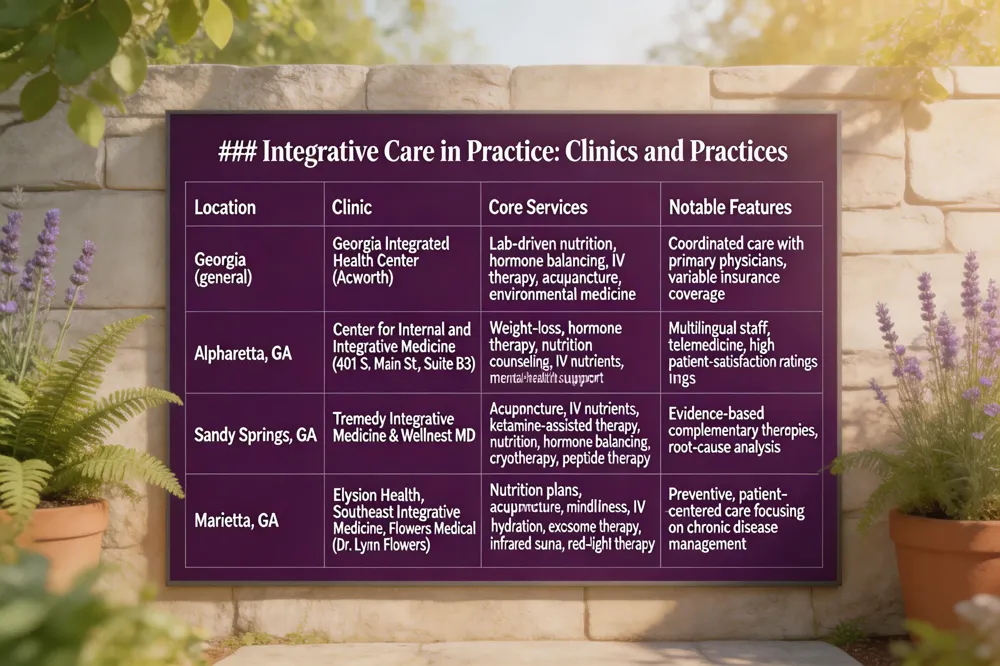 Integrative medicine in Georgia (general) – Georgia blends conventional Western care with functional, naturopathic, and holistic therapies. Clinics such as Georgia Integrated Health Center (Acworth) and Atlanta Integrative & Internal Medicine offer personalized lab‑driven nutrition, hormone balancing, IV therapy, acupuncture, and environmental medicine for diabetes, thyroid disorders, autoimmune disease, chronic pain, mental‑health challenges, and weight management. Plans are individualized, education‑focused, and often coordinated with a physicians; insurance coverage varies by modality.
Integrative medicine in Alpharetta, GA – The Center for Internal and Integrative Medicine (401 S. Main St., Suite B3) led by Dr. Eduard Fatakhov combines conventional internal medicine with weight‑loss programs, hormone therapy, nutrition counseling, IV nutrients, and mental‑health support. Multilingual staff, in‑person and telemedicine options, and high patient‑satisfaction ratings ensure comprehensive, personalized care for Alpharetta residents.
Integrative medicine in Sandy Springs, GA – Clinics like Tremedy Integrative Medicine and Wellnest MD provide acupuncture, IV nutrient therapy, ketamine‑assisted therapy, nutrition counseling, hormone balancing, cryotherapy, peptide therapy, and regenerative treatments. Each practice emphasizes evidence‑based complementary therapies, root‑cause analysis, and ongoing monitoring.
Integrative medicine in Marietta, GA – Elysion Health, Southeast Integrative Medicine, and Flowers Medical (Dr. Lynn Flowers) deliver nutrition plans, acupuncture, mindfulness, IV hydration, exosome therapy, infrared sauna, and red‑light therapy. The focus is preventive, patient‑centered care that empowers individuals to manage chronic disease and achieve optimal wellness.
Transformative Care: A Path Forward
Integrative health is rapidly evolving, blending evidence‑based medicine with nutrition, mind‑body practices and lifestyle coaching to treat the whole person. Patients who engage in personalized plans report reduced inflammation, better pain control and renewed confidence, illustrating how empowerment drives measurable outcomes. As research expands, we invite you to join this movement: schedule a wellness consultation, explore anti‑inflammatory diets, mindfulness and targeted therapies, and co‑create a roadmap toward lasting vitality. Embrace evidence‑driven nutrition, movement, and mindfulness for sustainable, vibrant health now.