

A New Paradigm for Patient‑Centered Care
Holistic health views the individual as an interconnected whole—body, mind, emotions, spirit, relationships and environment—rather than a collection of isolated symptoms. Traditional Western medicine, rooted in the biomedical model, focuses on diagnosing and treating specific pathophysiological processes, often overlooking psychosocial and lifestyle factors that influence disease. Integrative approaches bridge these perspectives by pairing evidence‑based conventional therapies with complementary practices such as acupuncture, yoga, mindfulness meditation, nutritional counseling and therapeutic massage. This patient‑centered model tailors treatment to personal values, cultural background and genetic makeup, fostering shared decision‑making and greater adherence. In modern healthcare settings, integrative programs have demonstrated reduced opioid use, improved blood‑pressure control, faster recovery after surgery and higher satisfaction scores, illustrating how combining the strengths of both systems creates more comprehensive, effective care for patients seeking lasting well‑being today.
Comparing Holistic and Western Medicine
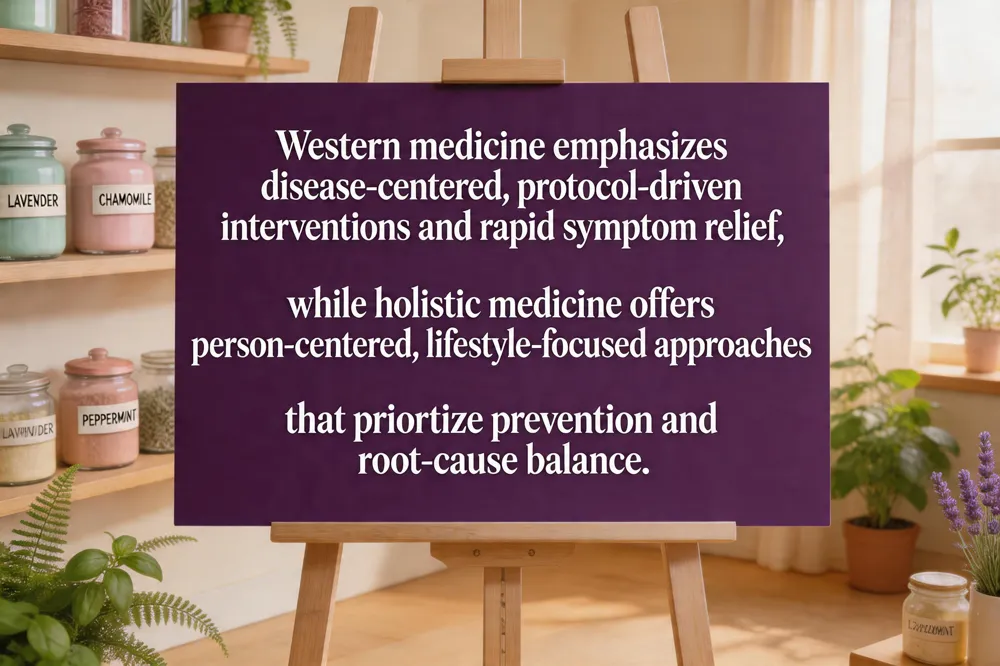 Core focus of each paradigm
Western (allopathic) medicine concentrates on diagnosing specific diseases and treating organ‑system pathology with pharmaceuticals, surgery, and standardized tests. Holistic medicine treats the whole person—body, mind, emotions, and spirit—using individualized nutrition, lifestyle changes, and mind‑body practices.
Typical tools and interventions
Western tools: imaging, laboratory tests, prescription drugs, invasive procedures. Holistic tools: acupuncture, yoga, mindfulness‑based stress reduction, therapeutic massage, herbal and nutraceutical supplements, and personalized health assessments that consider genetic, environmental, and psychosocial factors.
Strengths and limitations
Western care excels at rapid symptom relief, emergency management, and evidence‑based clinical trials. Its limitation is often a focus on disease rather than prevention. Holistic care shines in chronic‑condition management, preventive health, and uncovering root‑cause imbalances, but may lack large‑scale trial data for some modalities and can be limited by insurance coverage.
Holistic vs Western medicine chart
A side‑by‑side chart shows Western medicine’s disease‑centered, protocol‑driven approach versus holistic medicine’s person‑centered, lifestyle‑focused model, highlighting differing tools, strengths, and patient‑choice implications.
What is traditional medicine?
Traditional medicine comprises culturally rooted knowledge, skills, and practices passed down through generations—such as Ayurveda, Traditional Chinese Medicine, and Indigenous healing—used to maintain health, prevent illness, and treat physical and mental conditions. When safety and efficacy are supported by evidence, these practices can complement conventional care in integrative settings.
Examples of traditional medicine
Acupuncture, herbal formulas, cupping, yoga, Ayurvedic dietary regimens, Indigenous herbal teas, and ritual ceremonies are all traditional modalities employed worldwide for pain relief, mental‑health support, detoxification, and weight management.
10 advantages of traditional medicine
- Cultural relevance and community identity
- Accessibility and affordability in underserved areas
- Holistic view of health
- Strong preventive emphasis
- Use of natural, locally sourced resources
- Personalized, patient‑centered care
- Patient empowerment
- Potential to inspire new pharmaceuticals
- Community‑based practitioner knowledge
- Sustainable, environmentally friendly practices
Foundations of Holistic Care
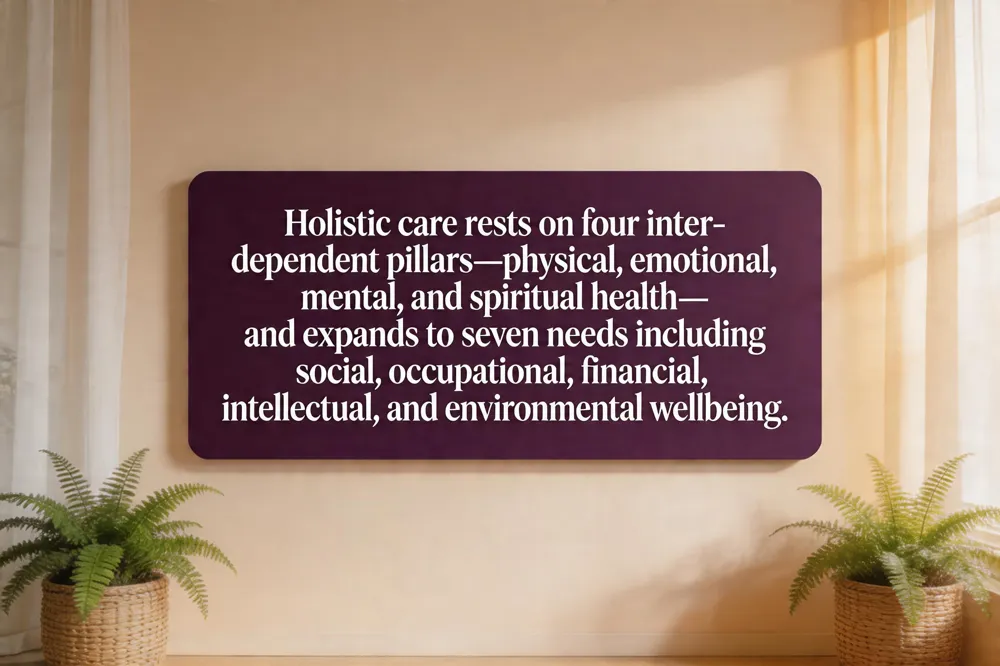 Holistic care rests on four inter‑dependent pillars: physical, emotional, mental, and spiritual health. Physical care includes nutrition, exercise, sleep, preventive screenings and safe medication use; emotional care nurtures relationships, stress‑management, and feelings of safety and belonging; mental care supports cognition, coping skills and mindfulness; spiritual care connects individuals to purpose, values and meaning, completing a balanced whole‑person approach.
The five holistic needs are mental & emotional wellness, physical wellness, social wellness, occupational (or work‑related) wellness, and financial wellness. Each dimension influences the others, so an imbalance in one area can affect overall well‑being.
Holistic health components expand to a larger framework: physical (exercise, sleep, nutrition), emotional (mood awareness, stress‑management), mental (cognitive function, problem‑solving), social (relationships, community), spiritual (purpose, inner peace), financial (economic stability) and environmental (impact of surroundings).
When the model is broadened to seven needs or pillars, additional domains appear: intellectual (lifelong learning, creativity), environmental (healthy surroundings) and vocational or occupational (fulfilling work). Together, these pillars, needs and components guide personalized, patient‑centered wellness plans that honor the mind‑body‑spirit connection.
Evidence‑Based Complementary Therapies
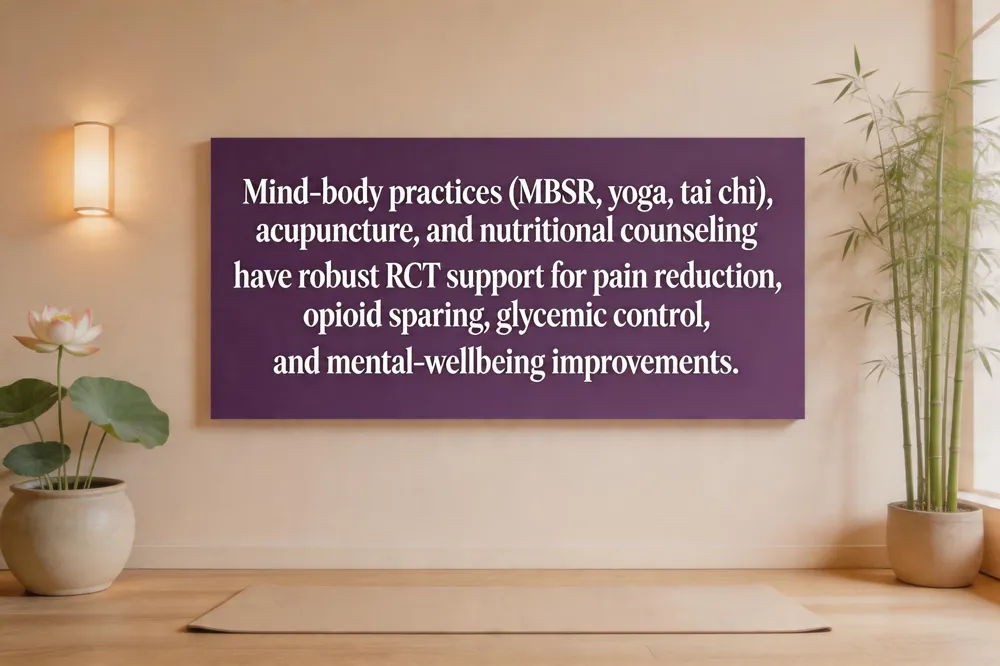 Integrative health bridges conventional medicine with evidence‑based holistic practices, offering patient‑centered, personalized care. Robust research—including randomized trials and systematic reviews—demonstrates that mindfulness‑based stress reduction , yoga, acupuncture, and nutritional counseling can lower pain scores, reduce opioid use, improve glycemic control, and enhance mental well‑being when combined with standard treatments.
Evidence‑based complementary and alternative medicine journal
The Journal of Evidence‑Based Complementary and Alternative Medicine (EBCAM) publishes rigorously designed clinical and pre‑clinical studies on acupuncture, herbal medicine, mind‑body techniques, and other CAM modalities. Another leading outlet is the Journal of Evidence‑Based Integrative Medicine (2022 impact factor 3.6), which focuses on translational research linking conventional and complementary approaches. Both journals require CONSORT and PRISMA compliance, ensuring high methodological standards.
Evidence‑Based Complementary and Alternative Medicine impact factor
The Evidence‑Based Complementary and Alternative Medicine (eCAM) journal held a 2021 impact factor of 2.650, reflecting moderate citation activity. Although it was removed from the Web of Science in 2024, its historical Q1 ranking underscores its relevance for clinicians seeking scientifically vetted holistic insights.
Is holistic therapy evidence‑based?
Mind‑body interventions (MBSR, yoga, tai chi) and acupuncture for chronic musculoskeletal pain have solid RCT support. Many other modalities—especially certain herbal formulas and energy‑balancing techniques—lack large‑scale trials, so their efficacy remains uncertain.
Do holistic remedies really work?
When they target lifestyle factors with strong evidence (exercise, balanced diet, stress‑management), holistic remedies can meaningfully improve health outcomes. Some complementary therapies (acupuncture for nausea, chiropractic for back pain) have documented benefits, while others (IV vitamin infusions, Reiki) lack robust data. The safest approach is to use them as complements—not replacements—to conventional care, always in consultation with a qualified provider.
Practical Holistic Interventions in Clinical Settings
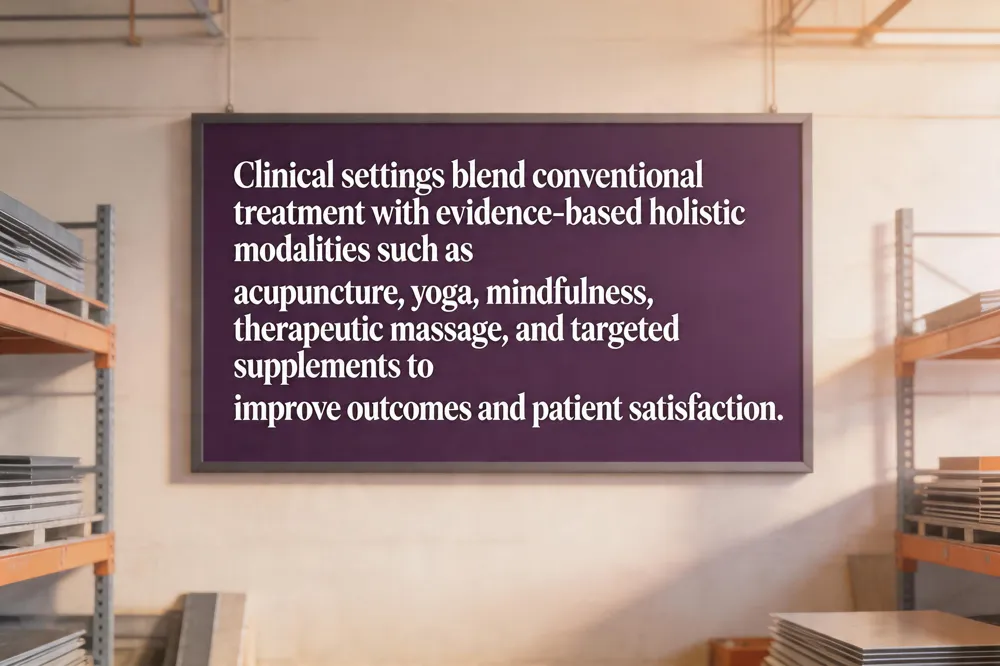 Integrative health clinics routinely blend conventional medicine with evidence‑based holistic therapies to address the whole person. Examples of holistic therapies include acupuncture for chemotherapy‑induced nausea, Yoga and tai chi to improve balance and blood pressure, mindfulness‑based stress reduction (MBSR) that lowers cortisol, therapeutic massage for pain relief, and herbal medicine such as curcumin to curb inflammation. Other modalities—energy‑based Reiki, art and music therapy, and probiotic supplementation—are also incorporated when supported by safety data.
Holistic approach example: In a primary‑care setting, a hypertensive patient receives an antihypertensive prescription while the care team assesses diet, sleep, stress, and emotional health. A personalized plan adds nutrition counseling, weekly Yoga and tai chi, mindfulness meditation, and optional acupuncture for musculoskeletal tension. Regular follow‑ups track blood pressure, HbA1c, and patient‑reported stress, allowing adjustments that treat the mind‑body‑spirit connection rather than the isolated symptom.
Benefits of holistic therapy: Clinical trials show reduced opioid use, lower pain scores, improved glycemic control, and higher patient satisfaction. Nursing teams that integrate massage, aromatherapy, and counseling report shorter hospital stays, better adherence to treatment plans, and enhanced staff well‑being, ultimately delivering more sustainable, patient‑centered outcomes.
Designing Personalized Wellness Plans
 A wellness plan is a personalized roadmap that outlines your health‑and‑well‑being goals, the specific actions you’ll take, and the timeline for achieving them. It integrates multiple dimensions of health—physical fitness, nutrition, stress management, mental and emotional resilience, and often spiritual or environmental factors—into a cohesive strategy. By identifying measurable milestones and the resources you’ll need (such as classes, coaching, or tools), the plan helps you track progress and make adjustments over time. It is designed to be flexible and adaptable, reflecting your unique lifestyle, preferences, and health status, and empowers you to proactively shape a balanced, healthier life.
Personal wellness plan examples include a 30‑day nutrition reset with weekly meal‑prep guides and a daily food journal; a weekly mindfulness schedule that mixes 10‑minute guided meditations, breath‑work, and journaling; a customized exercise program that blends strength, cardio, and flexibility three times a week; and a stress‑management toolkit with diaphragmatic breathing, progressive muscle relaxation, and gratitude logging. These plans often incorporate community connection goals and spiritual practices to nurture overall well‑being.
Wellness strategies range from on‑site services such as massage therapy and meditation pods to digital tools like health‑risk assessments, nutrition counseling, and personalized coaching apps. Integrating evidence‑based holistic therapies—yoga, acupuncture, mindfulness‑based stress reduction—with conventional care has been shown in randomized trials to lower chronic pain scores, reduce opioid use, and improve quality of life, supporting a patient‑centered, whole‑person approach.
Why People Turn to Holistic and Alternative Care
 Holistic health is important because it recognizes the interconnection of body, mind, emotions, relationships, and environment. By addressing root causes rather than isolated symptoms, it supports disease prevention and long‑term resilience. Evidence from randomized trials and systematic reviews shows that mindfulness‑based stress reduction can lower anxiety, blood pressure, and inflammatory markers, while acupuncture and yoga reduce pain scores and opioid use.
In definition, holistic health treats the individual as an interconnected whole, combining conventional medicine with evidence‑based complementary therapies—nutrition counseling, therapeutic massage, herbal remedies, and spiritual support—to restore balance and empower patients to make sustainable lifestyle changes that enhance overall quality of life.
Global Context and Future Directions
 The World Health Organization (WHO) published the 2023 Global Report on Traditional and Complementary Medicine, drawing on data from 106 Member States to examine governance, safety, quality, workforce capacity and patient‑satisfaction within traditional, complementary and integrative health services. The report expands on earlier surveys and adds new focus areas such as practice standards, education, health‑insurance coverage and integration into universal health‑care systems, providing a roadmap for policymakers and practitioners worldwide.
A holistic approach in medicine treats the individual as an integrated whole—body, mind, spirit and emotions—rather than isolated symptoms. It blends conventional treatments with lifestyle changes, nutrition, stress‑management and mind‑body practices (e.g., meditation, yoga, acupuncture) to restore balance and address root causes. Care is delivered through collaborative, patient‑centered teams that may include integrative physicians, osteopathic doctors, naturopaths and other complementary therapists.
Research is increasingly supporting this model: randomized trials show mindfulness‑based stress reduction lowers chronic pain and opioid use; acupuncture reduces chemotherapy‑induced nausea; yoga improves cardiovascular fitness and glycemic control. Integrative care trends—driven by NCCIH funding, WHO strategy 2025‑2034, and growing academic programs—are shaping policy that emphasizes evidence‑based, culturally respectful, and sustainable TCIM services.
The journal Evidence‑Based Complementary and Alternative Medicine (eCAM), once a leading open‑access venue, recorded a 2021 impact factor of 2.650, reflecting its role in disseminating rigorous research on complementary modalities. Though the journal was discontinued in 2024, its historical impact underscores the growing scientific credibility of integrative health, guiding future research and policy development.
Charting a Path Forward
Integrating the proven benefits of conventional medicine with the person‑centered, mind‑body practices of holistic care creates a synergistic model that addresses disease while nurturing overall well‑being. Evidence shows that acupuncture, yoga, mindfulness and tailored nutrition can lower pain, reduce opioid use, improve glycemic control, and enhance mental health when added to standard therapies. To realize this potential, clinicians should co‑design personalized integrative plans that respect each patient’s cultural background, preferences, and genetic profile, coordinating physicians, nutritionists, mental‑health specialists and trained holistic practitioners. Ongoing research must prioritize rigorous randomized trials, health‑economic analyses, and implementation studies, while policy makers should expand insurance coverage, certify practitioners, and fund interdisciplinary training programs. Such coordinated effort will ensure safe, effective, and equitable access to integrative care for all patients. Implementing it will benefit everyone daily.