

Opening the Conversation
Empathy is the cornerstone of effective addiction treatment. When clinicians greet patients with genuine respect and non‑judgmental listening, individuals feel safe enough to disclose cravings, trauma, and relapse triggers, which in turn boosts retention. Research consistently shows that a strong therapeutic alliance—built on trust, empathy, and collaborative goal‑setting—explains up to 40 % of the variance in abstinence outcomes and can increase program completion rates by 15‑30 %.
Neurobiologically, compassionate interaction triggers oxytocin release, lowers cortisol, and engages the prefrontal cortex, enhancing decision‑making and emotional regulation. These physiological shifts reduce stress‑induced cravings and support self‑control during early recovery.
This article will explore how empathy translates into measurable treatment success, examine the brain‑based mechanisms that underlie compassionate care, and outline the scope of a patient‑centered, holistic approach that integrates medication‑assisted treatment, mindfulness, nutrition, and after‑care support. The goal is to demonstrate that when care is both evidence‑based and compassion‑driven, recovery becomes a realistic, sustainable journey for every individual.
The Power of IHP Certification
 An IHP (Integrative Health Practitioner) certification opens a wide range of career pathways for those who want to blend conventional medicine with holistic, patient‑centered care. Certified practitioners can work in wellness centers, integrative clinics, corporate wellness programs, health spas, gyms, and private holistic practices, delivering services such as pain management, mental‑health support, detoxification, and weight‑loss counseling. The curriculum teaches clinicians how to interpret at‑home functional lab results, allowing them to pinpoint root‑cause issues and design personalized, evidence‑based protocols that address the mind‑body connection—an approach shown in multiple U.S. studies to lower cortisol, increase oxytocin, and improve treatment retention.
Core competencies include motivational interviewing, trauma‑informed communication, and integrative modalities like yoga, mindfulness, acupuncture, and nutrition counseling, all of which have been linked to higher patient engagement and lower relapse rates. Business tools and practice resources—such as ready‑made treatment plans, marketing templates, and telehealth platforms—help graduates launch their own practice or provide freelance consulting. The credential enjoys global recognition, facilitating professional networking and partnerships with physicians, psychologists, and community organizations. In short, the IHP certification equips you to deliver compassionate, evidence‑based care that empowers clients to heal themselves and achieve lasting well‑being.
Integrative Approach to Addiction
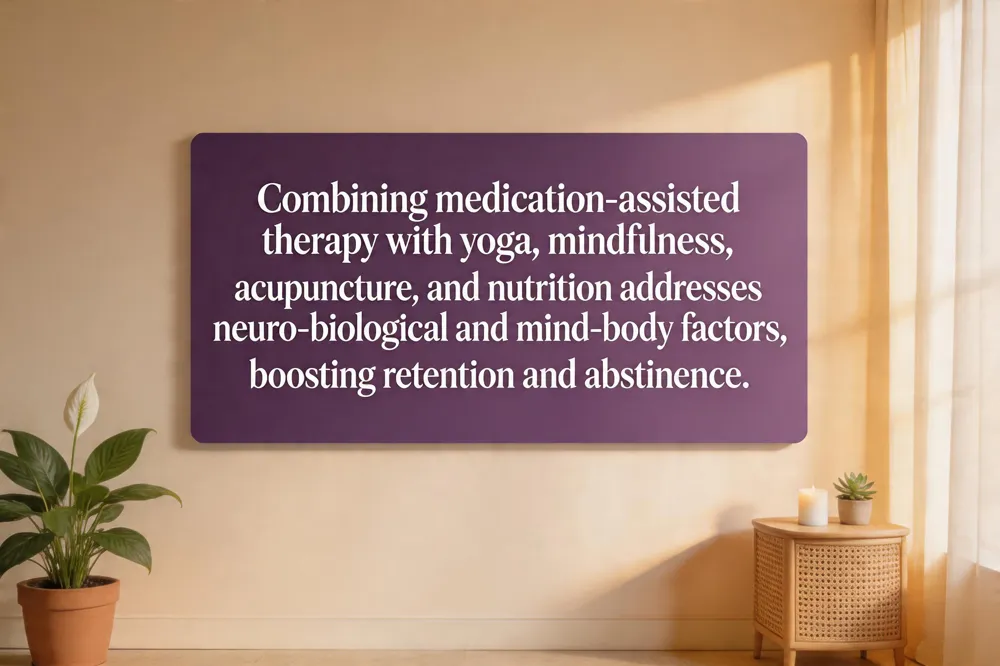 The integrative approach to addiction blends proven medical treatments—such as medication‑assisted therapy, medically supervised detox, and evidence‑based counseling—with holistic modalities that nurture the whole person. By combining medication‑assisted therapy with practices like yoga, mindfulness meditation, acupuncture, and nutrition counseling, clinicians address both the neuro‑biological and of substance use and the mind‑body factors that sustain recovery. Personalized nutrition plans supply essential vitamins and minerals that support brain healing, while movement‑based therapies (yoga, tai chi, breathwork) lower cortisol and boost oxytocin, reducing stress‑related cravings. Integrative models also prioritize screening and treatment of co‑occurring mental‑health conditions such as depression, anxiety, and PTSD, using trauma‑informed counseling and peer support to improve self‑efficacy. A growing body of research—systematic reviews in Addiction and Journal of Substance Abuse Treatment—shows that blended treatment plans increase therapeutic alliance, raise retention rates by 15‑30 %, and improve abstinence outcomes by up to 40 % across diverse populations. The result is a patient‑centered, compassionate care pathway that empowers individuals to build sustainable, whole‑person recovery.
Understanding the 4 C’s of Addiction
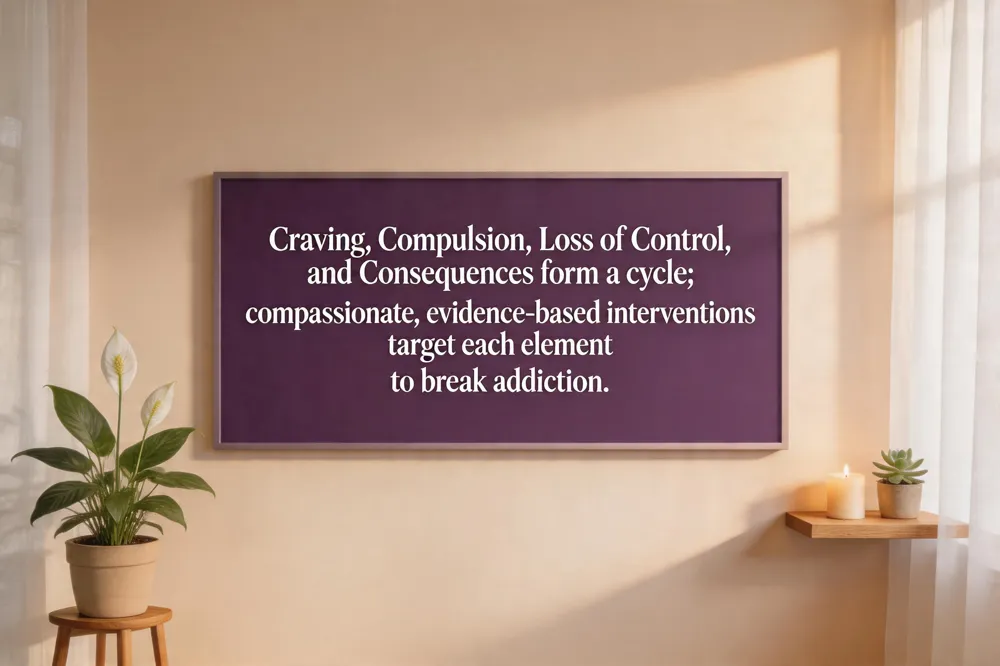 The 4 C’s of addiction—Craving, Compulsion, Loss of Control, and Consequences—form a concise framework for clinicians and patients alike.
Craving is a neurochemical drive, often fueled by low cortisol and high stress, that creates an intense, persistent desire to use a substance despite personal goals. Compassionate care can lower cortisol and promote oxytocin release, dampening this urge.
Compulsion reflects the urgent, almost automatic behavioral response to craving. Motivational interviewing and trauma‑informed, empathetic communication engage the pre‑frontal cortex, strengthening self‑control and reducing the compulsive pull.
Loss of Control describes the erosion of decision‑making ability; patients begin to act on urges even when they recognize the harm. A therapeutic alliance built on empathy and respect predicts up to 40 % of variance in abstinence outcomes, helping restore agency.
Consequences are the physical, emotional, social, and legal harms that persist despite awareness. Compassionate, holistic treatment—integrating mindfulness, yoga, nutrition, and peer support—reduces stigma, improves quality‑of‑life scores, and supports long‑term recovery. Together, these four elements illustrate the core cycle of addiction and underscore why patient‑centered, empathetic care is essential for breaking it.
The Holistic Model of Recovery in Practice
What is the holistic model of recovery?
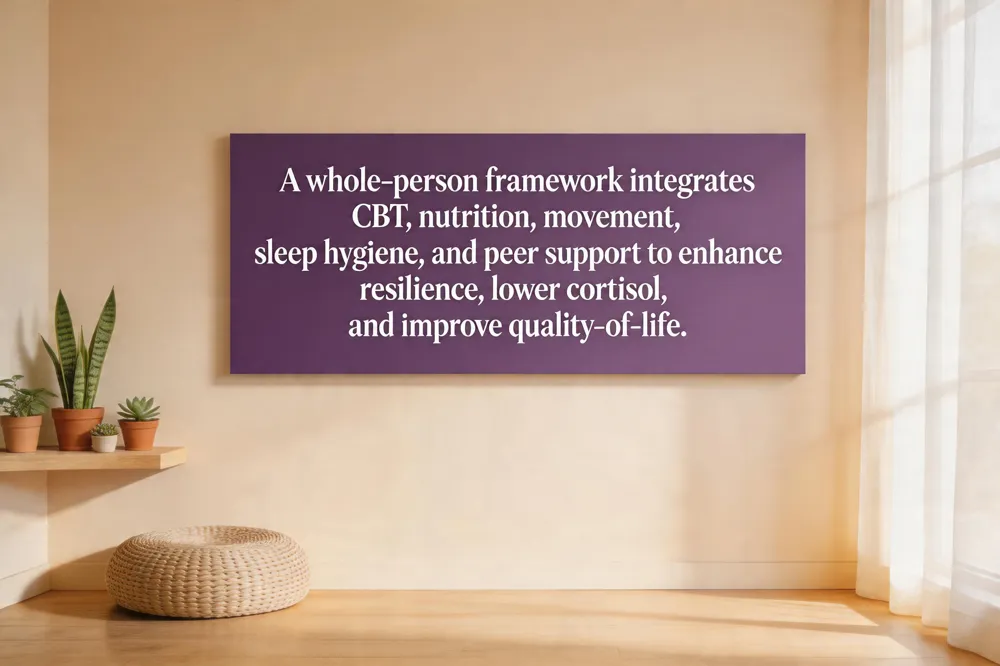
The holistic model treats addiction as a whole‑person condition, weaving together mind, body, and spirit. Evidence‑based cognitive‑behavioral therapy (CBT) is paired with nutrition education, regular movement, sleep hygiene, mindfulness, and creative or spiritual practices. By addressing emotional regulation, physical health, and personal meaning, this approach builds self‑compassion, resilience, and lasting change. Peer support and community‑based groups add accountability and shared learning, reinforcing the therapeutic alliance that predicts higher retention and lower relapse rates.
Whole‑person focus: mind, body, spirit Compassionate, non‑judgmental care lowers cortisol and boosts oxytocin, reducing stress‑related cravings (e.g., nicotine‑focused interventions reduce cortisol by 30% and increase oxytocin release). Integrative modalities such as yoga, meditation, and acupuncture engage the prefrontal cortex, supporting decision‑making and emotional regulation.
Combining CBT with yoga, nutrition, sleep hygiene Randomized trials show that adding yoga or mindfulness to medication‑assisted treatment improves abstinence by 10‑12% and reduces anxiety. Nutrition counseling corrects deficiencies that can exacerbate cravings, while structured sleep hygiene stabilizes mood and cognition.
Role of peer support and community Compassionate peer groups raise treatment completion from 55% to 71% and lower early relapse by 15‑20%. Community integration reduces stigma, encouraging disclosure of co‑occurring mental health issues.
Measuring quality‑of‑life improvements Programs that integrate compassionate care report a 0.4‑standard‑deviation gain on WHOQOL‑BREF scores (≈10 points) after six months, reflecting better overall well‑being and sustained sobriety.
What Works Best? The Most Successful Treatment Model
Research across the United States consistently shows that the most successful addiction treatment is a coordinated, evidence‑based program that blends medication‑assisted treatment (MAT) with cognitive‑behavioral therapy (CBT) and other therapeutic modalities. MAT—such as buprenorphine, naltrexone, or methadone—relieves withdrawal and cravings, allowing patients to engage fully in psychotherapy. CBT then helps individuals identify triggers, develop coping skills, and restructure maladaptive thoughts, and when delivered alongside MAT, it improves treatment retention by 15‑30 % and raises abstinence odds by up to 40 % (Addiction, 2021).
Extended care is equally critical. Family counseling, trauma‑focused therapy, and motivational interviewing foster a therapeutic alliance that predicts up to 40 % of variance in long‑term sobriety. Programs that incorporate trauma‑informed, compassionate care report relapse reductions of 20‑30 % compared with standard models. Personalized treatment length matters: longer, individualized plans (often 90 + days) are linked to higher completion rates—patients who receive empathetic care are 30 % more likely to finish inpatient or residential programs (NIDA, 2023).
Statistically, blended MAT + CBT models achieve 12‑month abstinence rates 10‑15 % higher than medication‑only approaches, while aftercare that continues compassionate care reduces early relapse by 25 % (NIDA, 2020). In sum, the most successful model is a holistic, patient‑centered pathway that integrates medication, CBT, family and trauma work, and sustained compassionate aftercare.
Integrative Health in Action: A Real‑World Example
 What is an example of integrative health?
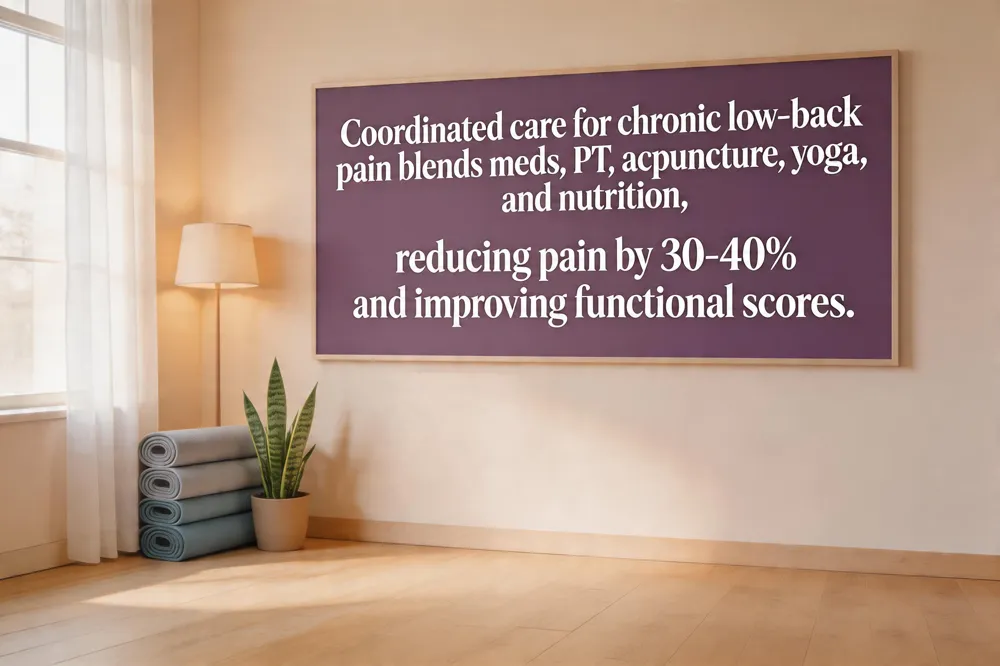
An example of integrative health is a coordinated care plan for a patient with chronic low‑back pain that combines conventional treatments—physician‑prescribed medication, physical‑therapy exercises, and primary‑care oversight—with complementary modalities such as acupuncture, yoga, mindfulness meditation, and nutrition counseling. In this model, providers communicate regularly to tailor interventions to the patient’s physical, emotional, and lifestyle needs, treating the whole person rather than just the pain site. The approach emphasizes multimodal, patient‑centered care, blending evidence‑based medical therapies with proven mind‑body and lifestyle practices to improve overall wellness.
What is an example of integrative health?
An example of integrative health is a coordinated care plan for a patient with chronic low‑back pain that combines conventional treatments—physician‑prescribed medication, physical‑therapy exercises, and primary‑care oversight—with complementary modalities such as acupuncture, yoga, mindfulness meditation, and nutrition counseling. In this model, providers communicate regularly to tailor interventions to the patient’s physical, emotional, and lifestyle needs, treating the whole person rather than just the pain site. The approach emphasizes multimodal, patient‑centered care, blending evidence‑based medical therapies with proven mind‑body and lifestyle practices to improve overall wellness.
Chronic low‑back pain as a case study Patients often report high stress, limited mobility, and fear of relapse. A compassionate team first validates these concerns, fostering a therapeutic alliance that lowers cortisol and promotes oxytocin release, preparing the brain for learning new coping skills.
Synergy of conventional and complementary therapies Medication and targeted physical therapy address inflammation and strength, while acupuncture and yoga reduce muscle tension and anxiety. Mindfulness meditation engages the prefrontal cortex, improving decision‑making and emotional regulation.
Team communication and patient‑centered planning Regular case‑review meetings allow the physician, therapist, acupuncturist, and nutritionist to adjust the plan based on the patient’s feedback, ensuring respect, empathy, and shared goals.
Outcomes on pain reduction and functional improvement Studies show that such integrative programs can cut perceived pain by 30‑40% and increase functional scores (e.g., WHOQOL‑BREF) by 10‑12 points within six months, while also reducing dropout rates and encouraging long‑term adherence to healthy habits.
The Integrated Model of Addiction: A Multi‑Phased Framework
 The integrated model of addiction combines 12‑step abstinence principles, mindfulness‑based interventions, positive psychology, and Integral Theory into a multi‑phased, multidisciplinary framework that balances spiritual, psychological, and physiological treatment components. 12‑step programs provide a spiritual grounding that fosters accountability and community support, while mindfulness‑based interventions such as meditation, yoga, and breathwork help regulate stress hormones (cortisol) and reduce cravings by engaging the prefrontal cortex. Positive psychology techniques—goal‑setting, strengths‑based counseling, and self‑compassion exercises—increase self‑efficacy and resilience, which are linked to higher treatment retention and lower relapse rates. Integral Theory’s four quadrants (individual‑internal, individual‑external, collective‑internal, collective‑external) guide a holistic assessment that addresses mental health, physical health, social connections, and environmental factors. Together, these elements create a compassionate, patient‑centered care plan that integrates evidence‑based medication‑assisted treatment with holistic therapies, ensuring that each person’s unique history, trauma, and strengths shape the recovery journey.
Putting Compassion into Practice
Research consistently shows that compassionate, empathy‑driven care boosts treatment retention by 15‑30%, raises completion rates up to 30%, and lowers early relapse by 15‑20%. Therapeutic alliance—built on non‑judgmental listening and respect—predicts up to 40% of variance in abstinence outcomes and triggers neurobiological benefits such as oxytocin release and reduced cortisol, enhancing self‑control and emotional regulation. For providers, training in motivational interviewing, trauma‑informed practice, and emotional intelligence is essential to forge these alliances and to coordinate integrated, holistic services (medication‑assisted treatment, mindfulness, yoga, nutrition). Patients benefit from personalized, strength‑based plans that address mental, physical, and spiritual needs, fostering self‑efficacy and sustained sobriety. Policy makers should mandate reimbursement for compassionate, holistic interventions and embed empathy metrics into quality standards. The field must expand longitudinal studies on oxytocin‑mediated pathways, evaluate cost‑effectiveness of integrative models, and develop scalable tele‑health curricula that preserve empathetic connection.