Setting the Stage: Why Holistic Integration Matters
Holistic care looks beyond isolated symptoms, treating the mind, body, spirit, and social context, while conventional medicine focuses primarily on disease pathology and organ‑specific interventions. By merging the two, patient‑centered whole‑person health emerges: clinicians coordinate conventional treatments with evidence‑based complementary modalities—such as acupuncture for chronic pain, yoga for balance and stress reduction, meditation for anxiety, and nutritional supplements—to address interconnected biological, behavioral, and environmental factors. In the United States, more than 30 % of adults and 12 % of children now use at least one complementary approach alongside standard care, with yoga participation rising from 9.5 % in 2012 to 14.3 % in 2017 and supplement use at 17.7 % of adults. This growing adoption reflects a cultural shift toward personalized, preventive, and collaborative care models and improved patient satisfaction and better outcomes across settings.
Mind‑Body Practices Complementing Traditional Treatment
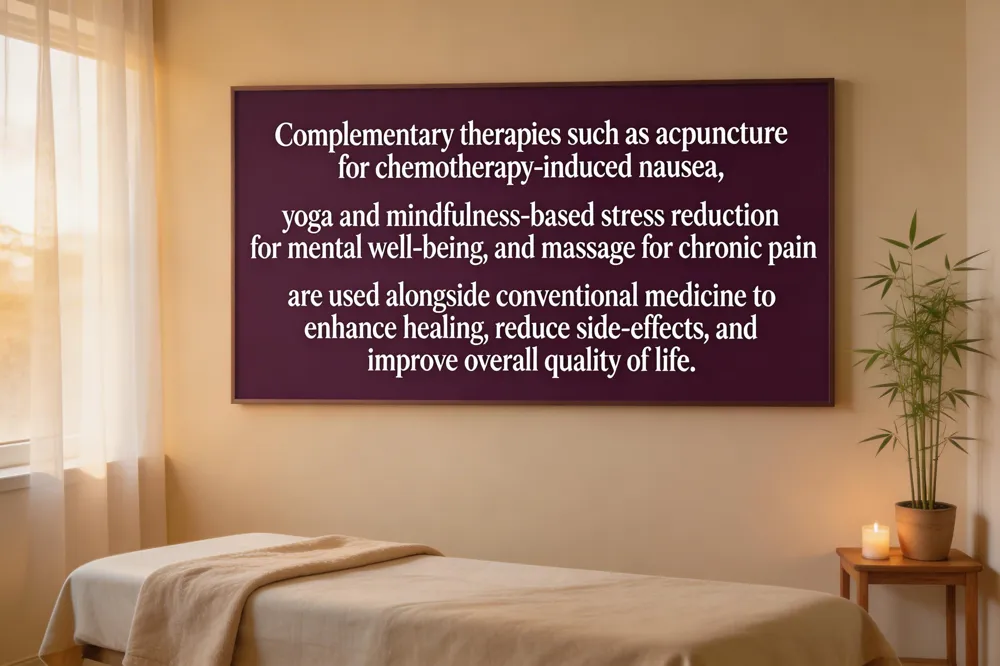 What medicine is used together with conventional medicine? Complementary medicine refers to therapies used alongside care to aid healing and lessen side‑effects, distinct from alternative medicine which replaces standard treatment. When both are offered together, it is called integrative medicine. Examples: acupuncture for chemotherapy‑induced nausea, yoga or mindfulness‑based stress reduction for mental well‑being, massage for chronic pain. Discuss any complementary therapies with your provider for safety and coordination.
Examples of treatment methods used in medicine Practices such as meditation, yoga, tai chi, and guided imagery lower stress, improve balance, and support pain coping. Acupuncture and therapeutic massage complement care, nutrition counseling and probiotic supplements address metabolic health.
What is an example of a holistic approach to healthcare? A patient with low‑back pain may receive medication, physical‑therapy, acupuncture, mindfulness meditation, nutritional counseling, and yoga, forming a plan.
Difference between complementary and alternative medicine Complementary adds to care; alternative replaces it.
Holistic approach in healthcare Treats the whole person—body, mind, emotions, spirit—by integrating lifestyle and therapies. Holistic approach
What is integrative health? A model that blends medicine with therapies to promote physical, emotional, spiritual health. Integrative health
Nutritional Supplements and Whole‑Person Wellness
 Five commonly used complementary and alternative medicine (CAM) therapies include acupuncture, yoga, mindfulness‑based stress reduction, herbal medicine, and chiropractic spinal manipulation. Acupuncture inserts fine needles at specific points to alleviate pain; yoga blends postures, breath work, and meditation for flexibility and mental well‑being; mindfulness‑based stress reduction teaches focused attention to reduce stress; herbal medicine uses plant‑derived preparations to support bodily functions; and chiropractic spinal manipulation addresses musculoskeletal alignment to relieve pain.
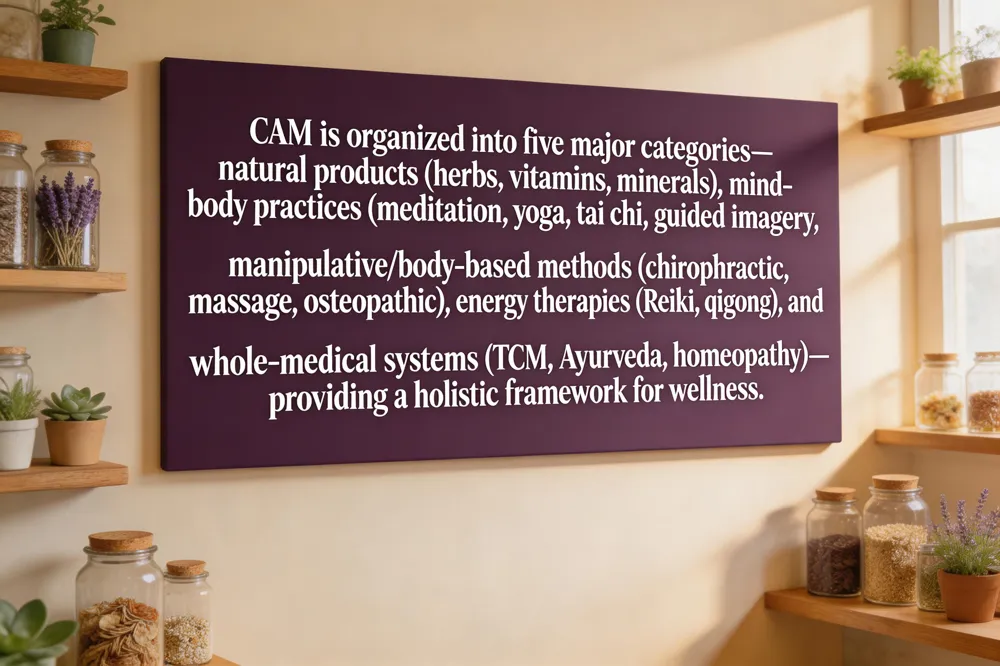
The five major CAM categories are: (1) natural products (herbs, vitamins, minerals), (2) mind‑body practices (meditation, yoga, tai chi, guided imagery), (3) manipulative and body‑based methods (chiropractic adjustments, massage, osteopathic manipulation), (4) energy therapies (Reiki, therapeutic touch, qigong), and (5) whole‑medical systems (Traditional Chinese Medicine, Ayurveda, homeopathy).
Physical Modalities: Acupuncture, Massage, and Chiropractic
 Integrative medicine doctors are MDs or DOs who blend conventional, evidence‑based care with safe, scientifically supported complementary therapies. They view patients as partners, addressing physical, mental, emotional, and spiritual health to promote overall wellness.
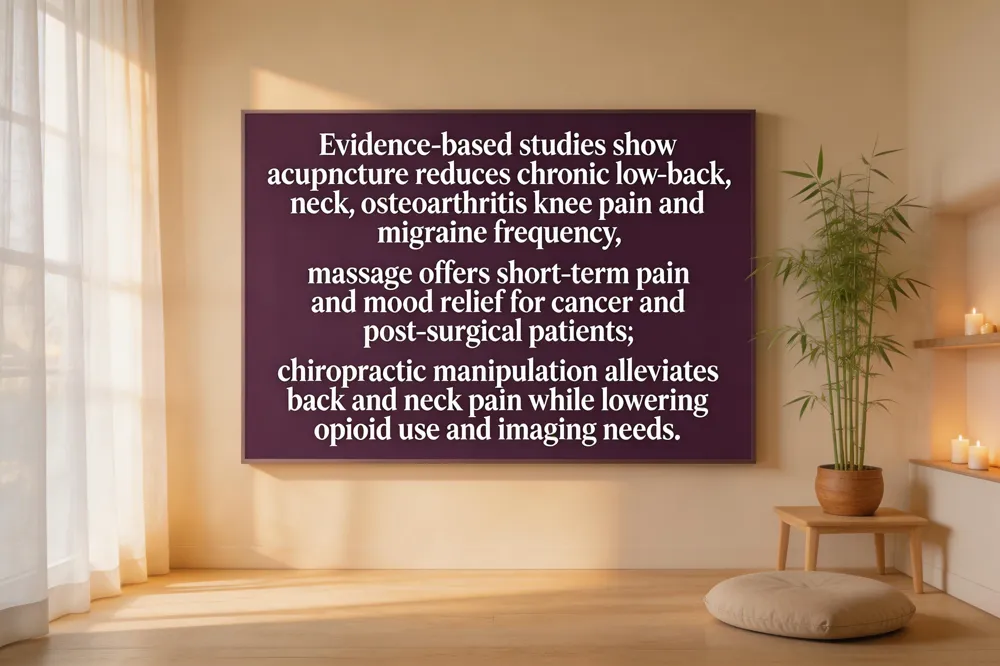
Complementary health practices such as Acupuncture, Massage therapy, and chiropractic spinal manipulation are used alongside standard treatment to enhance healing. Acupuncture has been shown in NCCIH‑funded trials to reduce chronic low‑back, neck pain, and osteoarthritis knee pain, and to lower migraine frequency. Massage therapy provides short‑term relief in pain and mood for advanced cancer and post‑surgical patients, improving circulation and muscle relaxation. Chiropractic spinal manipulation and other manual‑therapy techniques can relieve lower‑back and neck pain, often reducing opioid use and imaging needs.
Holistic medicine treatments combine these modalities with lifestyle counseling, nutrition, and mind‑body practices to address the whole person. An example of integrative health is a coordinated plan that includes acupuncture, massage, and chiropractic care to manage chronic pain while supporting stress reduction through meditation. This patient‑centered, multimodal approach aligns with evidence‑based guidelines and aims for faster, safer recovery and improved quality of life.
Integrative Care Teams, Functional Medicine, and Professional Standards
 An integrative approach to health blends conventional medical care with evidence‑based complementary therapies—nutrition counseling, mindfulness, acupuncture, massage, yoga, and Tai Chi—to treat the whole person:body, mind, spirit, and emotions. An integrative physician leads a patient‑centered team that coordinates primary doctors, specialists, and certified holistic providers, ensuring each modality is safe, synergistic, and rooted in research.
Integrative health is a whole‑person model that adds mind‑body practices and lifestyle interventions to standard care, while functional medicine digs deeper to uncover biochemical, genetic, and environmental drivers of disease. Functional medicine uses detailed histories, laboratory panels, and systems‑based reasoning to correct underlying dysfunctions, complementing integrative therapies for chronic pain, stress, detoxification, and weight‑loss goals.
Both models emphasize personalized, team‑based care. Detox programs—guided by qualified practitioners—address toxin exposure, gut health, and metabolic reset, and are integrated with nutrition and stress‑management strategies.
Professional standards are upheld through certification. The Institute for Functional Medicine offers the Functional Medicine Certified Professional™ (FMCP) and FMCP‑M credentials after rigorous coursework, clinical‑hour requirements, and a validated exam. Certification signals competence, enhances patient safety, and provides ongoing education, though it does not expand legal scope of practice.
Conventional medicine remains essential, providing antibiotics, surgery, chemotherapy, vaccines, and evidence‑based pharmaceuticals that form the backbone of integrated care.
Evidence, Safety, and Trusted Resources
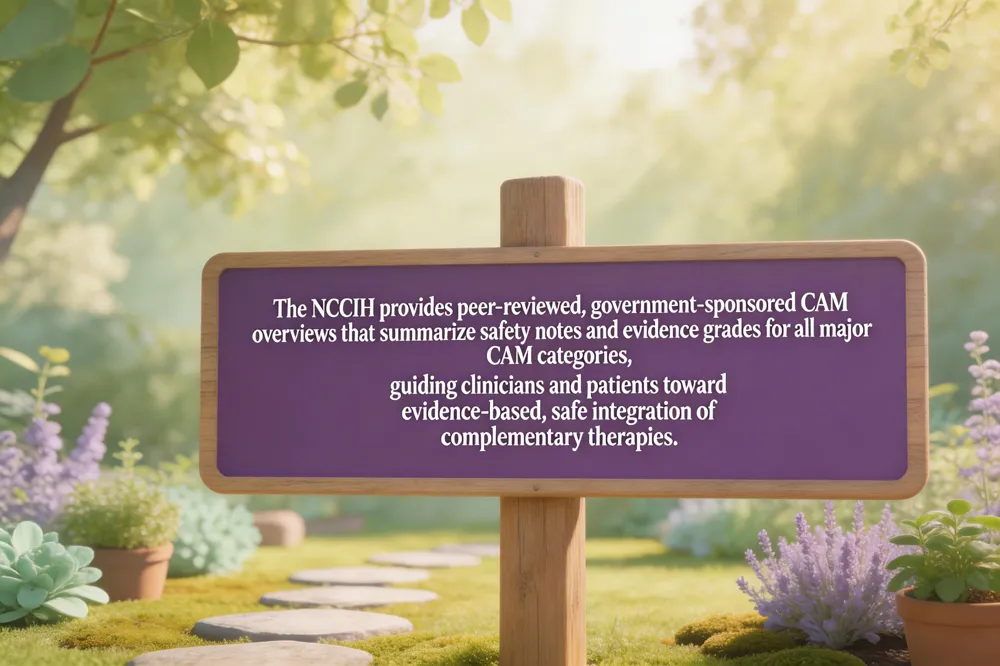 Integrative health draws on a growing body of research funded by the National Center for Complementary and Integrative Health (NCCIH). The NCCIH website offers a downloadable “CAM Overview” PDF that summarizes the five major CAM categories—natural products, mind‑body practices, manipulative/body‑based methods, energy therapies, and whole‑medical systems—along with safety notes and evidence grades. Because the file is hosted on a .gov domain, it is a reliable, peer‑reviewed resource for clinicians and patients alike.
Why is holistic medicine often considered superior? By treating the whole person—body, mind, and spirit—it uncovers root causes, reduces reliance on pharmaceuticals, and improves adherence through patient empowerment. Evidence shows mindfulness, yoga, and acupuncture can lower blood pressure, alleviate chronic pain, and decrease opioid use when added to conventional care.
Alternative medicine refers to therapies used instead of standard treatment, such as homeopathy, Ayurveda, or Reiki; these lack rigorous testing and may interact with prescription drugs. Common examples include acupuncture, herbal formulas, chiropractic adjustments, and energy‑balancing practices.
For detailed guidance, clinicians should consult the NCCIH CAM overview PDF and related NIH or WHO PDFs, which provide evidence‑based recommendations and safety considerations for integrating complementary therapies into mainstream care.
Putting It All Together
Integrative care thrives when patients become active partners in their health journey. Empowerment begins with clear communication: clinicians explain how conventional treatments work while introducing evidence‑based complementary options—such as mindfulness meditation, yoga, acupuncture, or tailored nutrition—so individuals can choose modalities that fit their values and lifestyle. This shared decision‑making builds confidence, improves adherence, and reduces reliance on medications alone. Looking ahead, research funded by NCCIH and other agencies is expanding the evidence base for whole‑person models, exploring digital mind‑body platforms, microbiome‑targeted nutrition, and coordinated veteran programs that blend chiropractic, mental‑health, and primary‑care services. The anticipated benefits include lower chronic‑pain scores, reduced opioid use, enhanced quality of life, and decreased health‑care costs. By uniting conventional science with compassionate holistic practices, integrative medicine promises a future where every patient feels heard, supported, and empowered to heal.