Holistic Overview of Chronic Pain Management
Chronic pain is best understood through the biopsychosocial model, which views pain as the product of intertwined biological, psychological, and social factors. Central sensitization, stress‑induced inflammation, and mood disturbances amplify pain signals, while social isolation and maladaptive beliefs worsen outcomes. Lifestyle choices—balanced nutrition, regular low‑impact movement, adequate hydration, and restorative sleep—directly modulate inflammation and nervous‑system excitability. Anti‑inflammatory diets rich in polyphenols, omega‑3 fatty acids, and micronutrients (vitamin D, magnesium) reduce oxidative stress, while mindfulness and breathing techniques calm the sympathetic response, lower cortisol, and reshape pain‑related brain activity. A patient‑centered plan weaves together medical optimization, physical therapy, and behavioral interventions such as CBT, mindfulness‑based stress reduction, and skills training, creating a personalized, multimodal pathway toward functional improvement and enhanced quality of life.
Non‑Pharmacological Pain Management in Nursing Care
 Nursing teams play a pivotal role in delivering non‑pharmacological pain relief that complements medical therapy. Patient education and psychological conditioning lay the foundation; nurses teach coping skills, explain neurophysiology of pain, and reduce fear‑avoidance beliefs. Cognitive‑behavioral techniques such as hypnosis, guided imagery, and distraction shift attention away from nociceptive signals and lower anxiety. Comfort therapies are applied at the bedside—heat or cold packs, therapeutic massage, optimal positioning, gentle stretching, meditation, music, art, and pastoral counseling—to activate the parasympathetic system and promote relaxation. Physical and occupational therapy interventions, including aqua therapy, graded strengthening, and desensitization, restore function while modulating central sensitization. Psychosocial counseling, delivered individually or in groups, addresses depression, isolation, and catastrophizing, reinforcing a supportive network. Neurostimulation modalities such as transcutaneous electrical nerve stimulation (TENS), acupuncture, and acupressure are incorporated into care plans to inhibit pain pathways without drugs. Together, these personalized, evidence‑based strategies empower patients, reduce opioid reliance, and improve overall quality of life.
Nutrition’s Role in Reducing Chronic Pain
 A diet that targets inflammation can dramatically calm chronic pain. Anti‑inflammatory patterns such as the Mediterranean or plant‑forward eating emphasize colorful fruits and vegetables, whole grains, legumes, nuts, and olive oil—foods rich in polyphenols and antioxidants that protect nerves and lower oxidative stress. Omega‑3 fatty acids from oily fish, flaxseed, walnuts, or high‑quality fish‑oil supplements further dampen inflammatory pathways, while healthy fats like avocado and extra‑virgin olive oil support cell membrane health. Key micronutrients—vitamin D, B12, magnesium, zinc, and selenium—are essential for muscle function, nerve repair, and immune balance; deficiencies often heighten pain. Adequate hydration (≈2–3 L/day) and fiber (25–30 g/day) aid circulation, gut microbiome health, and weight control, reducing joint load and “meta‑inflammation.” Foods that exacerbate pain include ultra‑processed snacks, added sugars, refined grains, saturated and trans fats; limiting these can prevent flare‑ups. Thoughtful supplementation (turmeric with black pepper, magnesium, vitamin D) may add benefit but should be discussed with a clinician. Together, these nutritional strategies create a synergistic, low‑inflammation environment that supports overall pain management.
Psychological and Behavioral Therapies for Pain
 Psychological therapy for pain management
Psychological therapy is a cornerstone of comprehensive pain care, reshaping thoughts, emotions, and behaviors that amplify discomfort. Evidence‑based approaches such as cognitive‑behavioral therapy (CBT), mindfulness‑based stress reduction (MBSR), acceptance and commitment therapy (ACT), and operant‑behavioral interventions teach coping skills, relaxation techniques, and healthier pain‑related beliefs. These therapies aim not to eliminate pain but to improve physical, emotional, and social functioning, often reducing perceived intensity and medication reliance. Integrated care teams—psychologists, physicians, physical therapists—tailor plans to each individual, boosting self‑efficacy and resilience.
Psychological therapy for pain management
Psychological therapy is a cornerstone of comprehensive pain care, reshaping thoughts, emotions, and behaviors that amplify discomfort. Evidence‑based approaches such as cognitive‑behavioral therapy (CBT), mindfulness‑based stress reduction (MBSR), acceptance and commitment therapy (ACT), and operant‑behavioral interventions teach coping skills, relaxation techniques, and healthier pain‑related beliefs. These therapies aim not to eliminate pain but to improve physical, emotional, and social functioning, often reducing perceived intensity and medication reliance. Integrated care teams—psychologists, physicians, physical therapists—tailor plans to each individual, boosting self‑efficacy and resilience.
Mindfulness for chronic pain research MRI studies show mindfulness lowers pain intensity and unpleasantness by modulating neural signatures (NPS, NAPS) rather than via placebo. Trials by F. Zeidan report participants who train in mindfulness often reduce or discontinue opioid use. The practice cultivates non‑judgmental awareness, decouples pain from self‑identity, and improves emotional regulation, supporting safer, drug‑free relief.
Mindfulness for chronic pain exercises Begin with a body‑scan: lie or sit comfortably, close eyes, and attend to each body part, noting sensations without trying to change them. Pair with diaphragmatic breathing—inhale to expand the belly, exhale to release tension. Add mindful walking or gentle stretching, labeling sensations (“tightness,” “burning”) and then returning to breath. Practice 10‑20 minutes daily to retrain the nervous system, lower stress, and increase pain tolerance.
Emerging Non‑Opioid Treatments for Chronic Pain Relief
 Recent research is shifting toward non‑opioid, targeted therapies that modulate the body’s own pain pathways. At Duke, scientists have created a novel ENT1 inhibitor that raises adenosine levels, providing stronger relief for neuropathic pain than gabapentin while avoiding addiction and respiratory side‑effects. Meanwhile, UNC investigators are developing drug candidates that silence the “unpleasantness” circuitry in the basolateral amygdala, aiming to dull the emotional component of chronic pain without impairing normal sensation. These precision‑medicine approaches represent a move away from blanket opioid use toward mechanism‑based treatments that can be combined with integrative modalities such as physical therapy, mindfulness, and nutrition for holistic pain management.
Nutrition is a pivotal lifestyle factor in chronic pain. Suboptimal dietary patterns amplify oxidative stress, systemic inflammation, and dysregulated glucose metabolism, all of which heighten nociceptive signaling. Incorporating nutrition screening and personalized dietary assessment into pain‑management plans allows clinicians to correct deficiencies (e.g., vitamin D, omega‑3, magnesium) and promote anti‑inflammatory foods—colorful fruits, vegetables, whole grains, and healthy fats. Evidence from narrative reviews shows that such diet modifications can reduce pain severity, improve function, and complement medical and psychosocial interventions, underscoring the need for an interdisciplinary, patient‑centered approach.
Evidence‑Based Alternative Modalities
 Evidence‑based alternative pain management – A growing body of research supports non‑opioid therapies such as acupuncture, mindfulness‑based stress reduction, yoga, tai chi, massage, and biofeedback/TENS. Systematic reviews show small‑to‑moderate improvements in pain intensity and functional outcomes for low‑back pain, osteoarthritis, and postoperative pain, while also reducing opioid reliance. What is the Chinese method of pain relief? Acupuncture, a traditional Chinese technique, inserts thin sterile needles into specific meridian points to stimulate nerves, muscles and connective tissue. This triggers endogenous pain‑relieving chemicals, lowers inflammation, and is safe when performed by qualified practitioners, with only mild soreness or bruising reported. A systematic review and meta‑analysis of nutrition interventions for chronic non‑cancer pain found that dietary changes—especially anti‑inflammatory patterns rich in polyphenols, omega‑3s, and adequate micronutrients—significantly reduced self‑reported pain severity. Supplements targeting vitamin D, magnesium, and B‑12 also contributed to pain relief. Integrating these nutrition strategies with the modalities above, regular low‑impact movement, adequate sleep, hydration, and nature‑based relaxation creates a personalized, whole‑person pain‑management plan that addresses physical, emotional, and social dimensions of chronic pain.
Practical Tools, Resources, and Lifestyle Programs
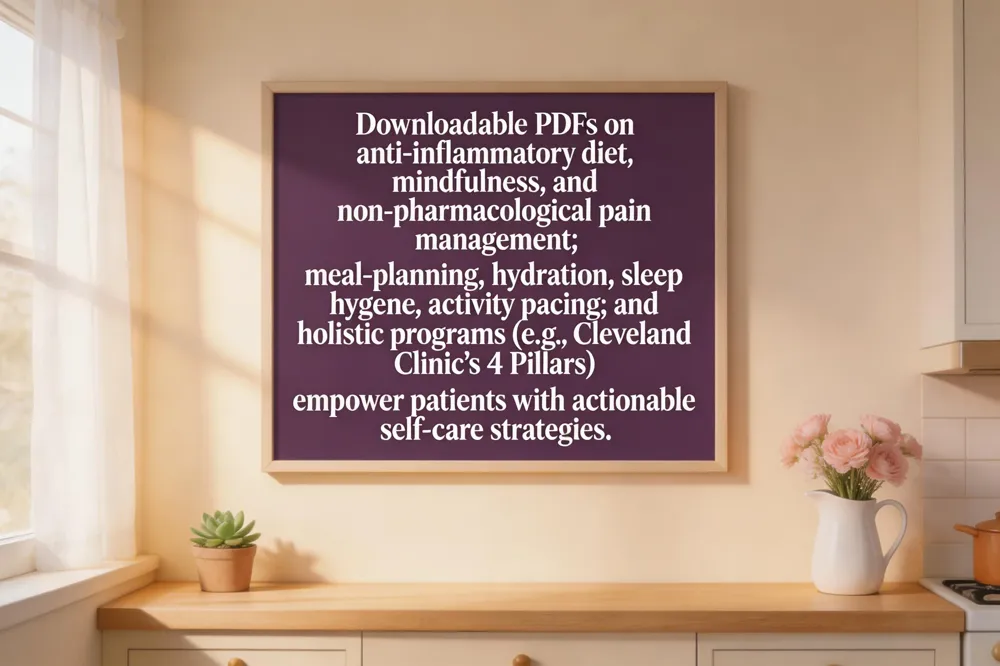 Living with chronic pain is easier when you have clear, actionable resources at hand.
Downloadable PDFs
- Anti‑inflammatory diet for chronic pain: Focus on whole, plant‑rich foods—colorful fruits, leafy greens, berries, nuts—and healthy fats from olive oil, avocado, and omega‑3‑rich fish or flaxseed. Choose lean proteins (beans, lentils, wild‑caught fish) and swap refined grains for whole‑grain options to boost fiber. Limit added sugars, processed oils, red/processed meats, and saturated fats. A concise PDF guide with meal‑planning tips is available on EclipseWellness.net.
- Mindfulness for chronic pain: Explains mindfulness as purposeful, present‑moment, non‑judgmental awareness and its evidence‑based benefits—reduced pain intensity, lower medication use, and calmer emotions. Includes neuro‑biological insights and step‑by‑step breathing and open‑monitoring exercises.
- Non‑pharmacological pain management: Covers nutrition, hydration, sleep hygiene, and complementary therapies (yoga, tai chi, guided imagery, massage, acupuncture, aromatherapy). Highlights cognitive‑behavioral strategies and multidisciplinary coordination, with toolkits from the Australian Aged Care Society and the University of Florida’s PAMI program.
Meal‑planning & hydration: Aim for 25‑30 g fiber daily (whole grains, veggies, beans, fruit) and at least 8 cups of water to aid digestion and lessen medication side‑effects.
Sleep hygiene & activity pacing: Keep a consistent bedtime, a dark cool room, and limit caffeine/electronics before sleep. Use pacing—start with ~⅓ of perceived capacity and schedule short breaks—to avoid over‑exertion.
Holistic programs: The Cleveland Clinic’s “4 Pillars of Lifestyle” (sleep, diet, exercise, stress) and EclipseWellness’s virtual workshops blend medical, physical, and mindfulness components for sustained pain relief.
Key Takeaways and Next Steps
Managing chronic pain works best when patients blend smart nutrition, mindfulness practice, and lifestyle habits. Anti‑inflammatory foods—omega‑3‑rich fish, colorful fruits, vegetables, and whole grains—lower systemic inflammation, while hydration and weight control reduce joint stress. Mindfulness techniques (body‑scan meditation, mindful breathing, gentle yoga) calm the nervous system, lower stress hormones, and reshape pain perception without drugs. Evidence‑based non‑pharmacologic options such as physical therapy, graded activity, acupuncture, and massage improve function with fewer side‑effects than long‑term opioids. Tailor each plan with a multidisciplinary team of physicians, psychologists, physiotherapists, dietitians, and nurses so goals fit personal readiness and barriers. Download the clinic’s self‑management toolkit, which offers printable exercise logs, meal‑planning guides, and guided meditation audio for home use.