Introduction
Concierge primary care is a membership‑based model that limits a physician’s panel to a few hundred patients, allowing 30‑minute or longer appointments, same‑day scheduling and 24/7 direct contact. For families, this structure creates a single, trusted clinician who coordinates preventive exams, chronic‑disease management and specialist referrals across every age group, fostering continuity and deeper trust. Many concierge practices weave integrative and holistic services—such as nutrition counseling, functional testing, acupuncture, massage and mind‑body coaching—into the personalized care plan. By blending conventional evidence‑based medicine with these whole‑person modalities, families receive proactive wellness strategies, early detection of health issues, and a coordinated, patient‑centered experience that supports long‑term health and well‑being and peace of mind daily.
Understanding Concierge Medicine Costs and Payments
| Cost Component | Typical Range | Notes |
|---|---|---|
| Annual Membership Fee (Individual) | $2,000 – $5,000 | Most common tier; non‑reimbursable by any insurer |
| Annual Membership Fee (Family) | $2,500 – $5,000+ | Often covers 2‑4 members; ultra‑luxury can exceed $10,000 |
| Ultra‑Luxury Practices | $40,000 – $100,000 | Includes extensive concierge services |
| Setup/Initiation Fee | $500 – $2,000 | One‑time charge for onboarding |
| Per‑Visit Charge (Non‑Covered) | $150 – $250 | Applied to services not covered by insurance |
| Insurance Interaction | Routine clinical services billed to insurance; membership fee is out‑of‑pocket | Medicare, Medicaid, and private plans do NOT reimburse the retainer |
| Example (MDVIP) | Membership fee non‑reimbursable; Medicare covers standard preventive exams | Patients may use HSA/FSA for fee payment |
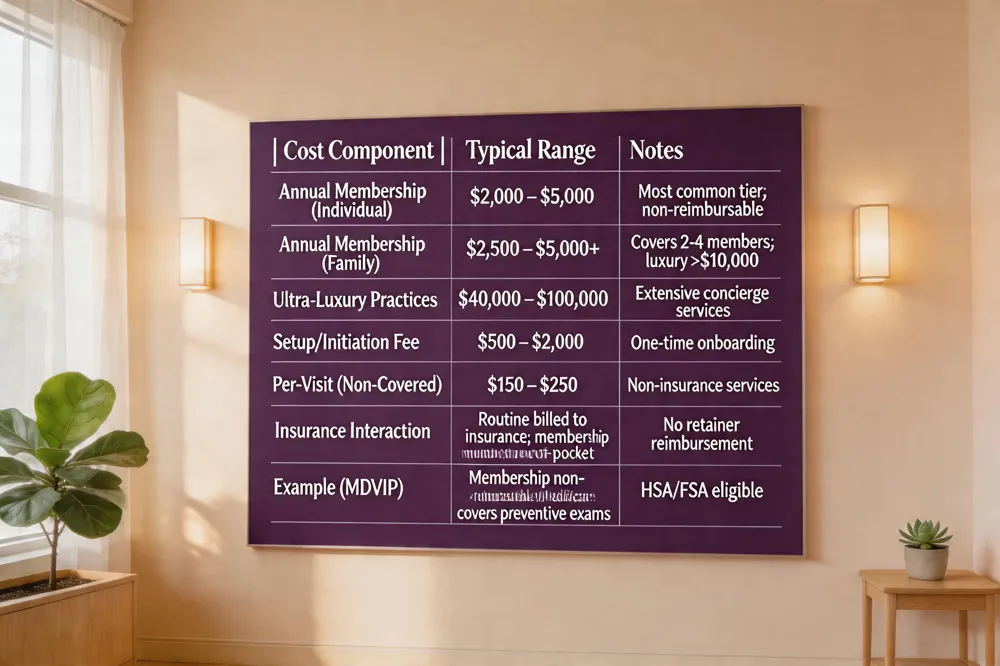 Concierge medicine typically requires an annual membership fee that varies by practice type and geography. Most providers charge $2,000–$5,000 per year for an individual, while families often pay $2,500–$5,000 or more; ultra‑luxury practices can exceed $10,000 and some high‑end programs reach $40,000–$100,000. A setup fee of $500–$2,000 and per‑visit charges of $150–$250 for non‑covered services are also common. The fee funds enhanced access—same‑day appointments, 30‑minute+ visits, andphysician contact—and proactive preventive planning—while traditional insurance still covers labs, imaging, specialist referrals, and hospital care.
Insurance interaction: Concierge practices usually bill the patient’s health‑insurance plan for routine clinical services, but the membership fee is a separate out‑of‑pocket expense that insurers (including Medicare and Medicaid) do not reimburse. Medicare does not pay for the concierge fee; it reimburses only covered services, and the practice must bill Medicare at the approved amount without bundling the fee. Blue Cross Blue Shield follows the same rule—no reimbursement for the retainer, but covered services are billed normally.
MDVIP, MD: The annual MDVIP membership fee is also non‑reimbursable by Medicare; members retain Medicare for standard preventive exams while paying the VIP fee out of pocket (or via HSA/FSA).
Holistic and Integrative Care in Primary Care
| Service | Provider Type | Evidence‑Based Benefits |
|---|---|---|
| Acupuncture | Licensed acupuncturist | Pain reduction, anxiety relief |
| Massage Therapy | Certified massage therapist | Improves circulation, reduces muscle tension |
| Yoga / Tai Chi | Certified instructor | Enhances flexibility, stress management |
| Nutrition Counseling | Registered dietitian | Improves metabolic markers, weight management |
| Mind‑Body Techniques (e.g., Reiki, Guided Imagery) | Trained practitioner | Supports mental health, pain coping |
| Integration Model | Primary‑care physician + multidisciplinary team | Holistic assessment, shared records, coordinated care |
| Reimbursement | Generally covered when medically necessary; varies by insurer & state | May require superbill submission for out‑of‑pocket items |
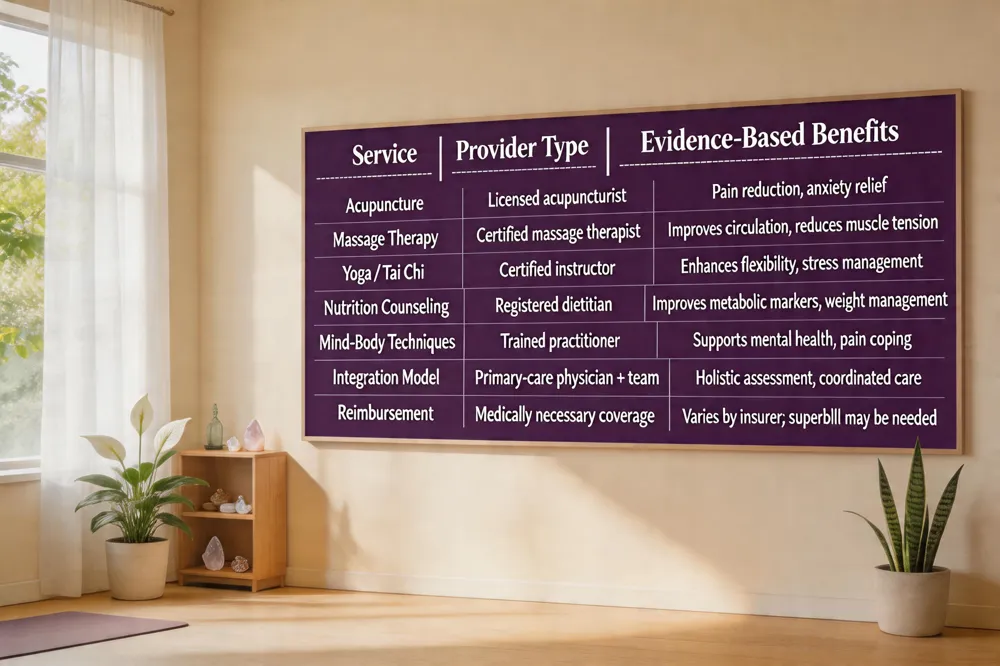 Holistic care in primary care treats patients as whole beings—physical, emotional, social, and spiritual—building a collaborative partnership where empathy, shared decision‑making, and personalized plans drive prevention and long‑term wellness.
Integrative health expands this model by blending evidence‑based conventional medicine with complementary therapies such as acupuncture, massage, yoga, nutrition counseling, and mind‑body techniques, creating a multidisciplinary team that tailors safe, proven modalities to each individual.
Yale New Haven Health’s Smilow Integrative Medicine Program offers acupuncture, yoga, Reiki, nutrition guidance, and group classes for cancer patients, coordinating these services with oncology care to manage pain, stress, and overall well‑being.
Hartford HealthCare’s Integrative Medicine program similarly provides acupuncture, massage, guided imagery, nutrition counseling, and Tai Chi across its hospitals and satellite sites, emphasizing research‑backed benefits for anxiety, pain, and immune function.
Services at Smilow and Hartford are generally reimbursable when medically necessary, but coverage varies by insurer, plan, and state licensing; patients should verify benefits and may need to submit superbills for out‑of‑pocket expenses.
An example of integrative health is a primary‑care physician managing hypertension while a licensed acupuncturist, yoga instructor, and nutritionist address stress, movement, and diet, sharing records to adjust treatment and promote whole‑person health.
Benefits of Concierge Care for Families
| Aspect | Details |
|---|---|
| Appointment Length | 30‑minute+ visits, allowing thorough discussion |
| Access Speed | Same‑day or next‑day appointments for acute issues |
| Direct Communication | 24/7 phone/email line to physician |
| Personalized Care | Continuous monitoring, proactive preventive plans |
| Coordination | Streamlined specialist referrals, wellness coaching |
| Pros | Rapid access, deeper doctor‑patient relationship, early detection |
| Cons | Out‑of‑pocket membership fee ($2,000–$5,000+), potential two‑tier system, limited insurance acceptance |
| Physician Compensation | $150,000 – $300,000 annually (higher due to smaller panels) |
| Equity Concern | May widen health disparities if only affluent can afford |
 Concierge healthcare gives you longer, unhurried appointments so your clinician can truly listen and tailor treatment plans to your unique history. You enjoy same‑day or next‑day access for acute issues, eliminating the weeks‑long wait common in traditional practices. A 24/7 direct line to your doctor provides peace of mind and helps avoid unnecessary emergency‑room visits. Because the physician sees fewer patients, you benefit from continuous, personalized care and proactive health monitoring that catches problems early. The model also coordinates specialist referrals and often includes wellness coaching, advanced testing, and other integrative services to support overall well‑being.
Concierge doctors give patients same‑day or next‑day appointments, 24/7 direct access, and longer visits that foster deeper doctor‑patient relationships. Continuous monitoring enables early detection of health issues and coordinated specialist referrals, supporting preventive care and chronic‑disease management.
Pros include rapid access, personalized preventive care, and integrated wellness services. Cons are the out‑of‑pocket membership fee (typically $2,000–$5,000+), potential creation of a two‑tier system, and limited insurance acceptance.
Physicians in this model often earn $150,000–$300,000 annually, reflecting higher compensation tied to smaller panels and enhanced services. Critics argue the model may widen health disparities by limiting high‑quality care to those who can afford the fee.
Regulatory and Oversight Landscape for Health Services
| Agency | Primary Role |
|---|---|
| Centers for Medicare & Medicaid Services (CMS) | Sets reimbursement & quality standards for hospitals & health programs |
| Occupational Safety and Health Administration (OSHA) | Enforces workplace safety & health regulations |
| Office for Civil Rights (OCR) | Protects patient privacy under HIPAA |
| Office of Inspector General (OIG) | Investigates fraud, waste, and abuse in health programs |
| Health Resources and Services Administration (HRSA) | Advances primary‑care access & community health initiatives |
| Food and Drug Administration (FDA) | Regulates drugs, medical devices, and related products used in hospitals |
| The Joint Commission | Non‑governmental accrediting body setting performance standards adopted by most hospitals |
| Local Health Department Oversight | Board of health (appointed/elected) + state health departments provide policy, performance review, and regulatory compliance |
| Definition of Health Oversight | Authority to monitor, regulate, and enforce standards ensuring safety, quality, and equity in health‑care delivery |
 The health‑care system operates under a layered framework of oversight to protect patients, ensure quality, and maintain safety. What are the 7 agencies that regulate hospitals? The principal federal regulators are: (1) the Centers for Medicare & Medicaid Services (CMS), which sets reimbursement and quality standards; (2) the Occupational Safety and Health Administration (OSHA), which enforces workplace safety and health rules; (3) the Office for Civil Rights (OCR), which safeguards patient privacy under HIPAA; (4) the Office of Inspector General (OIG), which investigates fraud, waste, and abuse in health programs; (5) the Health Resources and Services Administration (HRSA), which advances primary‑care access and community health initiatives; (6) the Food and Drug Administration (FDA), which governs drugs, medical devices, and related products used in hospitals; and (7) The Joint Commission, a non‑governmental accrediting body that sets performance standards adopted by most hospitals.
Who provides oversight of the local health department? Local health departments are primarily overseen by a board of health—an administrative body whose members are appointed or elected by the community. This board sets policy, reviews performance, and ensures compliance with local, state, and federal regulations. State health departments also play a supervisory role, offering guidance, resources, and legal authority to support the local agency.
What does health oversight mean? Health oversight refers to the authority of governmental agencies to monitor, regulate, and enforce standards in health‑care delivery and public‑health programs, protecting patient safety and promoting equitable, high‑quality care.
Integrated Healthcare Services and Community Resources
| Resource | Type | Primary Services |
|---|---|---|
| School‑Based Health Centers (SBHCs) | Licensed outpatient clinics in schools | Primary medical, dental, behavioral health for students |
| Tennessee Rural Health Initiatives | State‑level programs | Loan‑repayment for providers, enrollment assistance, Health Assist linking uninsured to resources |
| Integrated Wellness Group | Community holistic wellness organization | Mental‑health services, racial‑trauma counseling, flexible delivery models |
| Integrated Healthcare Services (general) | Multidisciplinary team (physicians, nurses, psychologists, social workers, therapists) | Unified treatment plans, whole‑person care, cost reduction |
| Key Features | Collaborative decision‑making, shared records, patient‑centered focus | Improves outcomes across urban and rural settings |
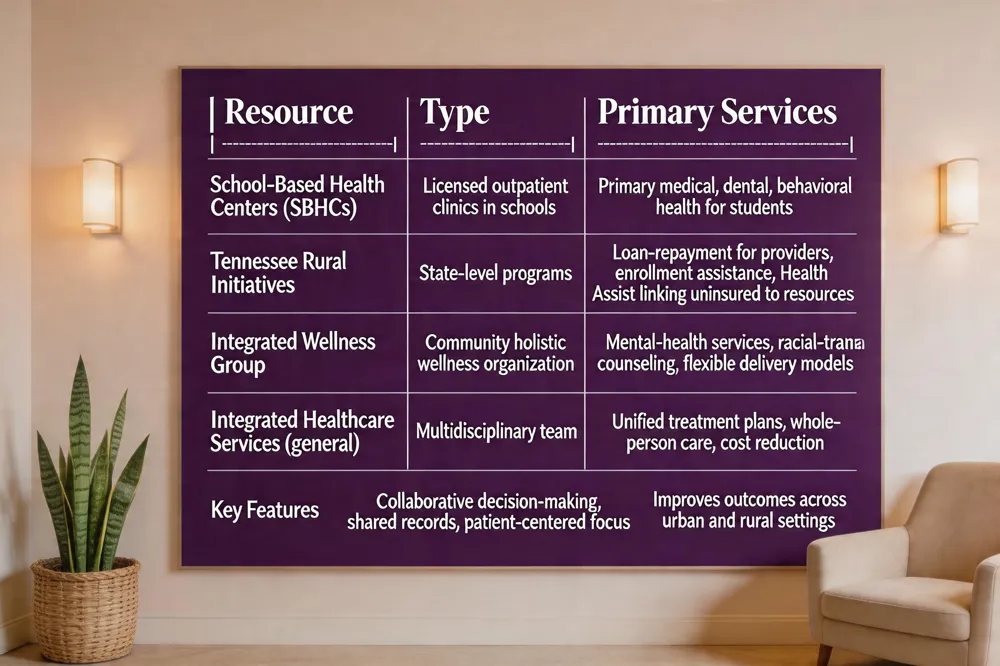 What does “integrated healthcare services” mean? Integrated healthcare services are a collaborative, patient‑centered model in which a diverse team of health professionals—physicians, nurses, psychologists, social workers, and therapists—work together to create and execute a unified treatment plan. By sharing information and decision‑making authority across disciplines, the team addresses the biological, psychological, and social dimensions of health, delivering seamless, whole‑person care that improves outcomes and reduces costs.
School‑Based Health Centers (SBHCs) operate within schools as licensed outpatient clinics, providing primary medical, dental, and behavioral health services on site. SBHCs keep students healthy, reduce absenteeism, and support academic success by eliminating the need for out‑of‑school appointments.
Tennessee Rural Health Initiatives such as the State Office of Rural Health, promote accessibility through loan‑repayment programs for providers, the "Get Covered Tennessee" enrollment assistance, and the Health Assist service that links uninsured residents to low‑cost community resources.
Integrated Wellness Group exemplifies community‑level holistic care by offering mental‑health services, racial‑trauma counseling, and flexible delivery models, ensuring families can access comprehensive wellness support.
Community Access to Holistic Care is further expanded by programs like Integrated Health Services and local integrative medicine clinics, which combine conventional treatment with evidence‑based complementary therapies (e.g., acupuncture, massage, nutrition counseling) to address mind‑body health for families across urban and rural settings.
Conclusion
Concierge medicine offers faster appointments, longer visits, 24/7 physician access, and proactive preventive care that boost satisfaction and health outcomes. Families should weigh costs, insurance compatibility, and access equity before joining. To pursue integrated, holistic care, research local concierge practices, verify their wellness services, and schedule an introductory consult for your family.