Introduction
Compassion‑driven addiction recovery treats substance‑use disorder as a chronic brain disease, not a moral failing, and prioritizes empathy, respect, and non‑judgmental support. Modern care has moved away from stigma‑filled attitudes toward a holistic, integrative model that blends medication‑assisted therapy, evidence‑based counseling, and complementary practices such as yoga, mindfulness, and nutrition counseling. Personalizing treatment plans to each person’s genetic, psychological, and social context maximizes engagement, improves outcomes, and honors the whole‑person connection of mind, body, and spirit.
Understanding the Foundations: The 5 C’s and 4 C’s of Recovery
5 C’s & 4 C’s of Recovery
| C | Definition | Clinical Relevance |
|---|---|---|
| Craving | Intense desire for the substance, often cued by stress or environment | Guides intensity‑based interventions (e.g., cue‑exposure, mindfulness) |
| Compulsion | Automatic urge to use despite known harms | Highlights need for impulse‑control strategies and pharmacotherapy |
| Consequences | Physical, mental, social fallout of use | Basis for functional assessment and goal‑setting |
| Control | Re‑establishment of personal agency over thoughts/behaviors | Target of skill‑building (self‑monitoring, relapse‑prevention plans) |
| Coping | Healthy strategies to manage stress (mindfulness, therapy, exercise, nutrition) | Core of relapse‑prevention toolbox |
4 C’s (assessment tool) – Craving, Compulsion, Control, Consequences. Clinicians measure each domain, map severity, and prioritize interventions that restore control while building coping skills.
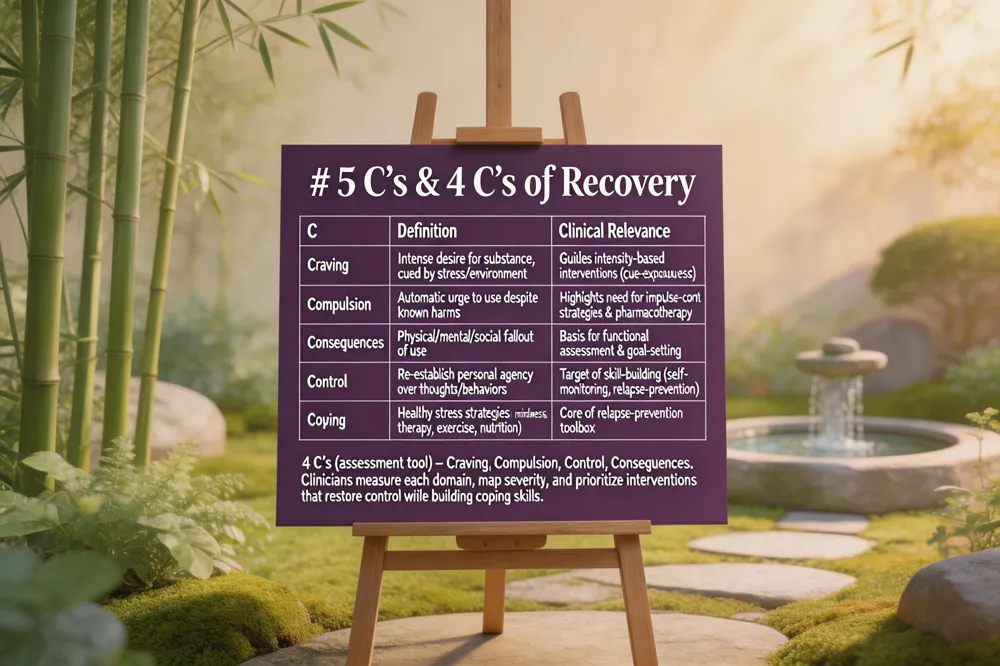 Recovery hinges on a clear framework that translates neuro‑biological reality into compassionate, patient‑centered care. The 5 C’s of recovery are Craving, Compulsion, Consequences, Control, and Coping. Craving is the intense desire for a substance that can be cued by stress or environment. Compulsion is the automatic urge to use despite known harms, often overriding rational thought. Consequences encompass the physical, mental, and social fallout that fuels the cycle of use. Control reflects the re‑establishment of personal agency over thoughts and behaviors, while Coping refers to healthy strategies—mindfulness, therapy, peer support, nutrition, exercise—that help manage stress and prevent relapse.
In many clinical models the 4 C’s of addiction (Craving, Compulsion, Control, Consequences) are used as a streamlined assessment tool, emphasizing the core drivers of use and their outcomes.
How these concepts guide assessment and treatment planning: Clinicians start by measuring the intensity of craving and the degree of compulsive use, then map the concrete consequences (health, legal, relational). This data informs a personalized care plan that prioritizes restoring control through evidence‑based pharmacotherapy (e.g., MAT) and builds coping skills via motivational interviewing, trauma‑informed counseling, and holistic modalities such as yoga, acupuncture, and nutrition counseling. By continuously monitoring the 5 C’s, providers can adjust interventions, enhance therapeutic alliance, and empower patients to move from a cycle of compulsive use toward sustainable, whole‑person recovery.
Natural Strategies for Overcoming Addiction
Natural Strategies Overview
| Strategy | Key Actions | Mechanism / Benefit |
|---|---|---|
| Trigger Management | Keep a trigger diary; develop coping scripts; avoid high‑risk people/places | Reduces cue‑induced craving cycles |
| Exercise & Movement | Aerobic activity, yoga, strength training 3–5 × week | Lowers cortisol, boosts endorphins, improves neuroplasticity |
| Mindfulness & Meditation | Daily breath‑focus, body‑scan, guided imagery | Enhances prefrontal regulation, reduces amygdala reactivity |
| Nutrition Therapy | Protein‑rich meals, omega‑3s, fruits/veggies, adequate hydration, 7‑9 h sleep | Restores dopamine pathways, stabilizes mood |
| Peer‑Support Networks | Attend sober‑social fitness classes, art workshops, 12‑step groups | Provides accountability, reduces isolation |
| Professional Guidance | Nurse‑led detox, motivational interviewing, trauma‑informed counseling | Ensures safe withdrawal and personalized goal‑setting |
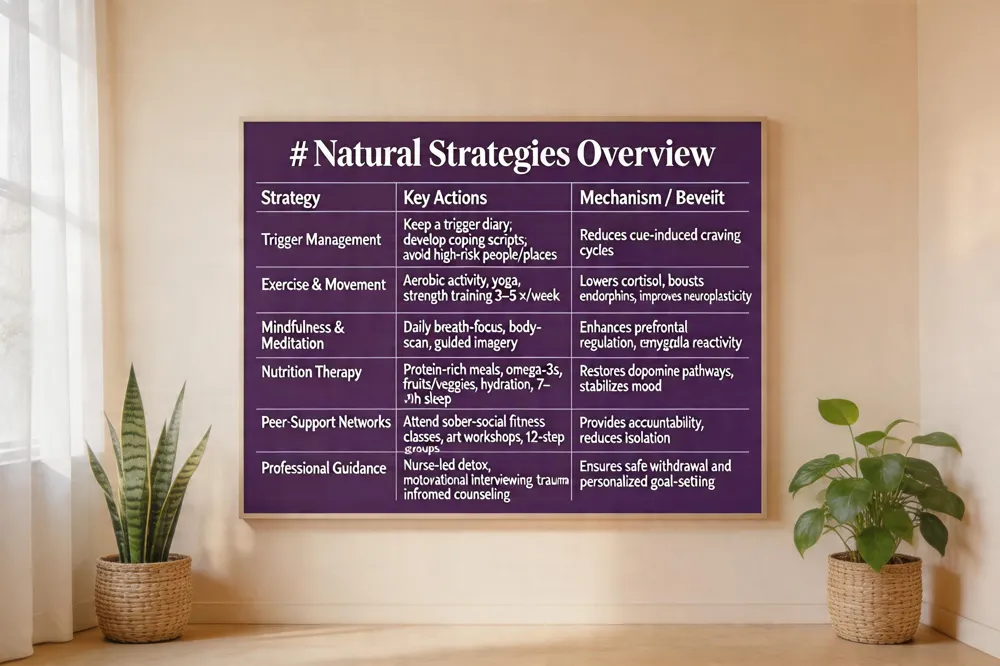 Stopping drug addiction naturally begins with self‑recognition and professional guidance for a safe detox. A nurse‑led or medically supervised withdrawal ensures physical stability while motivational interviewing helps you explore ambivalence and set personal recovery goals. Identify and avoid personal triggers—people, places, or stressors that spark cravings—by keeping a trigger diary and developing coping scripts. Holistic lifestyle changes support brain healing: regular aerobic exercise, yoga, and mindfulness meditation lower cortisol, boost endorphins, and improve emotional regulation. Nutrition therapy restores depleted nutrients; a diet rich in protein, omega-3s, fruits, and vegetables, paired with adequate hydration and 7‑9 hours of sleep, stabilizes dopamine pathways. Build a drug‑free network through peer‑support groups, family counseling, and community activities such as sober‑social fitness classes or art workshops. These connections provide accountability, reduce isolation, and reinforce the compassionate, whole‑person approach that underpins lasting recovery.
Compassion in Recovery: Self and Community
Compassion‑Focused Recovery
| Domain | Components | Outcome |
|---|---|---|
| Self‑Compassion | Mindful self‑awareness, common humanity, kindness‑focused inner dialogue | Lowers cortisol, activates oxytocin, reduces relapse risk |
| Compassionate Networks | Peer groups, family counseling, clinicians trained in trauma‑informed care | Strengthens therapeutic alliance, improves treatment adherence |
| Empathy‑Based Communication | Active listening, validation, non‑judgmental feedback | Enhances prefrontal‑cortex regulation, reduces dopamine‑driven urges |
| Community Practices | Group meditation, volunteer service, shared wellness activities | Builds sense of belonging, buffers stress |
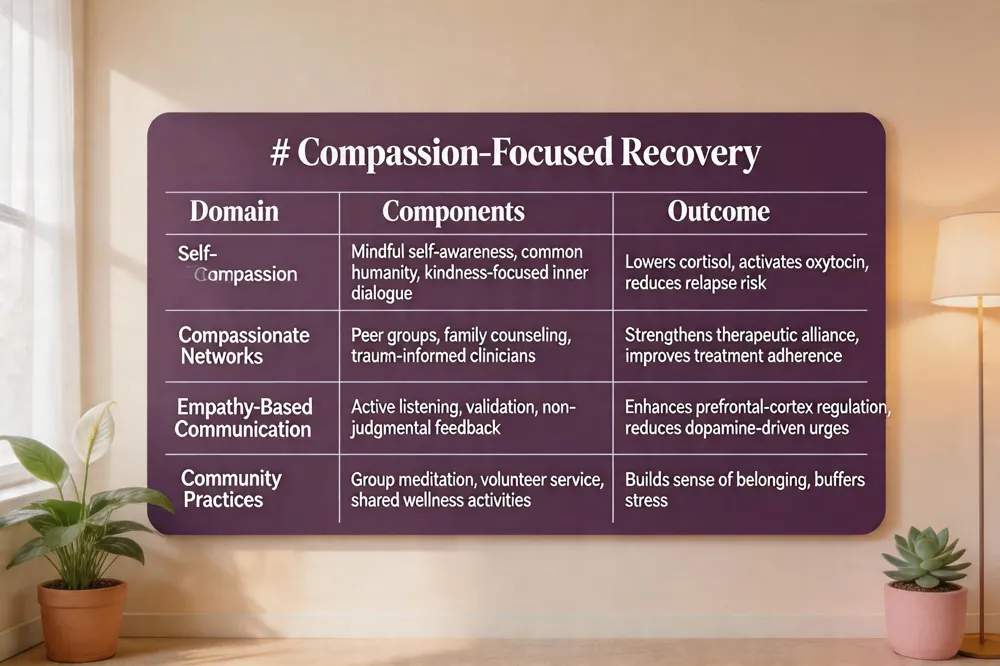 Compassion in recovery is the practice of meeting yourself and others with empathy, understanding, and kindness rather than judgment or criticism. It involves recognizing the pain, setbacks, and vulnerability that come with healing and responding with gentle acceptance and supportive encouragement. By replacing self‑shame with Self‑compassion, individuals create mental space that lets emotional wounds be acknowledged without being magnified, which strengthens resilience and promotes sustained progress.
Self‑compassion differs from self‑shame by fostering a nurturing inner dialogue that highlights common humanity and mindfulness, reducing cortisol levels and activating oxytocin pathways that lower cravings and stress. In contrast, shame amplifies the amygdala response, increasing relapse risk.
Compassionate support networks—peer groups, family members, and clinicians trained in trauma‑informed, empathy‑focused care—provide a safe environment where trust thrives. A strong Therapeutic alliance, built on genuine empathy, enhances treatment adherence and amplifies the neurobiological benefits of compassionate interactions, such as improved prefrontal‑cortex regulation and reduced dopamine‑driven urges.
When compassion becomes a core component of the recovery journey, it transforms challenges into opportunities for growth and nurtures a healthier, more balanced mind‑body experience.
The Hardest Addictions and Integrated Behavioral Health
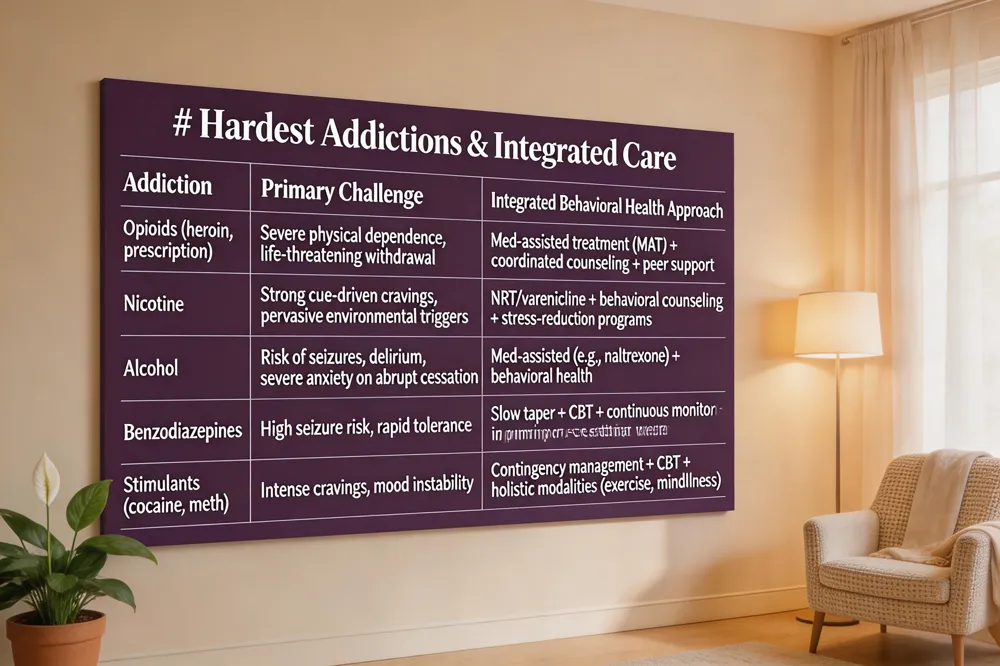
Hardest Addictions & Integrated Care
| Addiction | Primary Challenge | Integrated Behavioral Health Approach |
|---|---|---|
| Opioids (heroin, prescription) | Severe physical dependence, life‑threatening withdrawal | Med‑assisted treatment (MAT) + coordinated counseling + peer support |
| Nicotine | Strong cue‑driven cravings, pervasive environmental triggers | NRT/varenicline + behavioral counseling + stress‑reduction programs |
| Alcohol | Risk of seizures, delirium, severe anxiety on abrupt cessation | Med‑assisted (e.g., naltrexone) + integrated primary‑care behavioral health |
| Benzodiazepines | High seizure risk, rapid tolerance | Slow taper + CBT + continuous monitoring in primary‑care setting |
| Stimulants (cocaine, meth) | Intense cravings, mood instability | Contingency management + CBT + holistic modalities (exercise, mindfulness) |
 What is the hardest addiction to quit?
Opioid dependence—whether from heroin or prescription painkillers—is widely regarded as the most difficult addiction to overcome. Withdrawal can be severe, painful, and occasionally life‑threatening, generating powerful cravings that drive relapse. Nicotine follows closely; its blend of physical dependence and pervasive psychological cues makes quitting a long‑term battle. Alcohol and benzodiazepines also pose high risks, because abrupt cessation can trigger dangerous seizures, delirium, or severe anxiety. Stimulants such as cocaine and methamphetamine add intense cravings and mood instability to the mix. In short, the toughest addictions combine strong physiological dependence with deep‑seated psychological reliance, demanding medically supervised detox and sustained, compassionate support.
What is the hardest addiction to quit?
Opioid dependence—whether from heroin or prescription painkillers—is widely regarded as the most difficult addiction to overcome. Withdrawal can be severe, painful, and occasionally life‑threatening, generating powerful cravings that drive relapse. Nicotine follows closely; its blend of physical dependence and pervasive psychological cues makes quitting a long‑term battle. Alcohol and benzodiazepines also pose high risks, because abrupt cessation can trigger dangerous seizures, delirium, or severe anxiety. Stimulants such as cocaine and methamphetamine add intense cravings and mood instability to the mix. In short, the toughest addictions combine strong physiological dependence with deep‑seated psychological reliance, demanding medically supervised detox and sustained, compassionate support.
What is Integrated behavioral health? Integrated behavioral health is a collaborative care model that unites medical and behavioral‑health providers within a single setting. By embedding counselors, therapists, or psychologists alongside primary‑care teams, patients receive a “one‑stop‑shop” approach that addresses both physical and mental health needs. Shared screening tools, joint treatment planning, and coordinated communication reduce stigma and improve outcomes, making mental‑health services as accessible as routine medical care.
Integrated behavioral health model Typical models include Primary Care Behavioral Health (PCBH), where a behavioral‑health consultant works directly with physicians, and the Collaborative Care Model, which adds a care manager and consulting psychiatrist for chronic conditions. The Innovation in Behavioral Health (IBH) model expands this framework to Medicaid and Medicare populations, creating a “no‑wrong‑door” entry point. Together, these models deliver whole‑person treatment, lower emergency visits, and foster lasting recovery.
Evidence‑Based and Holistic Treatment Modalities
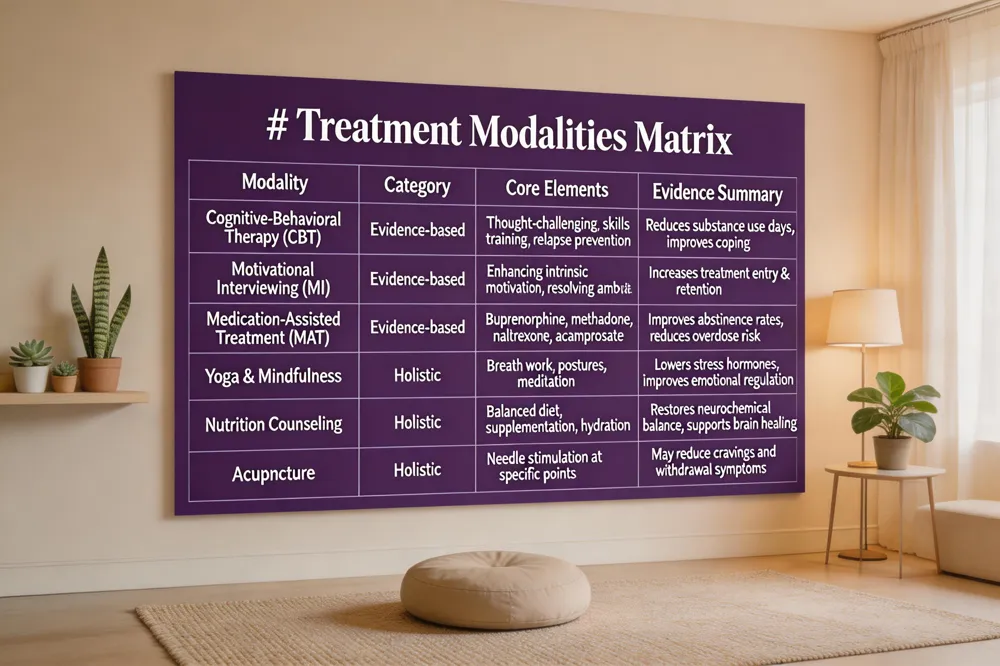
Treatment Modalities Matrix
| Modality | Category | Core Elements | Evidence Summary |
|---|---|---|---|
| Cognitive‑Behavioral Therapy (CBT) | Evidence‑based | Thought‑challenging, skills training, relapse prevention | Reduces substance use days, improves coping |
| Motivational Interviewing (MI) | Evidence‑based | Enhancing intrinsic motivation, resolving ambivalence | Increases treatment entry & retention |
| Medication‑Assisted Treatment (MAT) | Evidence‑based | Buprenorphine, methadone, naltrexone, acamprosate | Improves abstinence rates, reduces overdose risk |
| Yoga & Mindfulness | Holistic | Breath work, postures, meditation | Lowers stress hormones, improves emotional regulation |
| Nutrition Counseling | Holistic | Balanced diet, supplementation, hydration | Restores neurochemical balance, supports brain healing |
| Acupuncture | Holistic | Needle stimulation at specific points | May reduce cravings and withdrawal symptoms |
 What is the most effective treatment for addiction?
The most effective approach blends evidence‑based behavioral therapies—such as Cognitive‑Behavioral Therapy, Motivational Interviewing, and contingency management—with Medication‑assisted treatment (MAT) like buprenorphine, methadone, or naltrexone. This combination tackles both the neurochemical dependence and the psychological triggers of use, while a strong therapeutic alliance and personalized care plan enhance engagement and long‑term success.
What is the most effective treatment for addiction?
The most effective approach blends evidence‑based behavioral therapies—such as Cognitive‑Behavioral Therapy, Motivational Interviewing, and contingency management—with Medication‑assisted treatment (MAT) like buprenorphine, methadone, or naltrexone. This combination tackles both the neurochemical dependence and the psychological triggers of use, while a strong therapeutic alliance and personalized care plan enhance engagement and long‑term success.
What are the top 3 worst addictions? In the United States, alcohol, heroin, and cigarettes rank as the three most damaging addictions. Alcohol leads to the highest prevalence of substance‑use disorder and mortality; heroin’s potency creates rapid, life‑threatening dependence; and cigarette smoking causes more deaths than any other drug, driven by deep physiological and psychological dependence.
What is a holistic approach to addiction? Holistic care treats the whole person—mind, body, and spirit—by integrating traditional medical and behavioral interventions with complementary modalities such as yoga, mindfulness meditation, nutrition counseling, regular exercise, and acupuncture. These practices restore balance, reduce stress, and strengthen coping skills, supporting sustainable recovery beyond abstinence.
What does integrative mental health mean? Integrative mental health merges conventional psychiatry and psychotherapy with lifestyle, nutrition, and mind‑body therapies, creating a patient‑centered, whole‑person plan. It acknowledges the interplay of emotional, physical, social, and spiritual factors, tailoring interventions to each individual’s strengths and needs.
What is the most successful treatment for addiction? Success stems from coordinated multidisciplinary programs that combine Medication‑assisted treatment (MAT), evidence‑based counseling (Cognitive‑Behavioral Therapy, DBT, EMDR), trauma‑informed care, and holistic practices. Personalized, strength‑based plans that involve families, peer support, and after‑care services yield the highest retention rates and lasting sobriety.
Resources and Support Networks
Key Resources & Contact Points
| Resource | Contact / Link | Services Offered |
|---|---|---|
| SAMHSA National Helpline | 1‑800‑662‑HELP (text HELP4U to 435748) | 24‑hr confidential assistance, referral to local treatment |
| Fresno Community Health Clinics | https://wellness.hawaii.gov/ (Kahului & Lahaina) | Trauma‑informed care, MAT, holistic services |
| Aspire Counseling Services® | https://aspirecounselingservice.com/fresno-substance-abuse-treatment-programs/ | Outpatient therapy, medication management, yoga |
| The Lakes Treatment Center | https://www.thelakestreatmentcenter.com/regions/fresno/ | Integrated behavioral health, nutrition counseling |
| Peer‑Led Groups (The Phoenix, DV8 Kitchen) | Local 12‑step & sober‑social meet‑ups | Exercise, art, book clubs, peer accountability |
| Aloha Integrative Mental Health (tele‑health) | https://alohaimhhawaii.com/about-us | Virtual counseling, holistic modalities, MAT coordination |
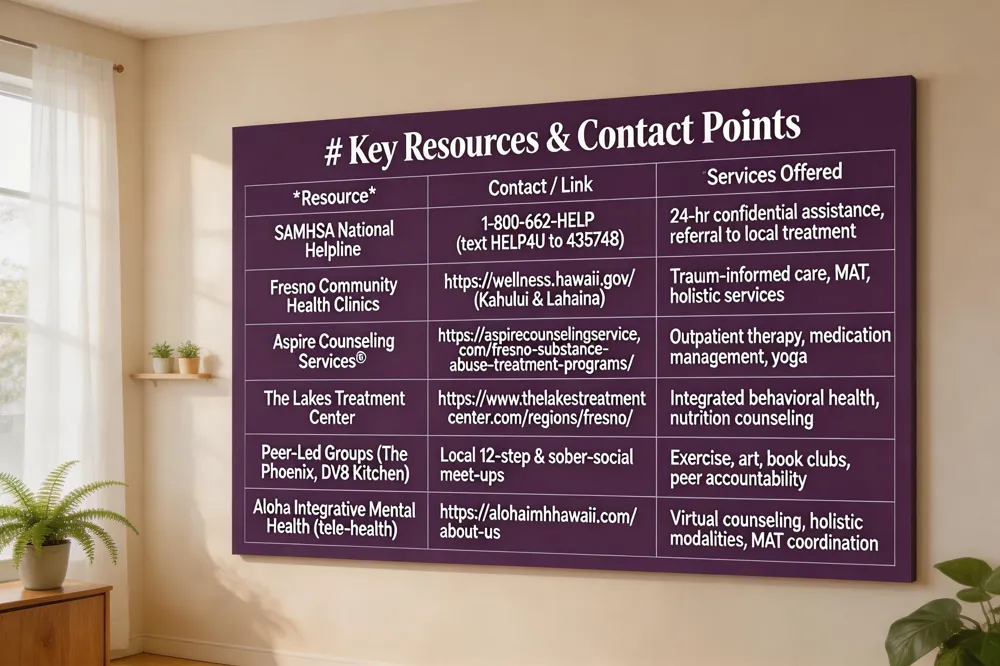 When addiction feels overwhelming, reaching out for help can be a lifesaving first step. The SAMHSA National Helpline (1‑800‑662‑HELP) offers free, confidential, 24‑hour assistance in English and Spanish, and its text‑messaging service HELP4U (text your zip code to 435748) quickly connects callers to nearby treatment and support resources. In California’s Central Valley, Fresno’s community health clinics—including the Certified Community Behavioral Health Clinics at Maui County (Kahului and Lahaina) and local outpatient programs such as Aspire Counseling Services® and The Lakes Treatment Center—provide trauma‑informed, non‑judgmental care that blends medication‑assisted therapy with holistic services like yoga, nutrition counseling, and mindfulness. Peer‑led recovery networks, such as The Phoenix, DV8 Kitchen, and local 12‑step groups, create sober‑social environments where individuals can exercise, practice yoga, or join book clubs, fostering connection and reducing isolation. For those unable to attend in‑person sessions, telehealth platforms from providers like Aloha Integrative Mental Health and SAMHSA’s online counseling extend compassionate, evidence‑based treatment to rural and underserved populations, ensuring that personalized, whole‑person care is always within reach.
Conclusion
Compassion‑driven, integrative recovery blends evidence‑based medication, counseling, and peer support with holistic practices like yoga, mindfulness, and nutrition, treating mind, body, and spirit. Individuals and providers should embrace personalized, trauma‑informed care, seeking community resources, telehealth options, and harm‑reduction services to foster lasting sobriety and empower overall wellbeing for healthier futures.