Why Dignity Matters in Modern Addiction Care
Modern addiction care recognizes that dignity is not a luxury but a therapeutic necessity. When services move away from punitive, stigma‑laden language toward respectful, person‑first communication, patients feel valued and are far more likely to stay engaged. This cultural shift reduces shame, encourages early help‑seeking, and builds trust essential for recovery. A holistic health philosophy expands treatment beyond the brain‑chemistry model, addressing physical, emotional, social and spiritual dimensions. Integrative approaches—combining medication‑assisted treatment, cognitive‑behavioral therapy, mindfulness, yoga, nutrition counseling and pain‑management modalities—create a whole‑person plan that honors each individual’s story, culture and goals. By personalizing care, clinicians empower patients to make shared decisions, reinforcing autonomy and self‑worth. The result is higher retention, lower relapse rates, and lasting healing that reflects the true essence of compassionate, dignity‑centered addiction treatment. Families and communities also benefit when dignity‑focused care creates an environment for recovery.
Foundations of Dignity in Care
Dignity Pillars
| Pillar | Description |
|---|---|
| Individual Respect | Tailored treatment plans that honor personal history, culture, and co‑occurring conditions. |
| Autonomy | Use of person‑first language and shared decision‑making to empower patients. |
| Confidentiality | Strict privacy safeguards (e.g., SAMHSA Helpline, HELP4U) with consent‑based information sharing. |
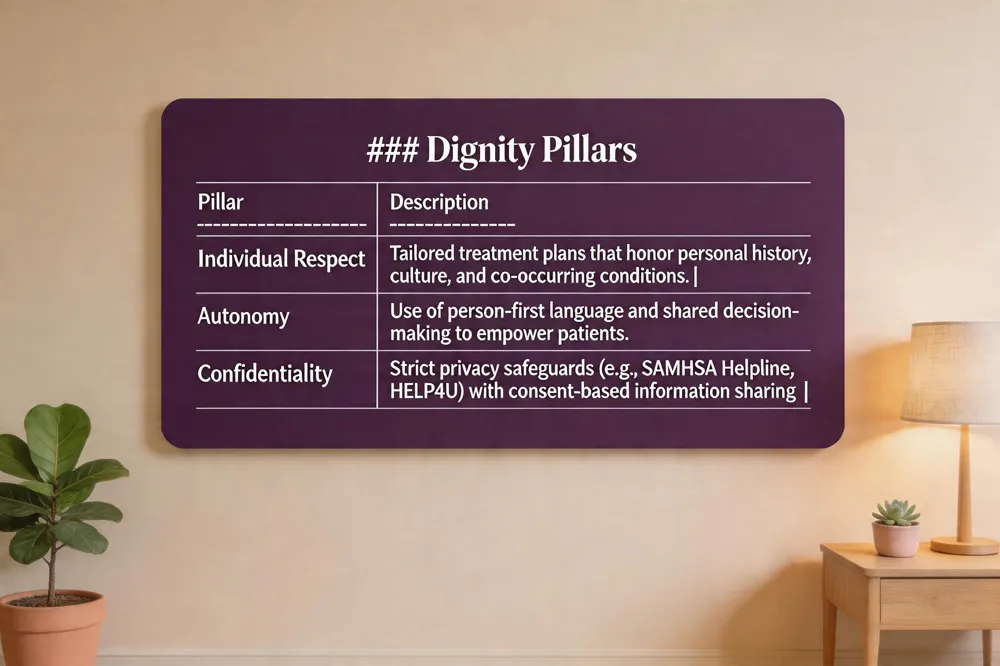 Compassion‑centric addiction programs are built on a set of core dignity principles that guide every interaction. First, each person’s individuality is recognized and respected; treatment plans are tailored to personal history, cultural background, and co‑occurring conditions. Second, autonomy is promoted by using person‑first language and involving patients in shared decision‑making, so they feel empowered to choose their recovery pathway. Third, privacy and confidentiality are rigorously protected—SAMHSA’s 24/7 Helpline and text service (HELP4U) exemplify this by safeguarding personal information and disclosing it only with consent. These three pillars—individual respect, autonomy, and confidentiality—create a safe, non‑judgmental environment that upholds patient dignity and supports lasting recovery.
The Landscape of Harmful Addictions
Top Harmful Addictions in the U.S.
| Substance | Primary Health Impacts | Approx. Mortality |
|---|---|---|
| Alcohol | Liver disease, cardiovascular issues, mental‑health challenges | ~10 deaths per hour |
| Opioids (heroin, prescription) | Overdose, respiratory depression, mental‑health comorbidities | High overdose fatality rate |
| Tobacco (cigarettes) | Cancer, heart disease, chronic respiratory disease | Leading cause of preventable death |
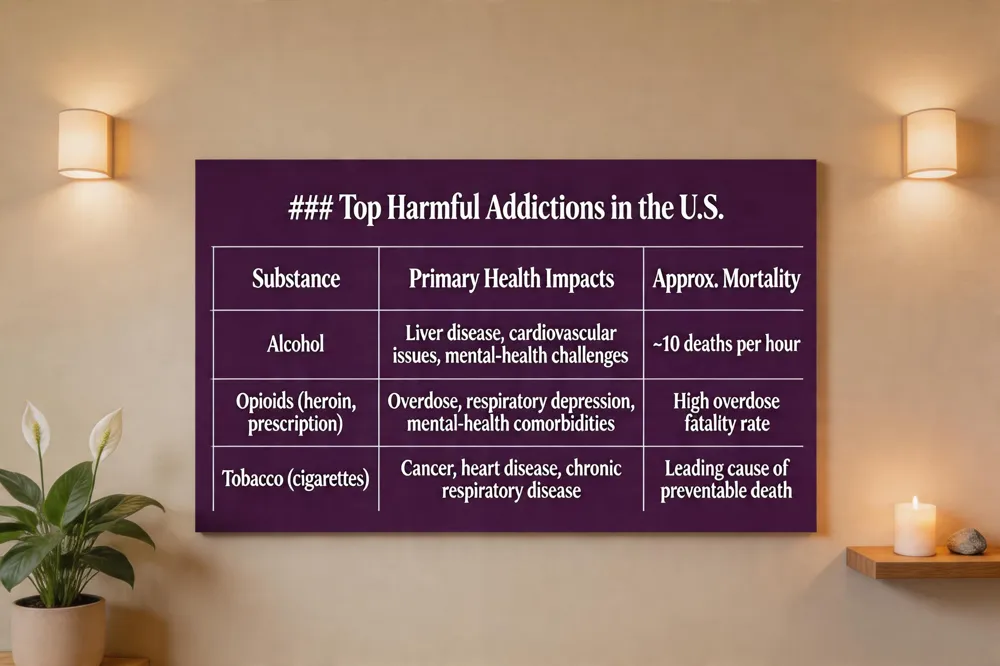 The three most harmful addictions in the United States are alcohol, opioids (including heroin and prescription painkillers), and tobacco (cigarettes). Alcohol use disorder leads the nation’s substance‑use burden, accounting for roughly ten deaths every hour and contributing to liver disease, cardiovascular complications, and mental‑health challenges. Opioid addiction fuels a relentless overdose crisis, with millions dependent on opioids and a high risk of fatal respiratory depression; it also drives co‑occurring mental‑health issues. Tobacco use remains the leading cause of preventable death, causing cancer, heart disease, and chronic respiratory conditions. Together, these three substances generate the greatest health mortality and cost, affecting both families and patients. Actively addressing addiction requires a compassion‑centric, patient‑centred approach that blends evidence‑based medical treatment with holistic, mind‑body therapies, respects dignity, and offers personalized pathways to recovery.
Support Networks Beyond Al‑Anon
Alternative Support Options
| Program | Target Audience | Key Features |
|---|---|---|
| Nar‑Anon Family Groups | Families of people who use substances | 12‑step fellowship, in‑person & online meetings, literature |
| SMART Recovery Family & Friends | Families seeking CBT‑based tools | Communication, boundary‑setting, self‑care skills |
| Alateen | Teens affected by a loved one’s addiction | Age‑appropriate meetings, virtual & in‑person, confidential peer support |
| SMART Recovery (peer specialists) | Individuals seeking evidence‑based relapse prevention | Structured techniques, research‑backed, reduces relapse risk |
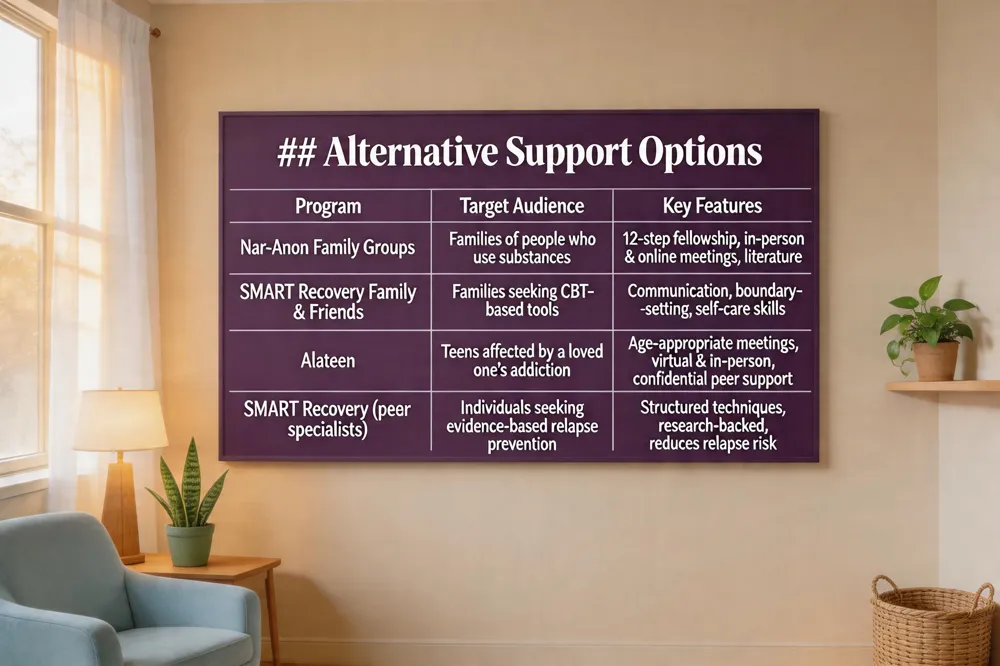 Compassion‑centric recovery extends beyond traditional Al‑Anon by offering family‑focused, teen‑specific, and evidence‑based peer assistance that honor patient dignity and holistic healing.
Family‑focused recovery groups – A widely‑recommended alternative for families is Nar‑Anon Family Groups, a 12‑step fellowship that provides in‑person and online meetings, literature, and a supportive network for relatives of people who use substances. SMART Recovery Family & Friends offers a non‑12‑step, cognitive‑behavioral approach that teaches practical communication, boundary‑setting, and self‑care skills.
Teen‑specific support – Alateen is the teen‑focused chapter of Al‑Anon, designed for adolescents whose lives are impacted by a loved one’s addiction. It offers age‑appropriate meetings (both in‑person and virtual) where teens share experiences, learn coping tools, and receive peer support in a safe, confidential setting.
Evidence‑based peer assistance – Peer recovery specialists and programs such as SMART Recovery provide structured, research‑backed techniques that reduce relapse risk and promote sustained engagement. All of these groups can be accessed through local treatment centers, the SAMHSA National Helpline (1‑800‑662‑HELP), or online directories, offering free, confidential support for families and teens.
Integrative Treatment: Merging Science and Holism
Integrated Modality Overview
| Modality | Type | Primary Benefits |
|---|---|---|
| Medication‑Assisted Treatment (MAT) | Evidence‑based | Reduces cravings, stabilizes neurochemistry |
| Cognitive‑Behavioral Therapy (CBT) | Evidence‑based | Lowers relapse rates, builds coping skills |
| Mindfulness Meditation | Complementary | Decreases stress, improves emotional regulation |
| Yoga | Complementary | Enhances physical health, promotes relaxation |
| Acupuncture | Complementary | Alleviates withdrawal discomfort |
| Nutrition Counseling | Complementary | Supports overall health, restores brain chemistry |
| Biofeedback / Neurofeedback | Complementary | Improves sleep, brain function |
| Family Therapy | Evidence‑based | Strengthens therapeutic alliance, supports dignity |
| Peer‑Support Specialists | Evidence‑based | Provides lived‑experience guidance, reduces isolation |
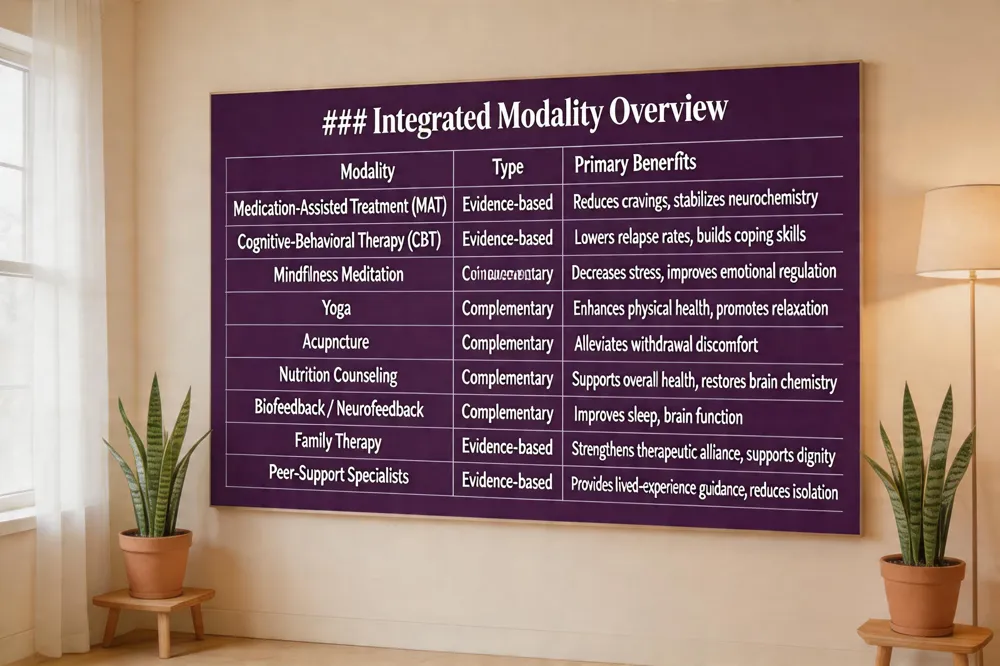 An integrative approach to addiction treatment blends evidence‑based conventional therapies—medication‑assisted treatment (MAT), cognitive‑behavioral therapy (CBT), and psychiatric care—with complementary modalities such as mindfulness meditation, yoga, acupuncture, nutrition counseling, biofeedback, and neurofeedback. This whole‑person model addresses physical health, emotional regulation, mental clarity, and spiritual well‑being, helping patients develop resilient coping skills and reduce cravings. Research consistently shows CBT paired with MAT yields the lowest relapse rates, making it the gold‑standard combination for most substance‑use disorders. Holistic care adds mind‑body practices—mindfulness‑based relapse prevention, yoga, art, music, and nutrition therapy—that lower stress, improve sleep, and restore brain chemistry, supporting sustained recovery. Family therapy and peer‑support specialists further reinforce dignity‑preserving, patient‑centered environments. By honoring each individual’s unique history, cultural background, and co‑occurring conditions, the program creates a personalized, compassionate pathway that treats addiction as a chronic medical disease while nurturing overall wellness.
Cost and Accessibility of Quality Outpatient Care
Betty Ford Clinic Outpatient Pricing
| Service Level | Cost (3‑month program) | Insurance / Payment Options |
|---|---|---|
| Basic (weekly counseling + MAT) | $5,000 – $7,500 | Private, Medicaid, Medicare accepted |
| Intensive (adds mindfulness, yoga, nutrition, etc.) | $7,501 – $10,000 | Same coverage + sliding‑scale, payment plans, financial aid |
| Uninsured / Low‑income | Variable (based on sliding‑scale) | HELP4U text service, SAMHSA Helpline for referrals |
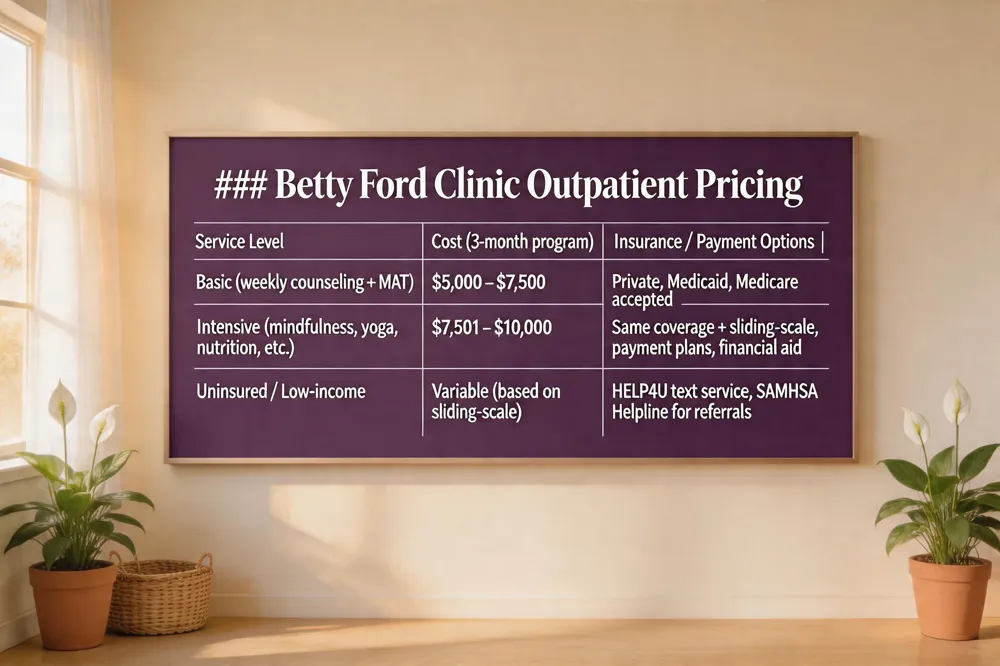 Outpatient addiction treatment at the Betty Ford Clinic typically runs between $5,000 and $10,000 for a three‑month program. The lower‑end reflects a basic schedule of weekly counseling and medication‑assisted treatment (MAT), while the higher‑end includes more intensive therapy, mindfulness‑based relapse‑prevention, yoga, nutrition counseling, and other complementary modalities.
Most major private insurers, Medicaid, and Medicare are accepted, so many patients see a substantial reduction in out‑of‑pocket costs. For those without coverage, the clinic offers sliding‑scale fees, payment plans, and financial‑aid options, and the nearbySAMHSA National Helpline (1‑800‑662‑HELP) can locate low‑cost local resources or help with insurance navigation. The text‑messaging service HELP4U (text 435748) also provides discreet, zip‑code‑based referrals. By combining evidence‑based care with holistic, patient‑centered services, the Betty Ford outpatient program strives to make high‑quality addiction treatment both affordable and accessible.
Designing a Personalized Integrated Therapy Plan
Sample Integrated Therapy Schedule
| Component | Frequency | Goal |
|---|---|---|
| CBT | Weekly (1‑hour session) | Skill building, relapse prevention |
| Mindfulness | Daily (10 min) | Stress reduction, emotional regulation |
| Nutrition Plan | Weekly (consult) | Optimize physical health, support brain chemistry |
| Yoga | Thrice‑weekly (45 min) | Physical flexibility, relaxation |
| Buprenorphine (MAT) | Daily (as prescribed) | Craving control, withdrawal management |
| Family Therapy | Monthly (1‑hour) | Strengthen support system, improve communication |
| Peer‑Mentor Meetings | Bi‑weekly (group) | Shared experience, accountability |
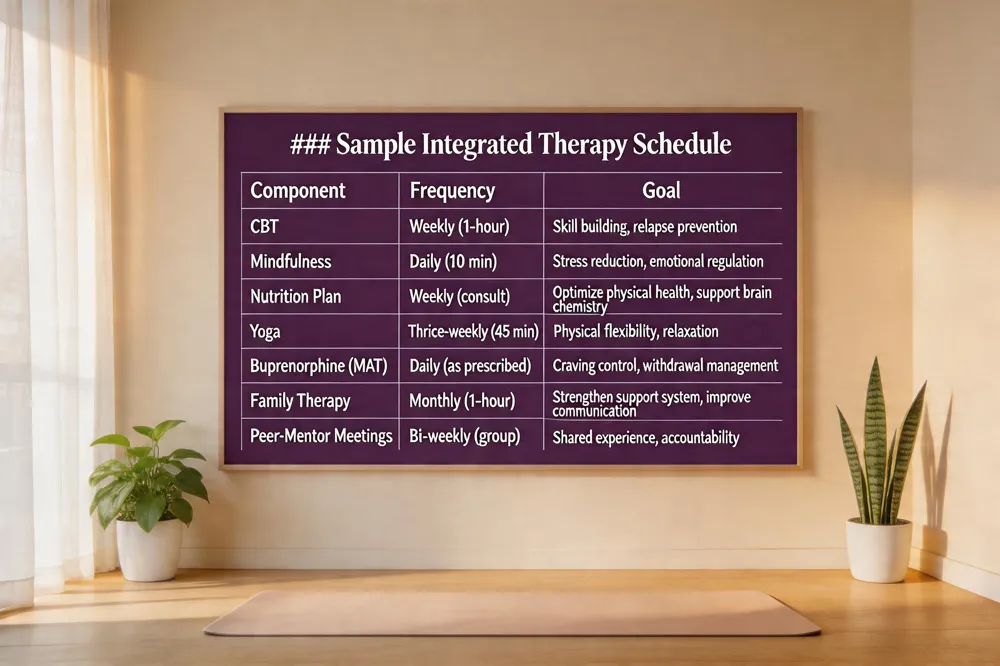 Example: A patient begins with weekly CBT, daily 10‑minute mindfulness, a diet plan from a nutritionist, thrice‑weekly yoga, and buprenorphine under medical supervision. Monthly family therapy and peer‑mentor meetings round out the plan, with continuous review to tailor each element to the patient’s evolving needs.
Compassion‑Centric Programs in Practice
Core Compassion‑Centric Practices
| Practice Element | Description |
|---|---|
| Trauma‑Informed Care | Safe spaces, ACE screening, non‑triggering language |
| Person‑First Language | Terminology that emphasizes the individual over the disorder |
| Shared Decision‑Making | Patients choose treatment modalities, nutrition, daily routines |
| Holistic Pain Management | Physical therapy, acupuncture, guided meditation, yoga |
| Family Involvement | Education, counseling, joint therapy sessions |
| Peer Recovery Specialists | Lived‑experience mentors modeling dignity‑preserving recovery |
| Cultural Competence | Respect for religious, linguistic, and cultural backgrounds |
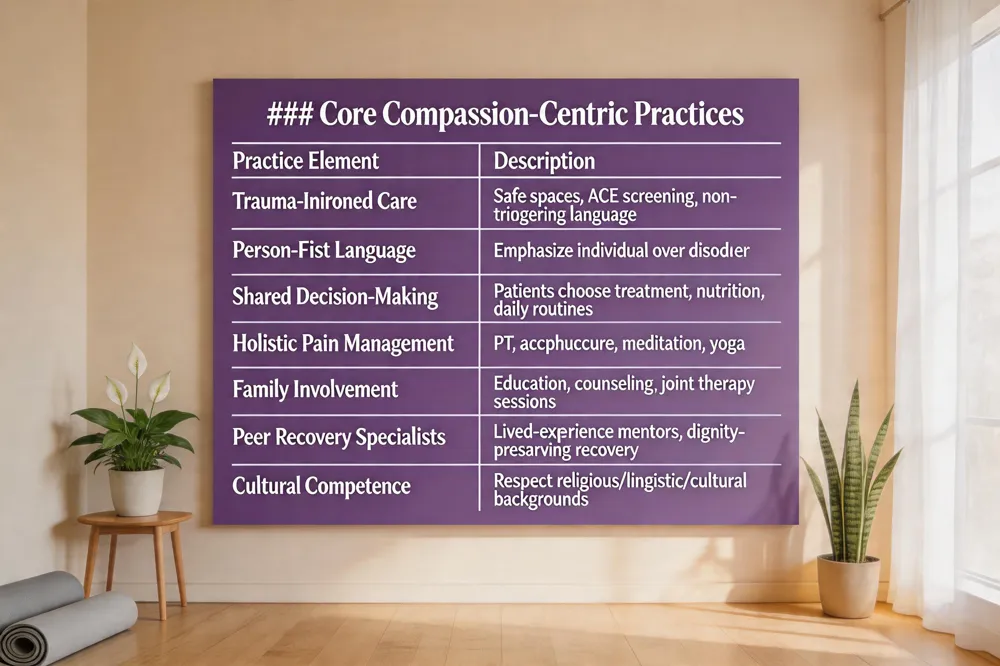 Trauma‑informed care is the foundation of compassion‑centric addiction treatment: clinicians create safe spaces, screen for adverse childhood experiences, and use non‑triggering language. Respectful communication and empathy follow with active listening, person‑first terminology (e.g., “person with a substance‑use disorder”), and shared decision‑making that lets patients choose treatment modalities, nutrition, and daily routines. Holistic pain management—such as physical therapy, acupuncture, guided meditation, and yoga—addresses withdrawal discomfort and chronic pain without relying on opioids, supporting both physical and emotional healing. Family involvement and peer recovery specialists strengthen the therapeutic alliance; families receive education and counseling, while peers with lived experience model dignity‑preserving recovery pathways. Cultural competence ensures that care respects religious, linguistic, and cultural backgrounds, reinforcing dignity and reducing stigma.
How can healthcare providers treat patients with dignity? By protecting privacy, honoring personal preferences, offering choices, listening without judgment, and fostering a respectful, empowering environment that integrates family and peer support while using culturally sensitive, stigma‑free language.
A Future Rooted in Compassion and Dignity
Compassion‑centric, whole‑person care moves addiction treatment beyond detox alone. By pairing medication‑assisted therapy and evidence‑based counseling with mindfulness, yoga, nutrition counseling and peer support, programs honor each individual’s physical, emotional, social and spiritual needs. This integrative model lowers cravings, reduces relapse and increases retention, creating a foundation for lasting recovery.
Community networks and policy frameworks must reflect these values. Funding for low‑threshold, 24/7 helplines such as SAMHSA’s national line, and for insurance coverage of holistic modalities, removes barriers and expands access. Legislative support for trauma‑informed, responsive services further reduces stigma and strengthens the safety net for families and underserved groups.
Providers are urged to adopt shared decision‑making, use person‑first language and embed continuity of care across medical and community settings. Seekers are encouraged to ask about holistic options, engage in peer groups and claim the dignity‑centered care they deserve.