A Fresh Perspective on Chronic Low Back Pain
Chronic low back pain affects roughly one‑in‑five adults and is a leading cause of disability worldwide. Because medications often bring side‑effects, clinicians now turn to non‑pharmacologic, integrative options that address both tissue injury and nervous‑system signaling. Central DuPage Physical Medicine in Carol Stream offers a coordinated program that blends evidence‑based acupuncture with personalized physical‑therapy regimens. Acupuncture’s thin needles stimulate endorphin release and reduce inflammation, creating a window of analgesia that lets patients engage more fully in PT exercises focused on core strength, flexibility, and posture. The clinic’s care model places the patient at the center, tailoring point selection, exercise intensity, and education to each individual’s goals, pain patterns, and lifestyle, fostering a mind‑body connection that supports lasting relief. Follow‑up ensures progress is monitored and treatment plans are adjusted for outcomes.
Why Combine Acupuncture and Physical Therapy?
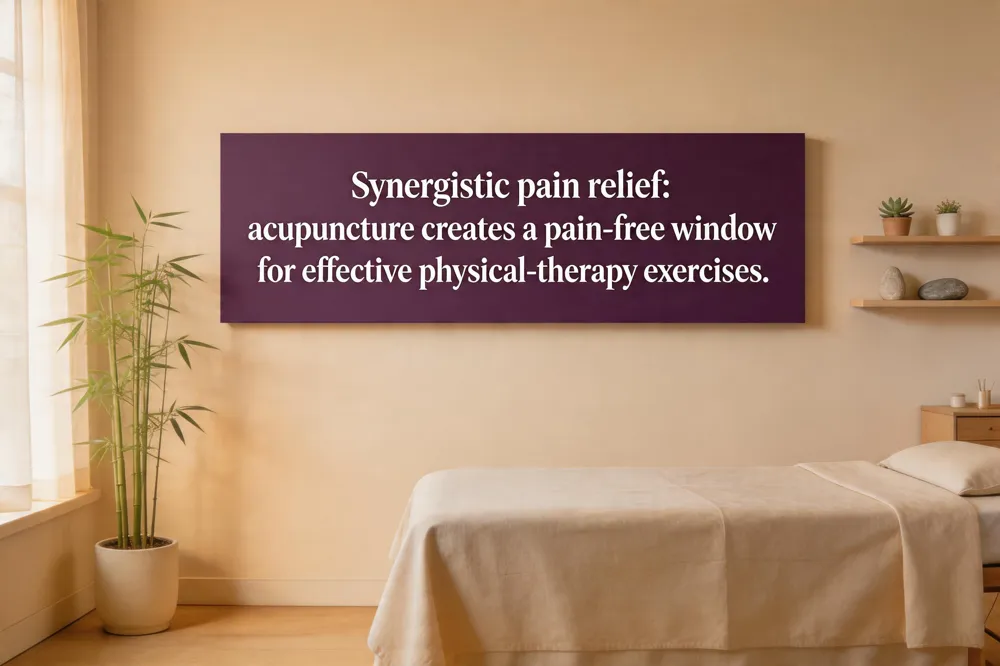 Acupuncture and physical therapy work together through a clear mechanistic synergy: needle stimulation releases endorphins, reduces inflammation and relaxes tight muscles, creating a pain‑free window that lets patients perform therapeutic exercises more fully. Robust evidence supports additive pain‑relief benefits—NIH‑funded BackInAction (800 adults 65+) showed up to 15 acupuncture sessions cut disability and pain more than usual care, while a 2020 RCT reported an 8‑point improvement on the Oswestry Disability Index when acupuncture was added to PT. Success rates are modest but meaningful, with 30‑40 % of patients achieving clinically important pain reduction. Major guidelines (ACP, AHA, WHO) now recommend multimodal, non‑drug first‑line treatment for chronic low back pain, explicitly endorsing acupuncture alongside PT. This aligns with the Five A’s framework: analgesia (pain relief), activities of daily living (improved function), minimal adverse effects, positive affect (mood and stress reduction), and reduced aberrant drug‑related behaviors by limiting opioid reliance. Integrating both modalities offers a personalized, holistic pathway to lasting back‑health.
Structuring Your Acupuncture Care: Frequency, Cost, and Safety
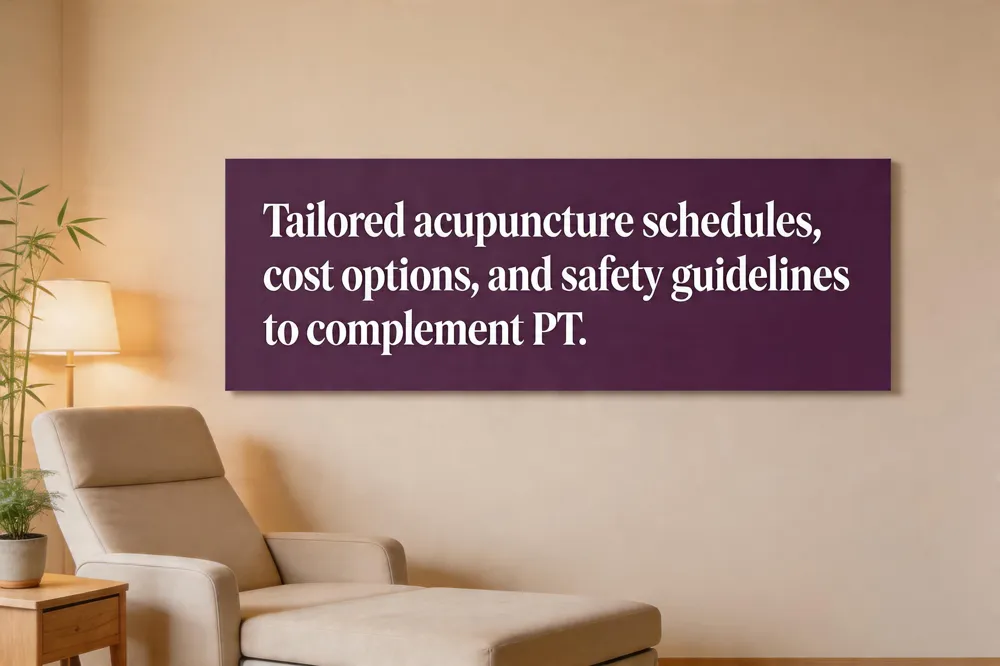 Acupuncture schedules differ by pain stage: acute episodes (≤1 week) often improve after 2‑3 sessions, sub‑acute pain (6‑12 weeks) typically needs 5‑10 visits, and chronic low back pain usually requires 10 or more treatments, beginning with weekly visits for 4‑6 weeks and tapering to bi‑weekly or monthly maintenance. The standard protocol for back pain starts with two sessions per week during the first few weeks to achieve rapid relief; chronic cases often total 12‑15 treatments, adjusted for severity and individual response. In the United States, a single session costs $70‑$150, with package discounts of $300‑$600 for 5‑10 visits. Medicare and many private insurers reimburse manual acupuncture when ordered by a physician for chronic low back pain, reducing out‑of‑pocket expense. Acupuncture is safe, with occasional soreness, minor bruising, or brief dizziness; serious complications are rare when performed by a licensed practitioner. To maximize benefit, schedule acupuncture before physical‑therapy appointments, allowing needle‑induced muscle relaxation to enhance exercise tolerance and improve overall rehabilitation outcomes.
Targeted Exercise and Stretch Protocols to Restore Mobility
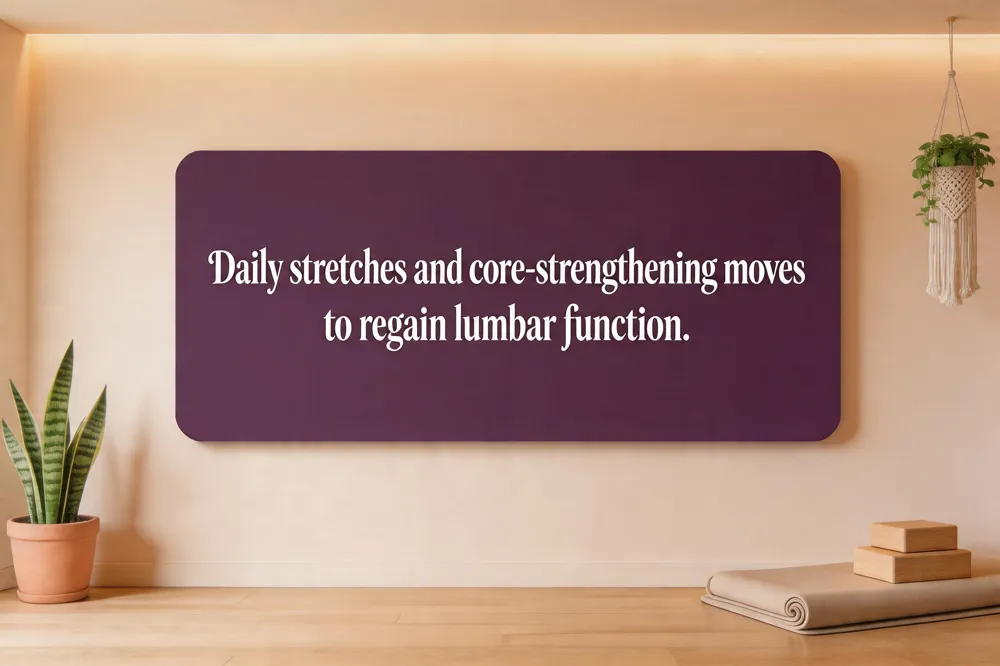 Stretch routine to loosen extremely tight lower‑back muscles – Begin with a gentle warm‑up (march in place or swing arms for 1 minute) to increase circulation. Follow with Cat‑Cow (10 slow cycles), then a Supine Knee‑to‑Chest stretch (20‑30 seconds per leg), the Reclining Figure‑Four for the glutes, a dynamic Hip‑Circle (10 each direction), and Child’s Pose with a side‑lean (30 seconds each). Finish with Legs‑Up‑the‑Wall for 1‑2 minutes. Perform daily, avoiding any pain that persists beyond a gentle stretch.
Top three exercises for back pain relief – 1) Supine Bridge: lift hips while shoulders stay grounded, hold briefly, repeat 8‑12 times. 2) Bird‑Dog: on all fours, extend opposite arm and leg, pause, switch sides; 8‑12 reps. 3) Child’s Pose: kneel, sit back on heels, reach arms forward, hold 30‑60 seconds. These moves strengthen core support, improve flexibility, and reduce lumbar pressure.
Single best exercise for lower back pain – The pelvic tilt (golden move): lie on back, knees bent, tighten abdominals, press lower back into floor, hold a few seconds, repeat 10‑20 times twice daily. It stabilizes the spine and eases tension.
Key acupuncture points – BL‑23 (Shenshu) beside L2, LV‑3 (Taichong) on the foot, GB‑30 (Huantiao) on the buttock, BL‑40 (Weizhong) behind the knee, and KI‑3 (Taixi) on the foot’s medial side. These points target lumbar weakness, sciatica‑type pain, and overall back‑.
Holistic Complementary Tools: Herbs, Mind, and Emerging Therapies
 Herbal remedies for chronic pain
Turmeric, ginger, and willow bark have anti‑inflammatory and analgesic effects for muscle and back pain. Capsaicin‑rich cayenne applied topically desensitizes nerves; adaptogens such as ashwagandha and rhodiola reduce stress‑related tension. Lavender oil can be used aromatically or in gentle massage. Discuss herbs with a clinician to avoid interactions.
Psychological therapy for pain
Cognitive‑behavioral therapy (CBT) teaches patients to reframe catastrophizing thoughts, practice relaxation, and adopt coping skills that lower tension. Mindfulness‑based and acceptance therapies promote awareness of pain, reducing distress. Biofeedback reinforces adaptive activity.
Holistic treatments
Acupuncture, chiropractic, massage, and targeted modalities stimulate nerves and improve circulation. Yoga, tai‑chi, meditation, and hypnosis re‑wire pain perception and boost flexibility. Combined with daily exercise and nutrition, these options support wellness.
Emerging non‑opioid options
Novel ENT1‑inhibitors that raise adenosine, peptide‑based dorsal‑root nerve blocks, and gene‑therapy viral vectors targeting pain circuits offer sustained long‑lasting analgesia without addiction risk.
Evidence‑based alternatives
Acupuncture, CBT, mindfulness, yoga, therapeutic massage, and targeted PT exercises have shown robust measurable pain reduction and functional gains in clinically proven trials, providing safe, opioid‑free relief
Your Path to Relief at Central DuPage Physical Medicine
 Central DuPage Physical Medicine is located at 798 W Army Trail Rd, Carol Stream, IL 60188. Call (630) 225‑7116. Office hours: Mon 9‑12:30 am & 2‑6 pm; Tue 2‑7 pm; Wed 9‑12:30 am & 2‑6 pm; Thu 9‑12:30 am & 2‑7 pm; Fri 9‑5 pm; Sat 9‑1 pm; Sun closed.
Each patient receives a personalized care plan that blends acupuncture, physical‑therapy exercises, and holistic modalities such as mindfulness and lifestyle counseling. Follow‑up monitoring ensures the plan evolves with progress.
Acupuncture for lower back pain – Safe, non‑addictive, acupuncture stimulates acupoints to release endorphins and modulate pain pathways. The NIH‑funded BackInAction trial showed up to 15 sessions over three months significantly reduced disability and pain, with lasting benefits and Medicare coverage for manual needling.
Combining physical therapy and acupuncture – Acupuncture eases muscle tension and improves circulation creating a pain‑free window for PT’s core‑strengthening, stretching, and mobility drills. The synergistic effect accelerates functional recovery for back pain, sciatica, frozen shoulder, and more.
Acupuncture cost for back pain – Sessions range $70‑$150; multi‑session packages $300‑$600. Many insurers reimburse when ordered by a physician; out‑of‑pocket costs are modest compared with long‑term medication use.
Patient success stories highlight rapid pain relief, increased range of motion, and reduced reliance on opioids. To begin, call the clinic, schedule a comprehensive evaluation, and start the integrative treatment journey.
Take the First Step Toward a Pain‑Free Life
Acupuncture and physical therapy work together to calm nervous‑system pain signals, reduce inflammation, and restore strength and mobility, offering both rapid relief and lasting functional gains. When needles ease muscle tension, PT exercises can be performed more comfortably, speeding recovery and decreasing the need for pain medication. If you’ve tried first‑line treatments without lasting results, consider an integrative approach that blends these evidence‑based modalities. Central DuPage Physical Medicine in Carol Stream welcomes you to explore this personalized pathway. Call (630) 225‑7116 or visit us at 798 W Army Trail Rd, IL 60188. Our office is open Monday‑Friday (9 am‑6 pm) and Saturday (9 am‑1 pm). Schedule a one‑on‑one assessment today and begin your journey toward a pain‑free life. Our team creates a customized care plan, monitors progress regularly, and adjusts treatment to keep you on track toward lasting relief.