Why Mind‑Body Matters for Healing
Research shows that breath, movement, and focused attention can calm the nervous system, lower cortisol, and boost immune activity, creating a physiological environment that accelerates tissue repair. Daily practices such as diaphragmatic breathing, guided imagery, gentle yoga or tai‑chi sequences, and progressive muscle relaxation activate parasympathetic tone, improve circulation, and stimulate growth‑factor release, all of which support faster wound healing and reduced pain. At Eclipse Wellness we blend these evidence‑based mind‑body techniques with conventional medical care—providing personalized nutrition, sleep hygiene, and supportive counseling—so each patient receives a holistic, patient‑centered plan that leverages both the mind and the body for optimal recovery.
Breathing & Relaxation Techniques to Reduce Anxiety
 Daily mind‑body exercises that calm the nervous system include diaphragmatic breathing and 4‑7‑8 breathing, progressive muscle relaxation (PMR), guided body‑scan meditation, and a gentle yoga flow such as cat‑cow and child’s pose. Diaphragmatic breathing activates the parasympathetic system, slowing heart rate and lowering cortisol; the 4‑7‑8 pattern (inhale 4 sec, hold 7 sec, exhale 8 sec) deepens relaxation. PMR systematically tenses and releases muscle groups, decreasing tension and anxiety. A body‑scan meditation brings focused awareness to each body part, reducing rumination and stress. A soft yoga sequence blends breath, movement, and mindfulness, further soothing the mind.
Mind‑body therapy refers to evidence‑based practices that integrate mental, emotional, and physical processes—such as yoga, tai‑chi, meditation, breathwork, and expressive arts—to promote whole‑person healing and improve health outcomes.
Movement Practices: Yoga, Tai Chi, and Qigong
 Yoga, tai‑chi, and qigong are movement‑based mind‑body practices that blend physical postures with conscious breath control and focused attention.
In yoga, each asana is paired with diaphragmatic or rhythmic breathing, creating a meditative flow that improves flexibility, strength, balance, and lymphatic drainage.
Guided imagery—visualizing cells repairing, joints easing, or a calm landscape—activates neuro‑plastic pathways, modulating pain perception and supporting immune function.
Evidence shows that regular practice lowers cortisol, reduces inflammatory cytokines, and alleviates chronic low‑back, neck, and osteoarthritis pain, while enhancing functional mobility and quality of life.
Broader mind‑body techniques include meditation, breathwork, progressive muscle relaxation, biofeedback, hypnosis, expressive arts, and guided imagery, all of which foster stress resilience, better sleep, mood elevation, and lower blood pressure.
Together, these practices create a synergistic healing environment that nurtures both the body’s tissues and the mind’s capacity for recovery.
Nutrition Essentials for Faster Tissue Repair
 A protein‑rich diet is the cornerstone of wound recovery. Lean meats, fish, eggs, dairy, beans, and lentils supply the amino acids needed for new collagen, blood‑vessel formation and immune cells. Pair each protein serving with vitamin‑C‑packed foods—citrus, berries, bell peppers, broccoli—to boost collagen synthesis and protect against oxidative stress. Zinc‑rich choices such as pumpkin seeds, nuts, shellfish and lean pork support cell growth and inflammation control, while healthy fats from avocados, olive oil, fatty fish and nuts provide omega‑3s and fat‑soluble vitamins that reduce inflammation.
9 daily foods for health: water (8‑12 cups), dark‑green vegetables, whole grains, legumes, fatty fish, berries, winter squash, soy products, and a handful of nuts or seeds.
Top healing food: lean protein, because without sufficient amino acids tissue repair stalls.
7 pillars of holistic health: movement, nutrition, restorative sleep, stress management, social engagement, gratitude/purpose, and cognitive enhancement. Together, these nutrition basics and lifestyle pillars create a supportive environment for faster, more complete healing.
Rest, Hydration, and Lifestyle for Healing
 How can I speed up wound healing?
Keep the wound clean and covered with a moist, non‑stick dressing to protect it and promote epithelial growth. Warm the area and move gently (e.g., ankle pumps, shoulder squeezes) to boost circulation while avoiding prolonged pressure. Hydrate with 8–10 cups of water daily and consume protein‑rich foods, omega‑3s, vitamin C, zinc, and vitamin A to supply the building blocks for tissue repair. A balanced anti‑inflammatory diet (leafy greens, berries, whole grains, turmeric, probiotics) supports immune function. Avoid smoking, excess alcohol, and manage chronic conditions like diabetes under medical guidance. Prioritize 7–9 hours of quality sleep; deep sleep releases growth hormone that drives collagen synthesis and cellular regeneration.
How can I speed up wound healing?
Keep the wound clean and covered with a moist, non‑stick dressing to protect it and promote epithelial growth. Warm the area and move gently (e.g., ankle pumps, shoulder squeezes) to boost circulation while avoiding prolonged pressure. Hydrate with 8–10 cups of water daily and consume protein‑rich foods, omega‑3s, vitamin C, zinc, and vitamin A to supply the building blocks for tissue repair. A balanced anti‑inflammatory diet (leafy greens, berries, whole grains, turmeric, probiotics) supports immune function. Avoid smoking, excess alcohol, and manage chronic conditions like diabetes under medical guidance. Prioritize 7–9 hours of quality sleep; deep sleep releases growth hormone that drives collagen synthesis and cellular regeneration.
How can I improve my holistic health on a daily basis? Start each morning with 5 minutes of mindful breathing or meditation to lower cortisol and activate the parasympathetic system. Eat whole‑food meals rich in lean protein, healthy fats, and colorful vegetables, and stay well‑hydrated. Incorporate gentle movement—walking, yoga, tai chi, or light physiotherapy exercises—to improve circulation and lymphatic flow. Practice gratitude journaling, spend time in nature, and nurture supportive relationships for emotional resilience. Consistently‑ 7–9 hours of restful sleep and consider evidence‑based adjuncts such as honey or aloe gels for wound care when appropriate.
Mindful Practices: Meditation, Gratitude, and Cognitive Boosters
 Mind‑body interventions are evidence‑based practices that deliberately engage mental processes—thoughts, attention, emotions, and beliefs—to influence physiological functions and promote healing. They modulate stress hormones, immune responses, and autonomic regulation, and include mindfulness meditation, guided imagery, yoga, tai chi, progressive muscle relaxation, and biofeedback.
The 5 C’s of mindfulness are: Consciousness (present‑moment awareness), Compassion (kindness toward self and others), Confidence (trust in one’s capacity to be present), Courage (willingness to face discomfort), and Community (connection with others).
Five brain‑exercise activities that boost cognition are: 1) solving puzzles (crosswords, Sudoku, brain‑training apps); 2) learning a new language or musical instrument; 3) playing memory‑pairing games; 4) engaging in regular aerobic exercise such as brisk walking or dancing; and 5) practicing mindfulness meditation focused on breath or body sensations.
The 5 C’s of therapy are: Clarity, Connection, Coping, Control, and Compassion, each supporting personal insight, supportive relationships, effective stress management, a sense of agency, and self‑kindness.
Social Connection, Gratitude, and Emotional Resilience
 The 7 habits for a healthy mind and body – Stay well‑hydrated and eat nutrient‑dense whole foods, keep regular meal times, practice daily gratitude, walk briefly after meals, journal thoughts and feelings, weave mindfulness into routine tasks (e.g., brushing teeth), and engage in short, purposeful movement. These habits stabilize blood‑sugar, boost mood, and support physical recovery.
Cultivating supportive relationships – Regular contact with family, friends, or community groups provides emotional buffering, lowers cortisol, and improves immune function. Social support predicts faster wound healing and better pain tolerance.
Gratitude journaling and its physiological impact – Writing down three things you’re grateful for each day reduces inflammatory markers (CRP), lowers blood pressure, and increases serotonin, fostering resilience and quicker tissue repair.
Alternative healing modalities that complement conventional care – Acupuncture, herbal medicine, aromatherapy, Reiki, cupping, and functional nutrition can enhance pain relief, reduce inflammation, and support overall well‑being when integrated with standard medical treatment.
Safety, Personalization, and Special Considerations
 Which core exercises should a person with scoliosis avoid?
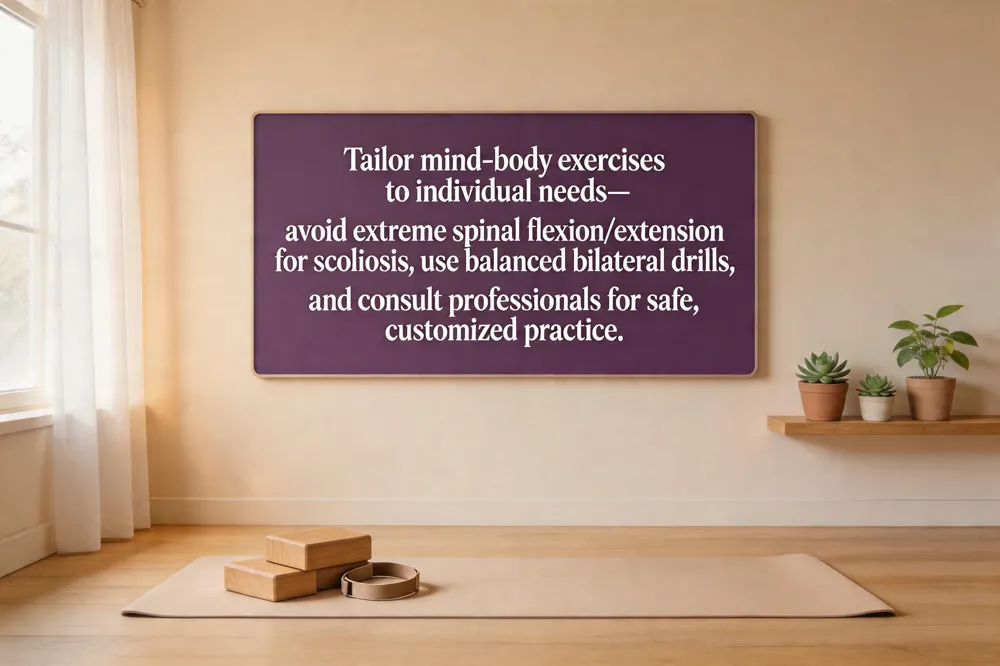
People with scoliosis should avoid movements that force the spine into extreme flexion or hyper‑extension, such as traditional sit‑ups, crunches, heavy deadlifts, and weighted back extensions. Asymmetrical work—single‑side planks, twisting sit‑ups, or one‑sided bends—can over‑use the concave side of the curve and should be replaced with balanced, bilateral stability drills (e.g., bird‑dog, side‑plank, pelvic tilts) performed under professional guidance.
Define “mind‑body exercise”
A mind‑body exercise blends physical motion with mental focus, breath awareness, or meditation—examples include yoga, tai‑chi, Pilates, and qigong.
Tailoring mind‑body practices to individual needs
Personalization means matching the intensity, posture, and breath work to a person’s health status, pain level, and goals. For scoliosis, choose gentle, neutral‑spine movements; for chronic pain, prioritize diaphragmatic breathing and guided imagery; and always consult a qualified practitioner to ensure safety and optimal benefit.
Putting It All Together for Accelerated Healing
Consistent daily practice of the five highlighted mind‑body habits—mindful breathing, guided visualization, gentle physiotherapy movement, gratitude journaling, and nature exposure—creates a synergistic environment for tissue repair, immune modulation, and stress reduction. At Eclipse Wellness we personalize this framework by matching each habit to the client’s health status, preferences, and schedule; for example, a patient recovering from surgery may combine diaphragmatic breathing with short, supervised physiotherapy sessions, while a chronic‑pain client might integrate gratitude journaling and nature walks to lower cortisol. By educating patients on the science behind each practice and providing tools such as guided audio tracks, home‑exercise videos, and nutrition counseling, we empower them to become active partners in their recovery, fostering confidence, adherence, and faster, sustainable healing.